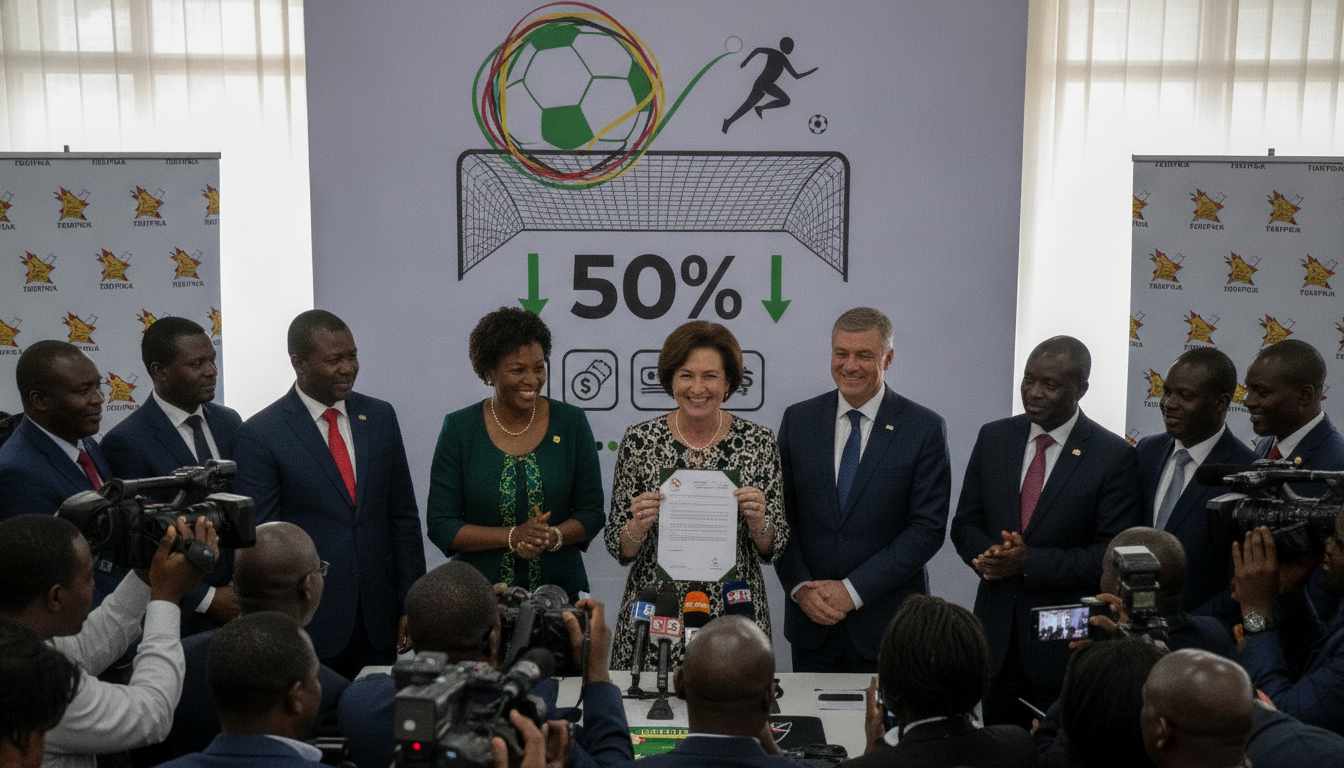
Zimbabwe football levies slashed as government halves SRC and ZIFA fees
Government cuts Zimbabwe football levies: SRC and ZIFA fees halved, PSL and venue charges reduced to boost club revenues, investment and youth development.


The government has approved sweeping reductions in Zimbabwe football levies and other match-day regulatory fees aimed at lowering operating costs for clubs and event organisers. The changes, announced at a post-Cabinet briefing by Finance Minister Professor Mthuli Ncube, include halving charges collected by the Sport and Recreation Commission and the Zimbabwe Football Association. The package also trims Premier Soccer League and local authority levies to give clubs a larger share of gate receipts and encourage reinvestment in the game.
Government approves broad levy cuts affecting sport and other sectors
Cabinet endorsed a Mop-Up Review of licences, permits, levies and fees that extends reforms to the sport sector alongside agriculture, education, transport and the natural stone export subsector. Professor Ncube told journalists that the exercise seeks to remove duplicated and overlapping charges and to eliminate levies that act as barriers to investment and business growth. The review expands earlier regulatory reforms covering 13 priority sectors approved on 29 July 2025 and now targets specific charges that government officials described as excessively high.
The policy objective, as presented at the briefing, is to simplify compliance and reduce transaction costs for businesses and sporting bodies. Officials said the changes are part of a broader programme to make the regulatory environment more competitive and attract private investment. Cabinet framed the moves as both a fiscal reform and an economic stimulus measure for affected industries.
Specific cuts for SRC, ZIFA and PSL levies
Under the approved measures, the Sport and Recreation Commission levy on football gate takings will be reduced by 50 percent, trimming the commission’s share from six percent to three percent. The Zimbabwe Football Association will match that reduction by halving its levy on gross match-day revenue, similarly lowering its charge from six percent to three percent. The Premier Soccer League levy will be reduced more sharply from 10 percent of net match-day income to four percent, delivering immediate relief to clubs’ bottom lines.
Together, these reductions mean a significant reallocation of match-day revenue back to clubs and organisers. For professional teams that rely heavily on gate receipts, the adjustments represent a material change in revenue structure that could free up funds for short-term operations and longer-term investments. Government officials emphasised that the cuts were targeted to address specific cost pressures identified during the review.
Local authority venue hire charges cut to increase club income
Local authorities will also benefit from revised charges, with venue hire fees on gross gate takings lowered from 15 percent to 10 percent. That adjustment removes a substantial line item from match-day expenses, particularly for clubs that host fixtures at municipal or council-owned stadia. Local government charges had been singled out in the review as one of the levies that disproportionately reduced the net proceeds available to clubs after a match.
Reduced venue fees are expected to encourage more frequent use of venues and could incentivise partnerships between clubs and local councils on stadium maintenance and upgrades. Authorities will be asked to align collection practices with the new rates, and clubs will need clear guidance on invoicing and settlement under the revised regime.
Expected short-term benefits for clubs and player development
The immediate effect of the levy cuts will be to increase the share of match-day revenue retained by clubs, which officials say should alleviate financial pressures at a time when many teams face squeezed budgets. More disposable income from gate receipts can be channelled into player salaries, youth academies, coaching, medical care and basic infrastructure improvements. The government noted that the savings could help strengthen the domestic league and create room for investment in grassroots football.
Club administrators welcomed the announcement as a practical step toward financial sustainability, while stakeholders will watch to see if the additional funds translate into measurable improvements in player welfare and youth programmes. The extent of those benefits will depend on how clubs prioritise spending and whether governing bodies provide oversight or incentives for reinvestment into development pathways.
Cabinet rationale and wider regulatory agenda
Cabinet said the mop-up review was designed to eliminate unnecessary licences and permits and to harmonise charges that overlapped across ministries, departments and agencies. Officials argued that removing duplicative fees and lowering excessive levies will reduce red tape and speed up business processes. The review’s expansion to sport followed assessments that match-day and sector-specific charges were constraining activity and deterring private sector participation.
Government statements framed the reform as part of a continuity plan that began with the 13-sector review in July 2025 and has now been deepened to address sub-sector anomalies. Cabinet emphasised that the changes are intended to create a more enabling environment for investment while preserving core regulatory functions and oversight.
Implementation, oversight and potential fiscal trade-offs
The post-Cabinet briefing did not set out a detailed implementation timetable, and officials said ministries and agencies will need to update regulations and collection procedures to reflect the new rates. That transition will require coordination with the Sport and Recreation Commission, the Zimbabwe Football Association, the Premier Soccer League and local authorities to ensure consistent application of the cuts. Administrative guidance and a clear schedule will be critical to prevent disputes over receipts and remittances in the short term.
Analysts note that while the measures reduce immediate fee-driven revenue for government agencies and associations, the policy seeks to stimulate broader economic activity that could offset shortfalls over time. The balance between short-term revenue loss and longer-term gains from increased attendance, commercialisation and investment will determine whether the cuts produce net fiscal benefits. Close monitoring and transparent financial reporting by sporting bodies will be important to assess outcomes.
Stakeholder responses and next steps for Zimbabwean football
Club officials, league administrators and local councils have been asked to review their budgets and operational plans in light of the reduced levies and charges. League executives will also need to revise distribution formulas and consider how to allocate the extra match-day revenue across competing priorities such as player wages, youth development and facility maintenance. The government has urged affected organisations to prioritise investment that strengthens the sustainability and competitiveness of Zimbabwean football.
Supporters’ groups and community stakeholders have signalled cautious optimism that lower levies could translate into more affordable tickets, improved match-day experience and greater reinvestment in local talent pipelines. The coming weeks will show how quickly the revised rates are implemented and whether the relief translates into measurable improvements on and off the pitch.
The policy shift represents a tangible change in how match-day income is shared across the football ecosystem, with potential implications for clubs’ finances, youth development and the commercial attractiveness of the domestic game.
The government says the broader review will continue to assess other statutory charges and remove unnecessary regulatory burdens as part of a long-term effort to boost investment and economic growth.