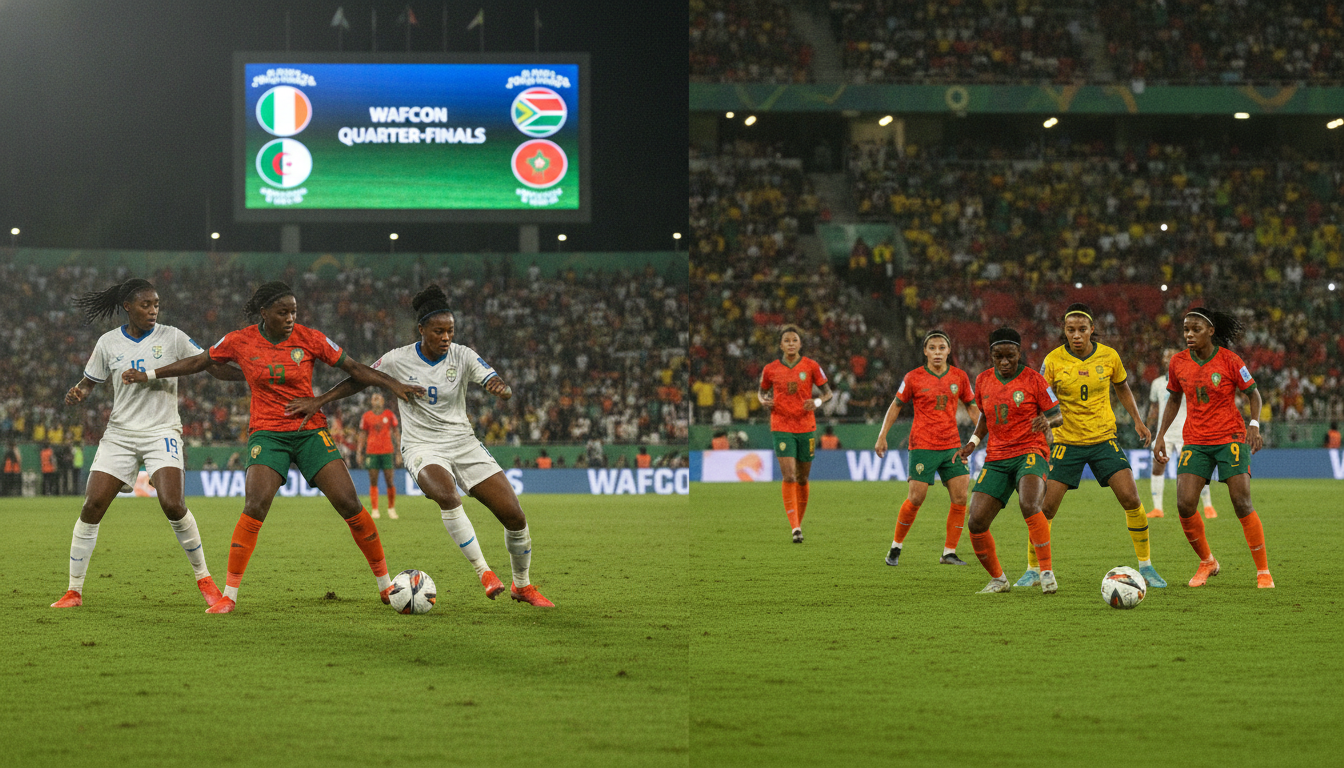
WAFCON quarter-finals take shape as Ivory Coast and South Africa advance from Group B
Ivory Coast and South Africa advanced from Group B to set WAFCON quarter-finals against Algeria and hosts Morocco. Quarter-finals begin Saturday. Next week.


The race to the knockout phase of the 2026 Women’s Africa Cup of Nations tightened on Tuesday as Group B concluded, with Ivory Coast and South Africa securing narrow wins that confirmed their places in the WAFCON quarter-finals. Ivory Coast overcame Tanzania 2-1 while South Africa edged Burkina Faso 1-0, results that produced two clear last-eight pairings. The stage is now set for high-stakes quarter-final ties that will send four teams through to the semi-finals.
Ivory Coast and South Africa advance from Group B
Ivory Coast delivered a decisive finish in their final Group B match, claiming a 2-1 victory that wrapped up qualification and ensured a last-eight meeting with Algeria. The win came after a competitive contest in which Ivory Coast showed sharper finishing in the decisive moments to separate themselves from Tanzania. Their progress highlights an upward trajectory for the side as they move into the knockout phase.
South Africa sealed their passage with a tight 1-0 victory over Burkina Faso that underlined defensive solidity and clinical use of limited chances. The narrow scoreline belies a disciplined performance that will give coach and supporters reason for cautious optimism ahead of a difficult quarter-final against hosts Morocco. Both qualifiers leave Group B with momentum but will face markedly different challenges in the last eight.
Ivory Coast to face Algeria in the last eight
The Ivory Coast versus Algeria tie promises to be a tactical contest between a team carrying momentum from group victories and an Algerian side that will be eager to assert itself on big-match days. Algeria’s route to the quarter-finals has been built on organization and moments of individual quality, and they will look to exploit any lapses from the Ivorian defense. Expect a strategic opening period as both sides probe for weaknesses before committing numbers forward.
Set pieces and transitions could prove decisive in a match that may be ultimately decided by one or two key moments. Ivory Coast’s attackers will need to combine patience with urgency against an opponent that can congest the midfield and force mistakes. The tie offers both teams an opportunity to show that they can balance control and risk when a single result determines progression.
South Africa drawn against hosts Morocco
South Africa will meet hosts Morocco in a fixture that carries the added weight of the home crowd and national expectation for the Moroccan side. Playing on home soil elevates Morocco’s confidence, and South Africa must guard against an early spell of pressure as the hosts seek to use familiarity and crowd energy to unsettle opponents. The match-up is likely to be intense with tactical nuance, as Morocco attempt to combine technical play with high-tempo pressing.
For South Africa, the quarter-final represents a test of resilience and adaptability in hostile surroundings. The team’s defensive shape and ability to manage transitional phases will be crucial, particularly in countering Morocco’s runners and wide play. The encounter has knockout drama written into it, and both teams will be aware that a place in the semi-finals is at stake.
Quarter-final schedule and the road to the semi-finals
The WAFCON quarter-finals begin on Saturday and will unfold across a compact schedule that funnels the competition toward the semi-finals and ultimately the final. The last-eight fixtures are single-elimination, meaning teams must produce their best performance on the day or face immediate exit from the tournament. With so little margin for error, coaches will be under pressure to make the right tactical calls and substitutions at critical moments.
Tournament scheduling also places a premium on recovery and squad rotation, as winners will need to be physically and mentally prepared for rapid turnaround should they progress. The structure favors teams with depth, disciplined fitness programs and the capacity to adjust to different match tempos. Each quarter-final will therefore not only measure technical and tactical ability but also squad management and psychological readiness.
Defending champions Nigeria eye retention of the title
Nigeria’s Super Falcons enter the knockout phase as defending champions and a team any rival would rather avoid at full strength. Having lifted the previous edition after defeating Morocco in the final, Nigeria will be expected to mount another serious challenge and to use their experience in high-pressure fixtures to their advantage. Their campaign will be watched closely by observers gauging whether the side can negotiate the unique demands of this edition.
Retaining the title will require consistency across all phases of the game, from the back line through to finishing chances in the box. Nigeria’s leadership and tournament pedigree give them a psychological edge, but they must guard against complacency and rising performances from nations that have closed the gap in recent cycles. As the competition reaches its decisive rounds, the Super Falcons will be measured on how they manage game tempo, stamina and in-game adjustments.
Remaining group outcomes will decide the final quarter-finalists
With Group B resolved, attention now turns to the remaining groups where several places remain unclaimed and the final quarter-final pairings will be confirmed. Those matches will carry equal importance because the draw and relative difficulty of opponents in the last eight can hinge on a single late result elsewhere in the tournament. Teams on the cusp will be under pressure to produce decisive performances that secure favorable match-ups.
The closing group fixtures will also test the depth of those teams, as injuries and suspensions begin to influence selection choices and tactical plans. Coaches will balance the need for positive results with player conservation, mindful that the knockout stage demands maximum physical output and strategic clarity. The next round of games therefore carries outcomes with both immediate and downstream consequences for quarter-final dynamics.
As WAFCON moves into the knockout phase, the tournament’s narrative shifts from group arithmetic to straight elimination drama and the fine margins that determine who advances. The confirmed ties — Ivory Coast versus Algeria and South Africa versus Morocco — set up compelling match-ups, while the other groups will finish their business and complete the quarter-final bracket. Fans can expect an intensified level of competition, tactical adjustments from coaches, and performances that will shape the race to the title.