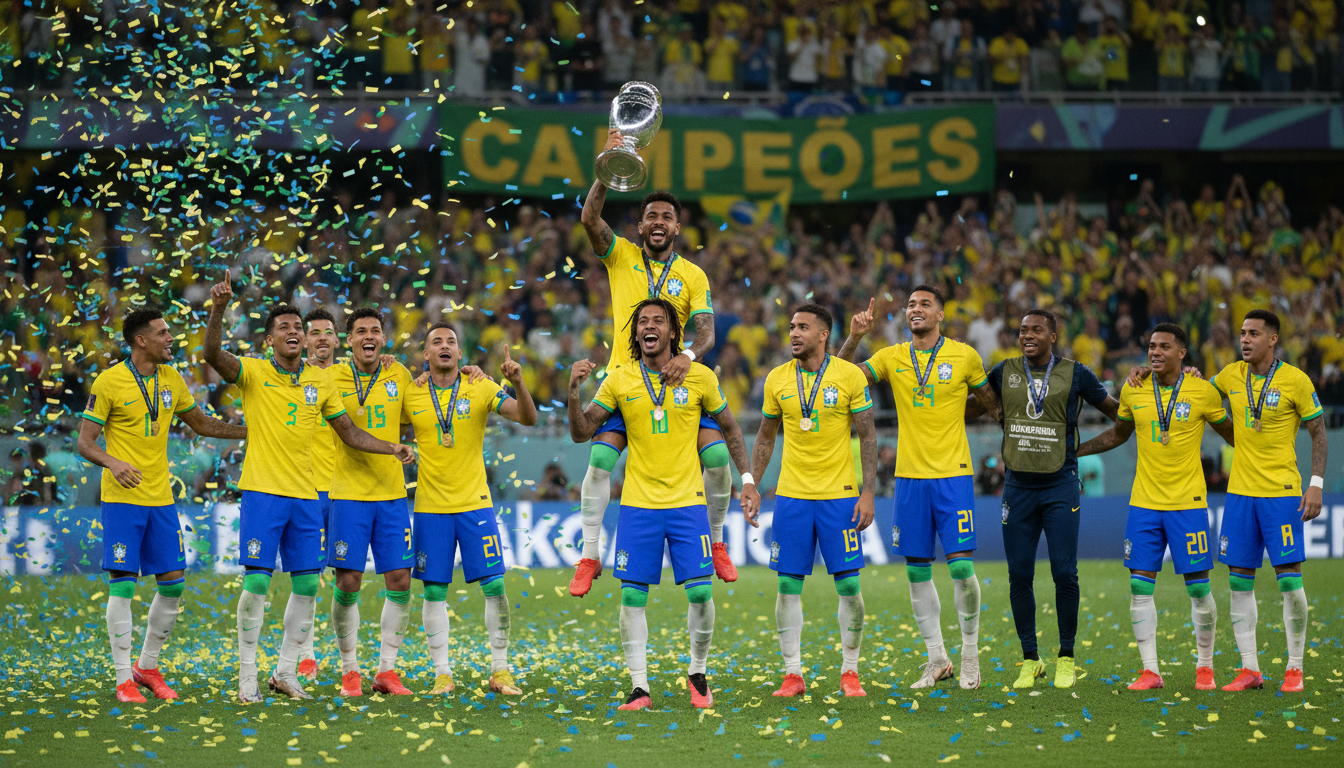
Brazil win Copa America without Neymar as Gabriel Jesus, Firmino and Everton deliver
Brazil win Copa America without Neymar after a 3-1 victory over Peru, with Gabriel Jesus, Roberto Firmino and Everton playing decisive roles in the final at the Maracanã.


Brazil lift Copa America at the Maracanã
Brazil secured the Copa America title in emphatic fashion, claiming a 3-1 victory over Peru in front of a packed Maracanã crowd. The win marked Brazil’s first Copa triumph since 2007 and was achieved notably without Neymar in the matchday squad.
The result ended a long wait for a major senior trophy and provided manager Tite with a vindication of his tactical choices across the tournament. Celebrations on the pitch reflected a team performance rather than reliance on a single star.
Tactical reshaping without Neymar
Tite reshuffled his forward line and midfield to compensate for Neymar’s prolonged absence and the changes produced a more collective attacking identity. Without a singular focal point, Brazil’s forwards rotated intelligently, created triangles in the final third and shared the creative load.
That new balance allowed players like Everton to occupy wide spaces and Gabriel Jesus to drift into central scoring positions while Roberto Firmino’s movement created lanes for team-mates. The result was a fluid attack that produced chances from a variety of patterns rather than predictable Neymar-led combinations.
Gabriel Jesus highs and the red card
Gabriel Jesus provided one of the defining contributions of the final, setting up Brazil’s opener with a well-timed cross and later finishing a clinical move himself. His second-half run and composed finish restored Brazil’s lead after Peru had pulled one back from the penalty spot.
However, Jesus’s afternoon was tempered by a late dismissal for a second bookable offence, leaving Brazil to defend their lead with ten men for the closing stages. The sending off introduced a period of nervy defending but also highlighted the squad’s depth and tactical discipline under pressure.
Everton and Firmino vindicate Tite’s selections
Everton was among the tournament’s breakout performers, providing pace, unpredictability and a decisive volley in the final that opened Brazil’s scoring. The Gremio winger’s movement off the ball and finishing gave Brazil a genuine left-sided attacking outlet in Neymar’s absence.
Roberto Firmino, operating in a deeper No. 9 role, combined industry with intelligence and won back possession at crucial moments to spark counter-moves. His ability to drop, link play and press defensively allowed Brazil to sustain tempo and overload central areas when required.
Midfield balance with Arthur, Coutinho and Casemiro
Brazil’s midfield operated with a clear division of labour that combined control, creativity and protection for the back four. Arthur provided short-passing fluency and tempo control, Coutinho offered incisive movement and direct attacking passes, and Casemiro shielded the defense while recycling possession.
That triangular structure allowed Brazil to progress through midfield without relying on a single individual to unlock defences, contributing to consistent territorial advantage and a steady supply of chances for the forwards. The balance also reduced the burden on peripheral creativity coming from a single superstar.
Key moments that decided the final
The opening goal arrived when Gabriel Jesus beat a full-back with a clever touch and delivered a difficult cross that Everton volleyed home at the far post. Peru responded with a penalty converted by Paolo Guerrero after a handball decision against Thiago Silva, briefly swinging momentum back to the visitors.
Brazil regained the lead through a composed finish from Jesus after Arthur regained the ball and threaded a timely pass, and Richarlison’s late penalty wrapped up the victory following a contentious sequence in the attack. Each of those moments shifted tactical emphasis and required Brazil to adapt quickly to Peru’s pressures.
How Neymar’s absence reframed the narrative
Neymar’s absence from the final — and the wider debate over his role with the national team — reshaped how observers interpreted Brazil’s success. Rather than highlighting a missing star as a fatal flaw, Brazil’s collective performance invited the argument that the team could be stronger without an overreliance on a single figure.
The outcome will intensify discussions about Neymar’s international legacy, his role within the squad and whether Brazil’s current crop of forwards and midfielders have evolved past the need for a marquee talisman in tournament football. For Neymar personally, the result is a reminder that international silverware remains a pressing component of his career ambitions.
Brazil win Copa America without Neymar reverberates through selection debates and supporters’ expectations, but it also underscores a wider point about squad construction and tactical modernity. The victory demonstrated that a team with balanced midfield control, interchangeable forwards and a clear defensive plan can prevail on the biggest stages.
Brazil’s manager now faces the task of consolidating the tournament lessons into a longer-term identity, preserving the front-line fluidity while accommodating the return of established stars if and when they are available. The tournament delivered both immediate success and a blueprint that could influence selections and tactics in upcoming international windows.
For the players who stepped forward, the Copa America title will be a career-defining achievement and a boost to their profiles at club and international level. For the nation it restored a coveted trophy and provided a fresh narrative about Brazil’s depth of talent and tactical adaptability in global football.
The final reflected a completed cycle for this squad, from group-stage adjustments to knockout resilience, and offered a clear signal that Brazil’s footballing identity is flexible enough to win without depending on a single personality. The win in Rio will be measured now against future results, but for the moment it stands as a convincing statement of team over individual.