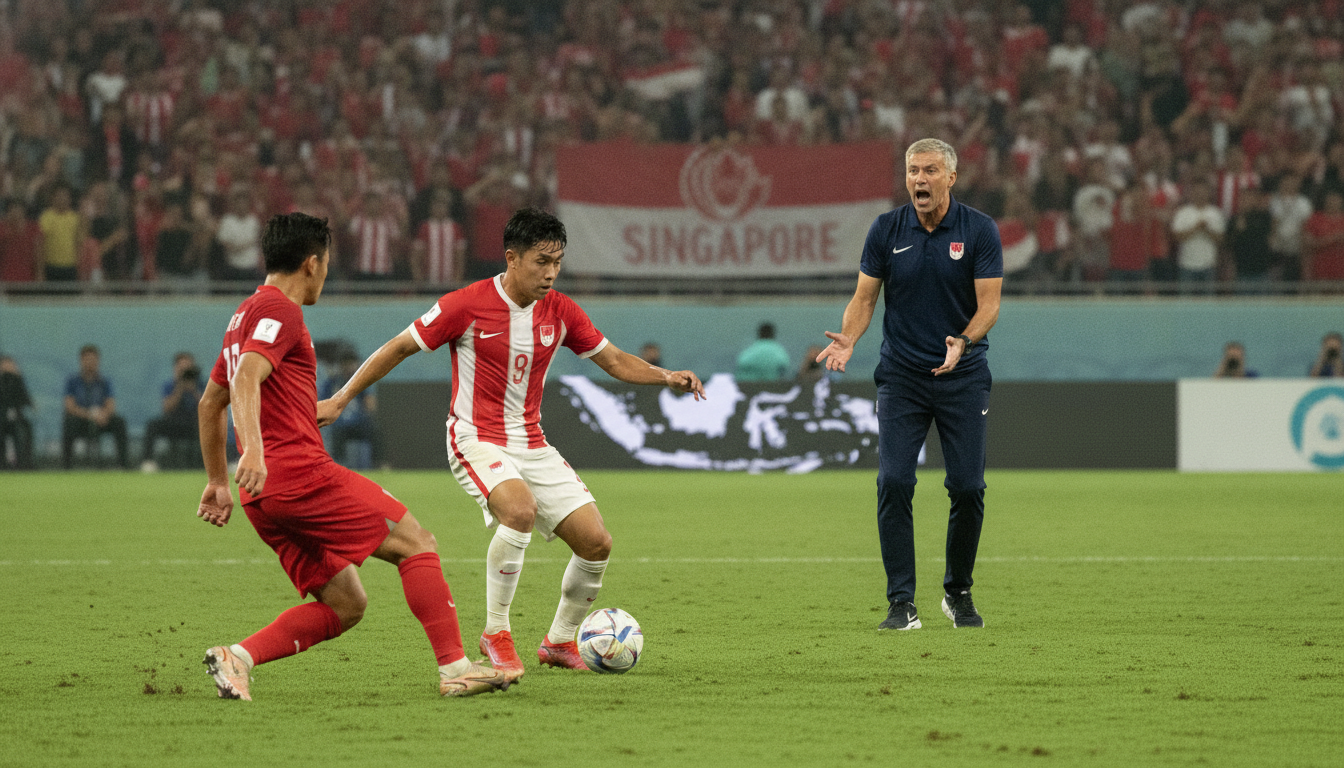
Indonesia vs Singapore: Herdman vows readiness in must-win ASEAN Hyundai Cup 2026 clash
Indonesia coach John Herdman demands focus and ‘fire’ as his side chase a must-win against Singapore in the ASEAN Hyundai Cup 2026 Group A decider.


High stakes as Indonesia head to Singapore for Group A decider
Indonesia travel to Singapore on August 7, 2026, needing a victory to keep their ASEAN Hyundai Cup 2026 title defence alive. A draw would see hosts Singapore progress at Indonesia’s expense, making the match a clear knockout moment in Group A. The pressure follows a 3-0 home defeat to defending champions Vietnam that left Herdman’s side with no margin for error. Expectation in Jakarta and among supporters will hinge on whether Herdman can translate training ground corrections into a performance on matchday.
Herdman highlights lessons from Vietnam defeat and defensive priorities
After the loss to Vietnam, Herdman described several positives but acknowledged weakness in defensive transition that must be addressed. He has focused training on tightening the moments when possession is lost, insisting the team must be more disciplined and compact between phases. Herdman also spoke about keeping players calm while igniting competitive intensity, blending composure with urgency ahead of the Singapore match. That balance will shape Indonesia’s setup and selection as they attempt to avoid repeating the lapses that cost them against Vietnam.
Singapore enter with a point to spare but face selection blow
Singapore will progress to the semi-finals with a draw, having built their position through wins over Cambodia and Timor-Leste and a draw with Vietnam. The hosts, however, will be without midfielder Kyoga Nakamura due to suspension, a loss that forces Gavin Lee to tweak his midfield options. Lee has been clear that Singapore will not fundamentally change the way they play simply because of the qualification scenario. The absence of Nakamura raises questions about control in midfield and which players will be asked to manage tempo and defensive cover.
Tactical contrasts: differing identities set up an intriguing battle
Herdman has repeatedly said Singapore present a different challenge from Vietnam, pointing to contrasting tactical identities and match rhythms. Indonesia will need to account for Singapore’s willingness to play forward and press in phases, rather than sitting deep for a point, according to Herdman’s remarks. The tactical chess-match could revolve around which side can impose their structure in midfield and how quickly each team can transition between attack and defense. Set-pieces and moments of individual brilliance may prove decisive given the narrow margin separating the teams in the standings.
Mental approach and group unity central to Indonesia’s response
Herdman has emphasised unity and a collective approach as foundations for Indonesia’s recovery, urging players to commit to a common process. He framed the squad as “wounded” but motivated, aiming to convert disappointment into determination and collective belief. The coach’s message blends calmness with a fighting spirit, asking players to trust the plan while bringing intensity to the pitch. That psychological reset will be as important as tactical adjustments when the teams meet under Singapore’s lights.
Singapore’s strategy: keep identity intact, adapt late if needed
Gavin Lee has insisted Singapore’s performance principles will remain unchanged, even with a straightforward qualification route available. His team has qualified for the semi-finals in three of the last four tournaments and will seek to reach another final phase by expressing their football. Lee has also signalled that situational intelligence will guide late-game decisions, hinting at pragmatic substitutions or adjustments if the match scenario demands it. For Singapore, the priority appears to be maintaining structure and composure while remaining alert to opportunities to press for a win.
Fixture atmosphere, crowd influence and regional implications
Playing in Singapore gives the hosts home advantage, including familiarity with the venue and support from local fans that could shape momentum. Indonesia’s players will face an intense atmosphere where early incidents or crowd energy could swing confidence and tempo. Beyond group qualification, the result will influence regional perceptions of both teams ahead of future tournaments and squad selections. A win for Indonesia would revive their title defence hopes, while a Singapore win or draw would confirm their progression and underline their consistency in the competition.
Indonesia’s likely tactical adjustments will target transition zones and set-piece organisation, reflecting the coach’s post-Vietnam priorities.
Herdman may opt for greater defensive compactness without abandoning forward intent, selecting players who combine physical presence with quick outlet passing. Singapore’s coach will weigh the need to control midfield against an opportunity to exploit spaces if Indonesia push men forward. Both sides must manage the fine margin between positive aggression and leaving gaps that can be exploited on the counter.
Player matchups to watch include the midfield battle for tempo and the duels on the wings where both teams can create overloads.
Indonesia will need midfielders capable of recycling possession quickly and offering defensive cover to blunt Singapore’s pressing triggers. Singapore’s replacements for Nakamura must provide discipline and creative balance to prevent Indonesia from controlling the game’s rhythm. Wing play may decide whose full-backs can advance safely and which team can turn territorial advantage into goal-scoring chances. Coaches will also watch bench options closely, as tactical substitutions could determine the match outcome in the closing stages.
Discipline and game management will be crucial in the closing minutes, especially given the qualification permutations.
A single card or an ill-timed foul could alter the balance of the match and force unexpected tactical reshuffles. Herdman and Lee both indicated they are prepared to make intelligent decisions as the match unfolds, prioritising the collective goal over individual risk-taking. For Indonesia, maintaining composure during the final phases will be essential to protect leads or chase a required result. For Singapore, shrewd time management and defensive organisation could secure the point needed to progress.
The result will have immediate consequences for semi-final draw and medium-term effects on squad selection ahead of future fixtures.
If Indonesia win, they will keep alive hopes of defending their title and provide Herdman with tactical validation for the changes he implements. A Singapore advance would reinforce Gavin Lee’s approach and underline the hosts’ consistency across recent tournaments. Both coaching camps will also use the game as an assessment tool for young players and fringe internationals seeking to stake a claim for upcoming fixtures. The match therefore serves as a competitive priority and a broader evaluation of depth, temperament and tactical flexibility.
The teams will meet with contrasting motivations but a similar professional focus: Indonesia to redeem and progress, Singapore to secure and advance with their identity intact.
The match in Singapore on August 7 will likely be tight, tense, and decided by small details, and both sides understand the stakes in the wider ASEAN Hyundai Cup 2026 context. The tactical battle, managerial decisions, and players’ mental responses will determine who moves on to the semi-finals. Whatever the outcome, the fixture promises a clear test of preparation, cohesion, and composure under pressure.