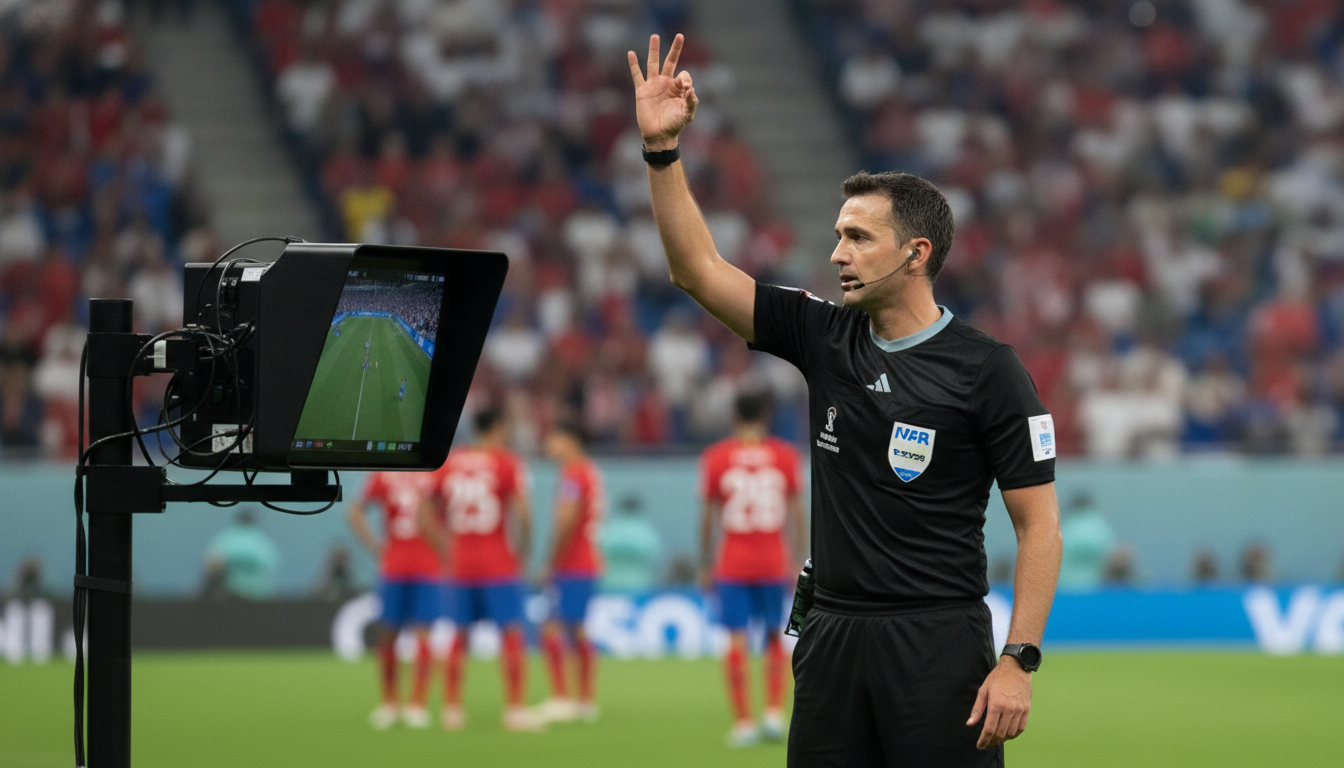
FIFA Probes Shaun Evans Hand Gesture After VAR Camera Cut During Germany v Curaçao
FIFA is seeking clarification after the Shaun Evans hand gesture—an inverted ‘OK’ sign—was seen on screen during Germany’s 7-1 victory over Curaçao, prompting immediate public debate. The hand signal, captured when cameras cut briefly to the VAR room, has drawn scrutiny because it is interpreted in very different ways by viewers. FIFA has told sources it is asking Evans for an explanation, while social media and commentators have offered competing readings of the action. The governing body has not yet issued a formal ruling or public statement.


FIFA Seeks Explanation from VAR Official
FIFA has opened an inquiry and is requesting a formal account from Shaun Evans about what he intended with the hand gesture seen on live broadcast. The organization’s initial steps, according to people close to the matter, involve direct questions to the Australian referee rather than an immediate disciplinary sanction. That approach indicates FIFA wants to establish motive and context before determining whether any rules were breached. A measured, fact-based response is consistent with FIFA’s standard practice in referee conduct reviews.
Broadcast Moment That Sparked Scrutiny
Television cameras briefly cut to the VAR area during the match and showed Evans standing in the control room before he formed an inverted ‘OK’ sign with his right hand. The shot was short but clear enough for viewers to freeze frames and share clips online within minutes. The timing—during a high-profile international friendly—meant the image circulated widely and quickly became the focus of debate. Broadcasters and league officials have noted how trivial-seeming actions in a glass-walled operations room can take on outsized significance when captured live.
Two Dominant Interpretations of the Gesture
There are two main interpretations being discussed in public forums and among observers: a benign, playful gesture from a childhood “gotcha” game, and a symbol that has been adopted by extremist groups. The inverted ‘OK’ shape has long been used in informal pranks where the aim is to get another person to look at the circle near the hip; proponents of this reading say Evans may simply have been joking. Critics point out that the same hand symbol has been appropriated by some as a sign of white supremacy, and they argue any use by an official in an international match merits careful scrutiny. FIFA’s inquiry will need to evaluate which interpretation fits the specific context and whether any intent to offend can be reasonably established.
Online Reaction and Media Debate
The image of the gesture produced a rapid, polarized response across social platforms, with some users insisting the moment was innocuous and others demanding an explanation or sanction. Clips and screenshots were shared with varying captions that framed the action as either a harmless prank or evidence of a troubling political statement. Independent fact-checkers and commentators attempted to trace the origin and common uses of the symbol, but short-form video and meme culture complicated efforts to settle the issue quickly. The intensity of the online reaction highlights how quickly a routine broadcast cut can become a wider reputational problem for officials and governing bodies.
Possible Disciplinary Paths and FIFA Procedures
If FIFA’s review finds evidence of misconduct, several courses of action are available, ranging from a private reprimand to formal disciplinary measures under its code of ethics. In practice, governing bodies often weigh intent, context, and prior conduct before deciding whether to impose sanctions on match officials. An internal investigation will typically involve a request for written explanation, review of video footage, and consultation with relevant committee members who oversee referee behavior. Any outcome will likely be communicated through an official FIFA channel once the federation completes its review and decides whether the matter warrants further action.
How This Fits with Past Football Controversies
Football has a history of controversies arising from gestures or statements by players and officials that later required adjudication by governing bodies. National associations and international federations have moved in past cases to sanction discriminatory language or symbols when intent could be established. That precedent means many observers expect FIFA to follow a documented process rather than issue an immediate verdict based on social media reaction alone. The handling of this incident will be watched closely as an indicator of how decisive and transparent FIFA will be when dealing with ambiguous conduct captured on international broadcasts.
What Officials and Stakeholders Are Saying
Representatives connected to match operations have so far emphasized the need for a calm, evidence-led assessment and urged the public to avoid definitive judgments before FIFA completes its review. Refereeing bodies frequently stress that a single frame of footage may not convey the full context of an action inside a working room. Media outlets covering the story have sought comment from refereeing authorities and from observers familiar with VAR protocols to better understand the environment in which the gesture occurred. Until FIFA publishes its findings, statements from third parties will shape public perception but not replace the federation’s formal determination.
Implications for Referee Visibility and Broadcast Practices
The episode highlights the visibility of match officials in modern stadium and broadcast environments and underscores the risk that informal behavior will be amplified. VAR rooms are now a standard part of elite match operations and are often in camera view, which increases the potential for incidental conduct to be seen by a global audience. Some broadcasters and event organizers may revisit camera placement and live cut policies to reduce the chance of similar misunderstandings. Any procedural changes would be aimed at balancing transparency in officiating with the need to minimize inadvertent controversies.
The inquiry into the Shaun Evans hand gesture remains ongoing and FIFA’s ultimate findings will determine whether the matter is closed, or whether it triggers formal disciplinary follow-up. In the meantime, the incident serves as a reminder of how quickly a fleeting image in the VAR room can ignite intense public scrutiny and debate.