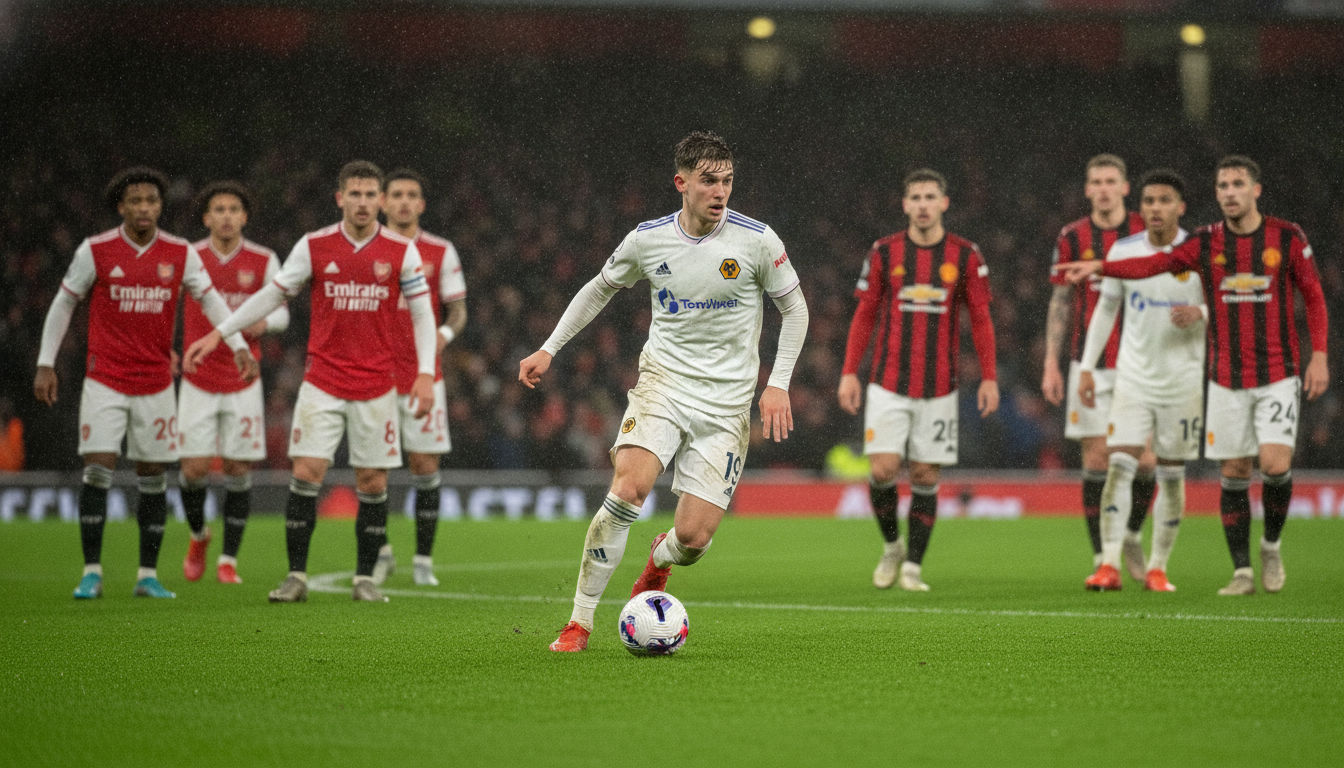
Morgan Gibbs-White transfer sparks Premier League bid battle as Arsenal and Man Utd circle
Morgan Gibbs-White transfer: Arsenal and Man Utd are among clubs tracking the Nottingham Forest captain after his 2025–26 breakout, with a summer bidding contest likely.


Morgan Gibbs-White transfer interest has emerged as a major storyline this summer after the Nottingham Forest midfielder completed a standout 2025–26 campaign. Reports indicate Arsenal and Manchester United are leading a cohort of suitors monitoring the England international, with additional Premier League and European clubs expected to engage. The potential move would mark a pivotal moment for Gibbs-White and for the clubs weighing whether to meet Forest’s valuation.
Arsenal and Manchester United Lead Transfer Race
Arsenal and Manchester United have been linked most prominently with a move for Gibbs-White, each viewing him as a solution to specific midfield and attacking needs. Sources familiar with transfer thinking at both clubs describe the player as a Premier League-proven creative threat who also brings pressing intensity and goal threat. For Arsenal, the appeal centers on adding more directness and late-box arrival from midfield to complement their existing front line.
Manchester United see Gibbs-White as someone who can both create chances and contribute measurable goal output from midfield zones, matching a recruitment pattern focused on dynamic, attack-minded players. Both clubs are expected to perform careful due diligence on wages, fit, and long-term project alignment before lodging formal offers. The scale of interest from top clubs could force Forest into a position where they extract a premium.
Negotiations, if they begin in earnest, will likely involve structured bids and performance-linked incentives rather than a simple flat fee. That process could extend into the late stages of the summer window as clubs weigh their options and reconcile budgets.
Gibbs-White’s 2025–26 Breakout by the Numbers
Gibbs-White produced one of the most productive seasons of his career in 2025–26, scoring 18 times across competitions and adding seven assists. His 15 goals in the Premier League placed him among the division’s most prolific English midfielders, illustrating a rare blend of finishing and creative contribution from a central role. Those returns came alongside consistent defensive work, with above-average recoveries and duel-winning figures that underline his all-around impact.
Statistically, Gibbs-White combined a high volume of attempts with respectable accuracy, demonstrating both confidence and consistency in advanced areas. His average recoveries per 90 and possession wins in the final third reflect a player capable of influencing transitions at both ends of the pitch. Forest’s European run to the Europa League semi-finals further showcased his capacity to perform on a larger stage against continental opposition.
The numbers explain why he has drawn attention domestically and abroad, and why clubs weighing the transfer see him as a high-upside addition rather than an uncertain gamble. Performance data from last season forms the backbone of any recruitment case, and Gibbs-White’s metrics present a persuasive argument.
Contract Position and Forest’s Transfer Stance
Gibbs-White is contracted to Nottingham Forest through June 2028 after signing an extension that followed reported interest from Tottenham the previous summer. That longer-term deal strengthens Forest’s negotiating position, allowing the club to demand a significant fee rather than being forced into a quick sale. Club officials are likely to drive a hard bargain given his role as captain and the timing following a career-best season.
Forest value him as a central asset to both on-field plans and broader commercial strategy, and they will seek compensation that reflects his impact and market demand. Owner-level interventions and sporting director oversight have combined in recent windows to slow down or block departures, a posture that could recur if bids do not meet expectations. Any move will therefore require careful coordination between sporting, financial, and boardroom stakeholders.
That stance makes a transfer possible but costly for suitors aiming to secure the player without disrupting their wage structures or squad harmony. How clubs structure their proposals will be central to whether negotiations progress beyond preliminary interest.
Tactical Fit for Mikel Arteta and Erik ten Hag
For Arsenal, Gibbs-White presents attributes that align with Mikel Arteta’s search for midfielders who can add directness and finishing to the final third. His ability to carry the ball at pace, break lines, and arrive late into scoring positions complements a system that prizes progression and overloads in attacking phases. Arteta would likely deploy him as a shuttling number 8 who can interchange with attackers and exploit half-space opportunities.
At Manchester United, Erik ten Hag could view Gibbs-White as a versatile operator capable of slotting into several tactical shapes, whether as part of a two-man engine room or a more advanced three. His pressing intensity and chance creation would be valuable in a system that demands high work-rate and verticality from its midfielders. Both managers would also need to consider squad balance, ensuring that bringing Gibbs-White into the fold does not displace critical structural roles.
Fitness, adaptability, and chemistry with existing playmakers will be evaluated during medicals and early planning stages if a move reaches agreement. Tactical fit often separates speculative interest from serious recruitment, and Gibbs-White ticks many boxes for top-level Premier League projects.
Rivals and European Interest Intensify Competition
Beyond Arsenal and Manchester United, the field is reported to include Chelsea, Tottenham Hotspur, Manchester City, and a number of European clubs, increasing the complexity of the market. Rival bids from clubs with differing financial strength and tactical needs can quickly push fees upward and shorten negotiation windows. European suitors tend to offer different contract terms and sporting visions, which may appeal to the player depending on his priorities.
Competition raises the possibility of an auction environment that would allow Forest to maximize the return on a player who is still improving and entering his prime. It also forces interested teams to present a clear sporting plan and competitive wages to persuade the player and his representatives. The existence of multiple credible suitors strengthens Gibbs-White’s negotiating leverage and could influence any final destination.
Timing will also be a factor, as clubs involved in European qualifiers or those changing managers may delay decisive moves until their summer planning is clearer. That uncertainty could stretch talks across weeks, making the window’s end date a crucial deadline.
Financial Outlook and Market Impact
Market analysts expect Gibbs-White’s transfer value to exceed common online valuations, with Forest unlikely to accept a price near the previously cited £60 million tag if stronger offers emerge. The player’s recent output and age profile make him a premium asset, and clubs prepared to invest in immediate attacking returns may view the cost as justified. Structured payments, add-ons for goals and appearances, and sell-on clauses are likely to feature in any agreement.
A high-profile sale would also have ripple effects across the Premier League transfer market, influencing valuations for similar midfielders and reshaping recruitment priorities for clubs chasing attacking midfield goals. For Forest, proceeds could fund reinforcements and infrastructure while altering the club’s short-term competitive plans. For the buying club, integrating Gibbs-White successfully could deliver instant returns on goal contribution and squad depth.
Financial prudence remains an opposing force, with salary caps, Financial Fair Play considerations, and strategic targets tempering how aggressively teams spend. Clubs will need to balance ambition with stability when preparing bids.
Gibbs-White’s decision-making will be influenced by playing time prospects, strategic fit, personal terms, and the chance to compete in European competitions. Those factors, combined with Forest’s valuation and the scale of interest, will determine whether the transfer materializes this summer or is deferred.
Reports indicate the coming weeks could see formal approaches, exploratory talks, and public posturing from interested parties, making this one of the transfer window’s more closely watched stories. The eventual outcome will reveal how Premier League clubs prioritize attacking midfield reinforcements and how Forest responds to offers for a homegrown leader.
Negotiations will hinge on deadline timing, willingness to pay, and the player’s readiness to embrace a new chapter. The Gibbs-White saga is likely to provide late-window drama and could reshape several squads if a deal is concluded.
As the summer window progresses, all eyes will be on how negotiations unfold and which club is prepared to meet Forest’s demands while offering Gibbs-White a compelling sporting case. The coming weeks should clarify whether a move is imminent or whether the captain will remain at the City Ground for another season.