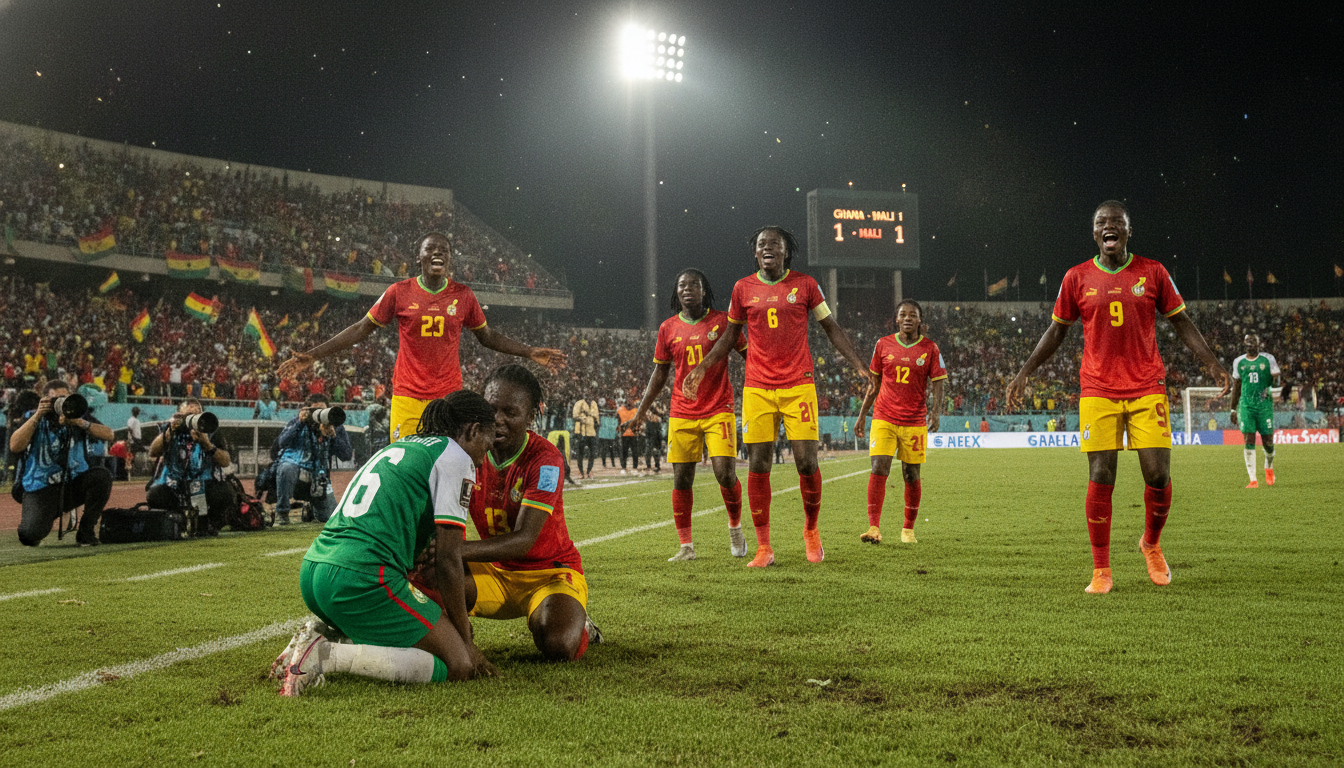
Ghana reach CAF Women’s Africa Cup of Nations quarter-finals after 1-1 draw with Mali
Ghana reached the CAF Women’s Africa Cup of Nations Morocco 2026 quarter-finals after a hard-fought 1-1 draw with Mali, securing second place in Group D and progression to the knockout stage.


Ghana booked their place in the quarter-finals of the TotalEnergies CAF Women’s Africa Cup of Nations Morocco 2026 with a tense 1-1 draw against Mali at the Larbi Zaouli Stadium in Casablanca. The Black Queens took the lead with a late first-half goal from Evelyn Badu before Kadidiatou Diabate equalised early in the second half, forcing a nervy finish. The result, combined with a draw in the other Group D fixture, meant Ghana advanced on points and goal criteria to keep their continental and World Cup hopes alive.
Late Badu strike hands Ghana the lead
Deep into first-half stoppage time, Comfort Yeboah cut a decisive pass into the penalty area that found Evelyn Badu, who finished calmly to give the Black Queens a priceless advantage. The timing of the goal — just before the break — shifted momentum and allowed Ghana to head into halftime with both a lead and the confidence that a draw would very likely see them through. The strike sparked clear celebrations on the Ghana bench and among travelling supporters, who sensed progression was within reach.
Mali hit back minutes after the restart
Mali emerged from the interval with renewed intensity and found an immediate reward when Kadidiatou Diabate carved space inside the Ghana box and finished clinically five minutes into the second half. The equaliser restored balance to the contest and reopened Mali’s route to the quarter-finals, prompting a tactical re-think from both camps. The scoreline produced a frantic middle period as Mali pushed for a second goal and Ghana reorganised defensively while seeking chances on the break.
Group D permutations and final standings
Ghana’s draw, taken alongside Cape Verde’s 1-1 draw with Cameroon, left Cameroon top of Group D on seven points while the Black Queens finished second on four points. Mali also accumulated four points but were eliminated on goal difference, bringing a bitter end to their campaign despite a spirited showing in Casablanca. Tournament debutants Cape Verde concluded their first AFCON with one point but earned praise for their performances and competitive debut at this level.
Tactical battle and key moments at Larbi Zaouli Stadium
The match unfolded as a calculated chess game, with Ghana controlling possession for significant stretches while Mali remained compact and dangerous on transitions. Mali’s game plan was disrupted early when Aïssata Kanté sustained an injury around the 22nd minute, forcing coach Birama Konaté into an unplanned reshuffle and an early tactical adjustment. Both sides created few clear-cut chances in the opening period, reflecting the match’s high stakes and the caution typical of decisive group-stage encounters.
Substitutions shaped the closing stages as Ghana manager Kim Lars Björkegren introduced attacking reinforcements to manage the game and add fresh legs. Players such as Stella Nyamekye, Doris Boaduwaa, Linda Owusu and Ajegipina Zakaria were summoned to increase tempo and relieve defensive pressure. Mali also turned to their bench in search of a late winner, but despite several promising moments neither side could alter the scoreline in the final quarter of an hour.
Coaching decisions and discipline decide tight contest
Björkegren’s pre-match message, urging his players to remain composed after a narrow defeat to Cameroon, was reflected in Ghana’s measured approach to the fixture. The Black Queens displayed defensive discipline in the second half, absorbing pressure and managing spaces to prevent Mali from producing a telling finishing opportunity. Mali’s willingness to press higher and chase the decisive goal tested Ghana’s shape, but tactical discipline and timely substitutions helped the West Africans maintain control of the most crucial variable: the points on the board.
Implications for Ghana’s World Cup ambitions
Progressing to the quarter-finals keeps Ghana firmly in contention for qualification routes that run through an expanded Women’s Africa Cup of Nations, and it sustains their ambition to return to the FIFA Women’s World Cup in 2027. The win-and-draw pattern required for deeper tournament runs demands consistency and sharper attacking output, areas Ghana will need to refine ahead of the knockout phase. As the competition intensifies, the Black Queens must combine defensive resilience with a more clinical edge in front of goal to convert tight matches into victories.
Mali exit leaves positives amid disappointment
For Mali, exiting on goal difference will be a hard pill to swallow, but the Lady Eagles leave Morocco with encouraging signs about their development and competitiveness. Their response after conceding just before halftime — highlighted by Diabate’s composed finish — demonstrated mental strength and an ability to alter the tempo at critical moments. The injury to Kanté and other disruptions hindered their rhythm, yet overall Mali’s campaign underlined a growing depth and tactical maturity that should serve them well in future tournaments.
What comes next for the quarter-finals hopefuls
Ghana now turn their attention to the knockout draw and the stiffer tests that follow as the competition narrows to the continent’s leading sides. Preparations will focus on recovery, tactical fine-tuning and targeting shortcomings from the group stage, particularly their ability to convert possession into high-quality scoring chances. The Black Queens’ objective will be to build on the defensive composure shown in the group decider while sharpening attacking combinations to avoid relying on narrow margins in single-elimination fixtures.
Ghana’s journey in Morocco continues, with the quarter-finals offering both risk and opportunity as they pursue continental silverware and a pathway toward the 2027 World Cup. The Black Queens negotiated a crucial first hurdle by securing the point they required, and now face a knockout test that will demand greater clinical finishing and sustained concentration across 90 minutes. The mission goes on for Ghana, whose players and coaching staff will aim to turn this cautious progress into a deeper run in the tournament.