Argentina VAR controversy deepens as Argentina prepare for 2026 World Cup final
Argentina VAR controversy shadows Lionel Messi as Argentina reach the 2026 World Cup final, igniting global debate over refereeing, VAR rulings and fairness.


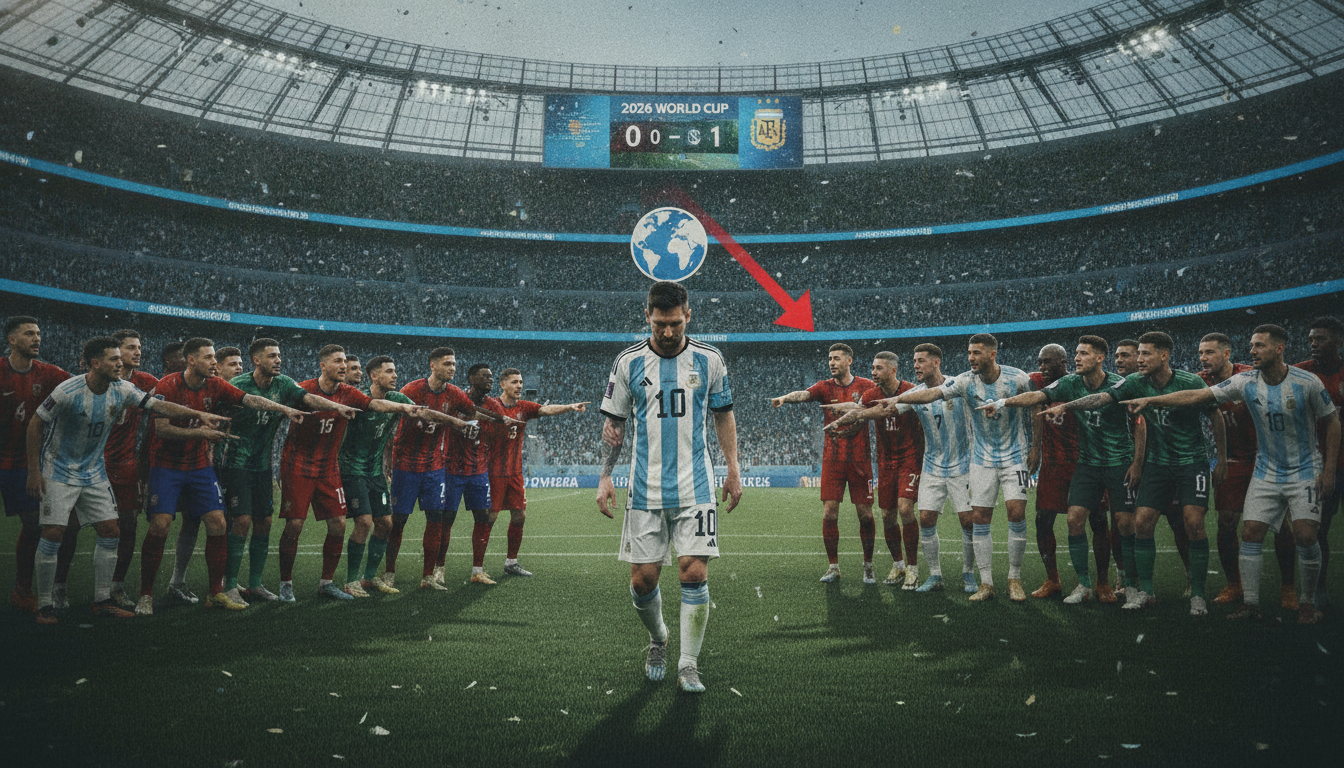
While Lionel Messi remains globally admired, the Argentina VAR controversy has turned the national side into the most distrusted team left at the 2026 World Cup ahead of Sunday’s final. The split between adulation for Messi and suspicion of his team has hardened in recent weeks, driven by a string of contentious officiating episodes and an online backlash that has framed Argentina’s run as unusually fortunate. As Argentina prepare to face Spain, critics, federations and fans are debating whether the controversy reflects systematic bias or the growing pains of expanded VAR protocols.
Public outcry and the ‘VARgentina’ label
A broad digital backlash has attached the label "VARgentina" to the team, a meme that has migrated quickly from social media into mainstream commentary. Reports of a petition seeking Argentina’s expulsion circulating with millions of signatures and polls in neighboring countries have amplified the sense that public trust has eroded. That reaction is not just noise; it reflects how a sequence of high-profile decisions can shape a tournament narrative irrespective of the finer points of the rulebook.
The emotional disconnect is striking because it separates the individual from the institution: Messi’s personal popularity has hardly dimmed, while the national side’s legitimacy is being questioned. Fans who celebrate Messi’s career achievements also express frustration at what they see as inconsistent refereeing, creating a complicated atmosphere for the final. This dissonance has made the match less about two teams and more about the integrity of officiating in a tournament that promised technological clarity.
Key moments that changed perception
Several pivotal calls are now central to the controversy narrative. Early in the group stage, a moment in Argentina’s match against Algeria — where Messi stepped on an opponent’s calf — drew scrutiny because it was not punished and preceded a hat-trick. That incident has been cited as one of the few calls which observers say genuinely fell in Argentina’s favour on the field.
The Round of 16 clash with Egypt is widely viewed as the flashpoint. A disallowed Egyptian goal after a marginal foul and two late penalty appeals that were waved away in stoppage time crystallised complaints of inconsistency. Egypt’s federation lodged an official protest, and their coach publicly questioned the fairness of the decisions, a reaction that helped turn isolated refereeing controversies into an international dispute.
The Switzerland decision and mistaken-identity rule
Controversy surged in Argentina’s quarter-final with Switzerland after a rare application of a new “mistaken identity” protocol. A booking initially given to Argentina’s Leandro Paredes was reversed, and the referee instead booked Breel Embolo for simulation — a verdict that resulted in Embolo’s dismissal because he had already been cautioned. Switzerland’s coach and captain described the outcome as decisive and unacceptable, arguing the intervention effectively rewrote the match after the fact.
That episode exposed how procedural innovations can have outsized consequences when they are imperfectly understood or inconsistently applied. Critics argue the mistaken-identity rule was used in a manner that extended beyond correcting administrative error and into overturning an on-field sporting balance. The result — a team reduced to ten men and a late extra-time defeat — intensified perceptions that VAR was capable of changing the competitive shape of crucial fixtures.
Semi-final controversy and inconsistent sanctioning
The semi-final with England added further heat to discussions of fairness. Early in the match, an elbow incident involving Enzo Fernández and an England player drew attention when the referee did not issue a card, while comparable incidents during the game received cautions for other players. Those contrasting outcomes fed a narrative of inconsistency that critics say has been a feature of multiple matches.
England’s press and former refereeing officials pointed to what they described as missed opportunities to assert control by match officials. Analysts noted that such selective enforcement can alter momentum and perception even when decisions are technically defensible under the laws of the game. The late goals that saw Argentina progress only hardened the view among many neutrals that the team’s path had been unusually smoothing by officiating outcomes.
Rule changes and the expansion of VAR scope
Several of the disputes stem from rule modifications introduced for the 2026 competition, which widened VAR’s remit to include cases of mistaken identity and incorrectly awarded second yellow cards. Those changes were intended to refine fairness by rectifying administrative errors, but their application has revealed operational and interpretative limits. Referees and VAR officials are navigating new protocols under intense global scrutiny, and early missteps have significant reputational cost.
Refereeing authorities argue the adjustments were introduced to improve justice on the pitch, and they point to instances where VAR corrected clear errors. However, opponents contend that expanding the VAR toolbox without full consensus on its boundaries has increased controversy rather than reducing it. The tension between rule fidelity and perceived equity underlies much of the current debate.
Data analysis and what the numbers show
Independent analytics groups have tried to quantify whether Argentina truly benefitted more from VAR than other teams. A study by a university sports-analytics unit placed Argentina among the teams that received a high number of favourable VAR interventions, with Argentina registering as the second-largest beneficiary overall in certain metrics. Researchers caution, however, that such figures reflect the frequency of interventions for fouls captured by VAR rather than proving intentional bias.
The statistics are double-edged: they can validate popular suspicions and also demonstrate the limits of interpretation. While Argentina’s tally of favourable interventions is conspicuous, analysts stress that raw intervention counts do not account for the context of each decision, the timing within matches, or the degree to which interventions corrected on-field errors. That nuance has done little to calm public debate, but it is important for a balanced assessment.
Responses from football authorities and rival teams
FIFA officials have defended the refereeing record, with senior figures publicly reviewing specific decisions and insisting the overall officiating met professional standards. FIFA’s refereeing leadership and the organisation’s president have both offered point-by-point responses to the most debated moments, attempting to reassure stakeholders that processes were followed correctly.
National team coaches and captains on the receiving end of controversial calls have been far less diplomatic. Figures from Egypt, Switzerland and England voiced frustration, and some called for clearer guidance and training for referees under the revised rules. Independent refereeing analysts have also urged governing bodies to issue explanatory guidance and post-match transparency to rebuild public confidence ahead of the tournament’s climax.
Spain now stands between Argentina and a rare successful title defence, built on a defensive structure that has conceded very little across seven matches. The matchup will be read through dual lenses: tactical battle and an informal referendum on whether the contest’s path to the final was above reproach. For many neutral supporters, the demand is simple — a clean, undisputed match decided on the field.
The coming final will test whether debate over the Argentina VAR controversy fades with a decisive on-pitch outcome or hardens into a lasting question about VAR’s role in major tournaments. Fans and officials will be watching not only for the winner but for how the match is refereed and whether authorities can demonstrate consistency in decisions.
As Argentina chase a consecutive World Cup title, hopes of a clear sporting resolution rest on a single match. The tension between admiration for Messi and mistrust of the team’s journey has set up a final that is as much about perception as it is about tactics. Regardless of Sunday’s scoreline, the tournament has raised urgent questions about the implementation of technology in football and the ways in which rules, interpretation and public opinion intersect in a global sport.