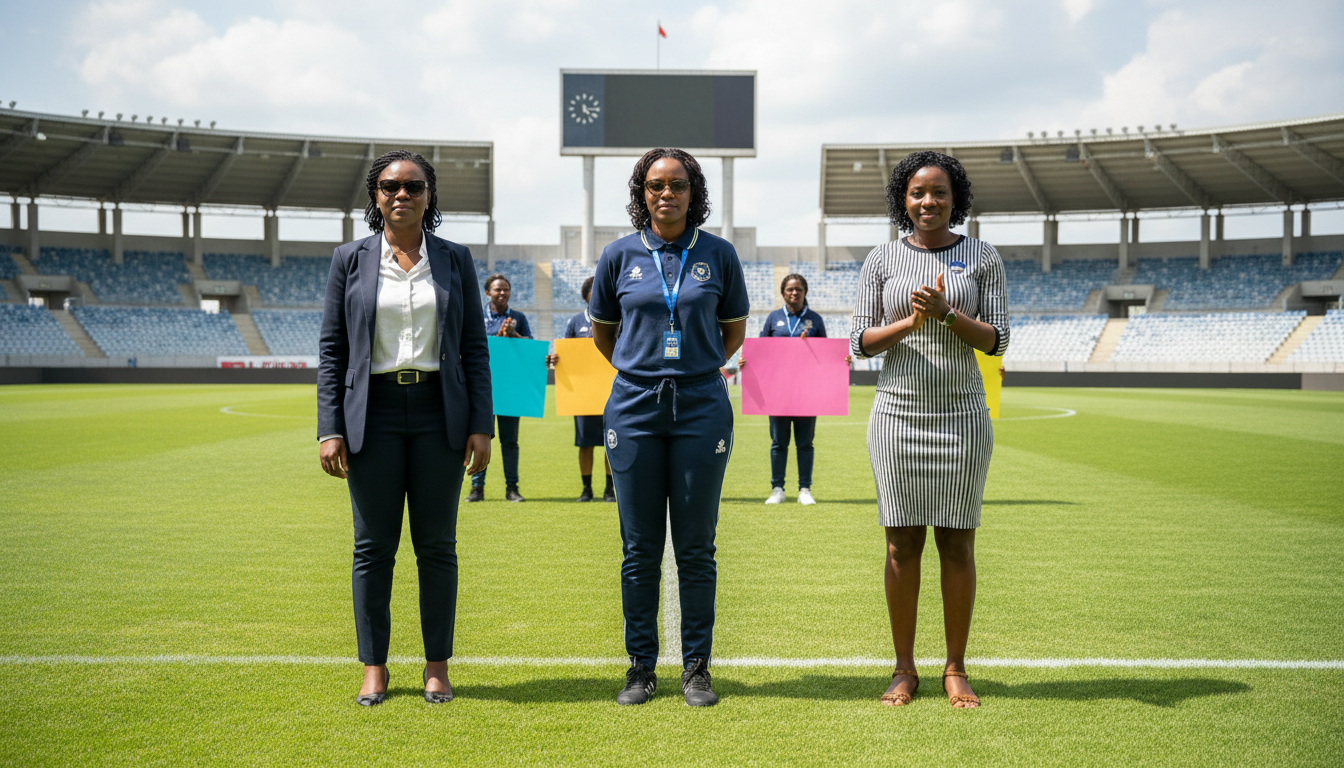
Three Candidates Cleared for LFA Women’s Representative Seat Ahead of May 15 Elections
Seton, Woodson and Findley cleared to contest the LFA Women’s Representative seat, in a pivotal race shaping the direction of women’s football in Liberia ahead of May 15.


The Liberia Football Association (LFA) announced that three candidates have been officially cleared to contest the single Women’s Representative seat on the LFA Executive Committee, intensifying a high-stakes race that will help determine the future direction of women’s football in Liberia. The contest for the LFA Women’s Representative — featuring incumbent Jodie Marian Reid Seton, former LFA executive committee member Rochell G.D. Woodson, and ex-player and club executive Kaddieyatu Darrah Findley — has mobilized stakeholders across the football community and framed the May 15 election timeline as a defining moment for the sport. Delegates, clubs and advocacy groups are now focusing on policy differences, governance priorities and practical plans for player welfare and grassroots growth as they prepare to cast their votes.
Three Candidates Cleared for LFA Women’s Representative Race
The field for the LFA Women’s Representative seat is compact but diverse, with each candidate bringing a different mix of administrative experience, governance credentials and on-field perspective to the contest. Seton seeks another term on the Executive Committee, Woodson is positioning herself as a reform-minded returnee with international committee experience, and Findley is running as a voice for former players and grassroots development. The formal clearance of all three candidates sets the stage for a concentrated campaign period in which policy specifics, coalition-building and delegate outreach will determine the outcome.
Seton Campaign: Continuity, Development and Institutional Strengthening
Incumbent Jodie Marian Reid Seton is campaigning on a platform that emphasizes continuity, the expansion of youth and grassroots programs, and the modernization of facilities to support female players across Liberia. Her messaging—framed around "Leadership, Passion, and Progress" and the rallying line "Together, We Build the Future"—focuses on building sustainable systems, improving player welfare and consolidating governance practices already under way at the LFA. Supporters of Seton argue that her time on the Executive Committee gives her practical knowledge of LFA operations, enabling her to advance reforms more quickly and to coordinate resource allocation for youth development and coaching education.
Seton’s Policy Priorities and Institutional Record
Seton’s stated priorities include targeted investment in grassroots leagues, enhanced welfare provisions for players, and the rehabilitation or upgrading of training and match facilities to meet emerging standards. She has highlighted the need for transparent budgeting and stronger administrative processes to ensure that funds directed at the women’s game are used efficiently and reach clubs and players at the community level. Observers note that Seton’s campaign seeks to balance immediate needs—such as equipment and welfare—with longer-term institution-building aimed at attracting sponsors and improving competitive pathways for girls and women.
Woodson Emphasizes Governance Reform and International Experience
Rochell G.D. Woodson has cast her bid for the Women’s Representative seat as a push for governance reform, increased transparency and stronger institutional integrity across the LFA. Woodson cites her prior tenure on the Executive Committee and her work on the FIFA Women’s Football Committee as evidence of experience in both domestic administration and international policymaking, arguing that Liberia can benefit from global best practices adapted to local realities. Her public statements stress that accountability, inclusive decision-making and strategic planning are essential if the women’s game is to become a central pillar of national football development rather than an afterthought.
Woodson’s Strategic Alliances and Platform Commitments
Woodson has made a notable political move by endorsing the third-term bid of LFA President Mustapha I. Raji, saying that continued leadership at the top combined with improved governance frameworks could accelerate infrastructure projects and capacity-building programs. Her platform includes proposals for independent oversight mechanisms, participatory budgeting for women’s football initiatives, and strengthened pathways to leadership for female administrators at regional and club levels. Supporters believe Woodson’s combination of domestic experience and international exposure positions her to reform administrative processes while expanding opportunities for women to participate in governance.
Findley Frames Candidacy Around Player Experience and Advocacy
Kaddieyatu Darrah Findley enters the race as a former league standout and a past executive of Invincible Eleven, presenting herself as a candidate rooted in lived experience of the playing environment in Liberia. Her campaign slogan, "I played the game," is intended to remind delegates that policies affecting athletes should be informed by those who have experienced the challenges of competition, training and career transitions firsthand. Findley’s narrative emphasizes direct representation for players, with a particular focus on welfare, career development, and mechanisms that protect athletes’ rights both during and after their playing careers.
Findley’s Priorities on Welfare, Career Paths and Grassroots Support
Findley has pledged to prioritize concrete, player-facing measures including standardized welfare protocols, educational and vocational support for female footballers, and strengthened local leagues to provide consistent competitive opportunities. She argues that the lack of systematic support structures has limited the progression of talented players from school and community teams into professional or national pathways, and that remedying this requires targeted investments and policy changes at the LFA level. Her supporters and allies within the player community contend that a seat held by a former player would shift decision-making toward practical interventions rather than abstract policy discussions.
Stakeholder Perspectives and the Delegate Decision
Clubs, regional associations and other stakeholders have signaled close interest in the outcome because the Women’s Representative seat carries influence on funding priorities, competition formats and governance decisions that directly affect the women’s game. Delegates will weigh candidate records, proposed policies and the likely ability of each contender to collaborate effectively with other Executive Committee members when casting their ballots. Many in the football community have also emphasized the importance of a candidate who can navigate both local political dynamics and external partnerships, including sponsorship negotiations and development assistance.
Potential Impacts on Funding, Competitions and Talent Pathways
The person elected to the LFA Women’s Representative seat will play a significant role in shaping allocation decisions for the women’s program, including how limited resources are distributed across grassroots leagues, national teams and coaching development initiatives. A Representative focused on institutional strengthening could pursue improved financial controls and strategic partnerships to attract investment, while a candidate prioritizing player welfare might direct funding toward scholarships, medical care and career-transition programs. The comparative approaches of Seton, Woodson and Findley suggest different trade-offs between continuity, governance reform and player-centered advocacy, each of which would steer the women’s game along distinct but intersecting paths.
Campaign Timeline and What to Watch Before May 15
With the election timeline pointing to May 15, the next weeks will be decisive as candidates intensify delegate outreach, detail implementation plans and seek endorsements from clubs and regional committees. Observers will be watching for public debates, policy papers or position statements that provide greater specificity on funding models, governance mechanisms and concrete timelines for facility upgrades and player-support programs. The behavior of key constituencies—regional associations, influential clubs and potential external partners—will also be an indicator of momentum for each campaign heading into the final vote.
The outcome of this race is likely to reverberate across Liberia’s football ecosystem, influencing how the women’s game is structured, funded and championed at the LFA for years to come. As delegates prepare to decide between continuity, governance reform and player-centered representation, the contest underscores a broader transition in Liberian football toward more concerted attention on the women’s game. The winner will inherit not just a seat but the responsibility to translate campaign promises into operational plans that improve competitive opportunities, strengthen administration and deliver tangible benefits to players and communities across the country.