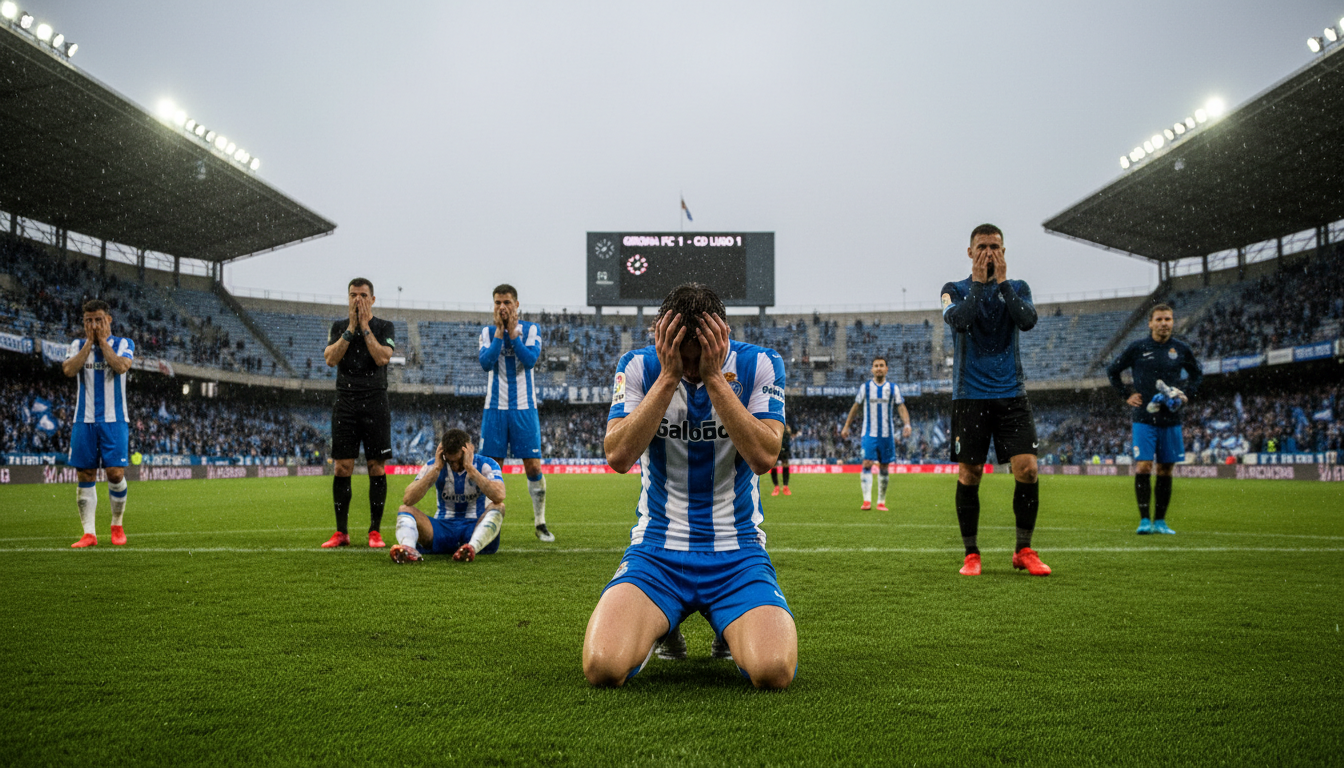
Real Oviedo relegated to Segunda División after Girona draw confirms mathematical drop
Real Oviedo relegated to Segunda División after Girona’s 1-1 draw at Rayo sealed the Carbayones’ fate, ending a difficult LaLiga return.

Real Oviedo’s return to LaLiga lasted one season after the club became the first team mathematically relegated in 2025–26 when Girona rescued a 1-1 draw at Rayo Vallecano on Matchday 35. The result left Oviedo unable to reach safety with three games remaining, confirming a drop to the Segunda División and ending a campaign that had promised more when the club returned to the top flight. (europapress.es)
Disastrous numbers define the season
Oviedo finished the matchweek with 29 points from 35 matches, a tally that reflected the persistent trouble the team faced all season. The ledger stood at six wins, 11 draws and 18 defeats, and the club ends the campaign well adrift of the survival places. (eldesmarque.com)
Offensive frailties were stark: Oviedo scored just 26 goals across the league, the lowest total in LaLiga, while conceding 54. Those margins underscored a season-long inability to find consistent attacking production and exposed structural defensive lapses at key moments. (en.wikipedia.org)
Two away wins and few highlights
The club’s victory tally was compounded by anemic form on the road, with only two away wins registered — a 2-1 success at Valencia and a 3-0 win at Celta Vigo. Those rare positive results were not enough to offset an otherwise unproductive campaign that lacked sustained runs of form. (eldesmarque.com)
Individual performances provided sporadic encouragement but failed to coalesce into a reliable collective output. The imbalance between occasional attacking flashes and consistent defensive errors left the squad vulnerable across long stretches of the season. (elpais.com)
Transfer strategy and squad construction under scrutiny
Real Oviedo’s transfer market work since promotion drew attention for its reliance on free agents and loans as the club sought to build a roster capable of surviving in LaLiga. The summer window brought signings such as Luka Ilić and Ilyas Chaira, plus Brandon Domingues, but many new additions did not deliver the impact required. (transfery.info)
A long list of acquisitions — including established names arriving on free transfers or temporary deals — failed to produce consistent performances. Players brought in to add experience and quality rarely combined to form a dependable spine, and a fragmented squad left the coaching staff with limited options when results slid. (en.wikipedia.org)
Managerial turmoil and boardroom tensions
The season saw three different head coaches, a disruption that coincided with the club’s slide down the table. Veljko Paunović began the campaign but was dismissed despite the team occupying a non-relegation position at the time, a decision that divided supporters and raised questions about the board’s long-term planning. (en.wikipedia.org)
Luis Carrión’s return failed to arrest the decline, and the club turned again to Guillermo Almada in December in an attempt to salvage survival. The repeated changes in the dugout eroded continuity and left Oviedo searching for stability during the most demanding phase of the season. (en.wikipedia.org)
Late Almada revival but too little, too late
Guillermo Almada produced the majority of Oviedo’s wins after his arrival, offering a clearer identity and a more attractive style that briefly lifted performances. Almada’s tenure yielded four of the team’s six league victories, and his work signaled a tactical reset that began to unlock the squad’s potential. (statmuse.com)
That reaction, however, arrived with insufficient time remaining to overturn a points deficit that had grown too large by midseason. The late improvement could not be translated into the sustained run needed to climb out of the relegation places, and mathematical demotion followed the Girona result. (europapress.es)
Ownership, expectations and next steps
Owned by Grupo Pachuca, Real Oviedo’s rapid ascent to the top flight came with heightened expectations for consolidation and growth, but the club’s first season back exposed gaps between ambition and execution. Questions over recruitment policy, sporting governance and the balance between short-term fixes and long-term stability will dominate the post-mortem. (soyfutbol.com)
With relegation confirmed, Oviedo faces a crucial summer that will shape its prospects in Segunda División. Financial recalibration, potential squad turnover and a clear sporting project will be necessary to mount an immediate promotion bid, while supporters and stakeholders prepare for the realities of life in the second tier. (eldesmarque.com)
Real Oviedo’s drop will prompt reflection across the club on decisions made during the campaign, from transfer strategy to the sequence of managerial changes, as the institution looks to rebuild and target a swift return to Spain’s top flight.