Safa Sets New Deadline for VAR Rollout in South African Football Ahead of 2026/27 Season
Safa targets VAR rollout across South African professional football by the 2026/27 season after a R20-million government allocation; funding gaps remain.

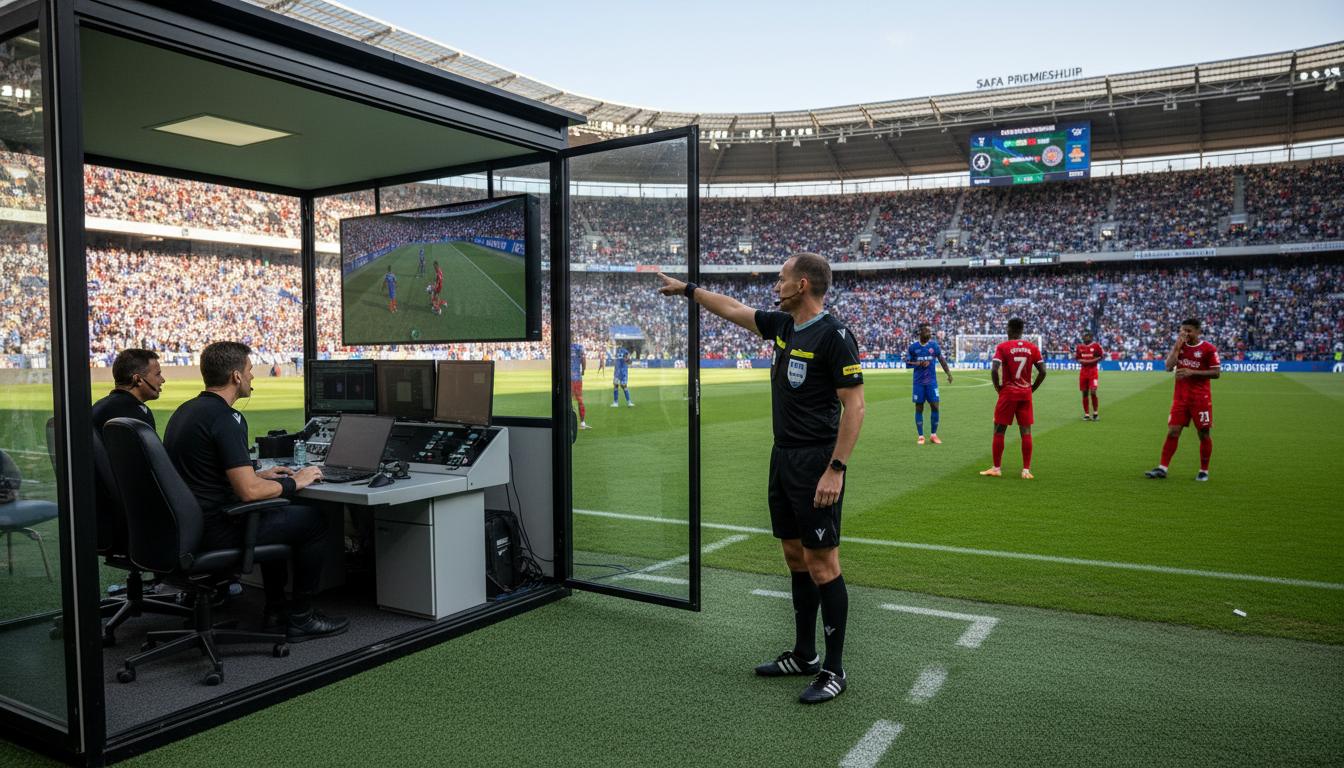
South African football has been given a fresh timetable for the VAR rollout, with the South African Football Association (Safa) now aiming to have the system operational across professional competitions by the start of the 2026/27 season. The VAR rollout announcement was confirmed to media by Mxolisi Sibam, chair of Safa’s finance committee, who said the association has received a R20-million allocation from government to begin implementation. The new target follows a series of missed deadlines and public assurances from political officials that failed to materialize in prior seasons.
Safa Announces 2026/27 Deadline for VAR Rollout
Safa said the implementation will cover both the Premier Soccer League (PSL) and the Hollywoodbets Super League, bringing video assistant referee technology to top-tier men’s and women’s domestic competitions. Sibam told reporters the association has been working on preparations for several months and is now formalizing the budget and operational plans tied to the R20-million transfer. The association framed the move as essential to safeguarding match integrity and aligning South African football with continental peers.
Government Funding and the R20-million Transfer
Safa officials disclosed that the R20-million sits in a separate Safa bank account earmarked for VAR preparations and that the association is finalizing internal approvals to begin work. Sibam described the government’s contribution as generous and said the funds will be used to establish initial infrastructure, training and procurement steps required for a national rollout. He indicated that the funding is intended to seed the programme and that further financing and logistical commitments will be necessary to reach full nationwide deployment.
Conflicting Timetables and Unresolved Funding Discrepancies
The latest commitment comes after a pattern of shifting deadlines from government officials, including Sports Minister Gayton McKenzie, who publicly pledged VAR for the 2025/26 season in May 2025 and cited R90-million as secured. That promise did not translate into delivery, and McKenzie later told Parliament the process of funding was still being finalized. In March 2026 the minister again returned to the podium saying, "I have the proof of payment in my hand," yet neither his office nor Safa has provided a full accounting that reconciles the R90-million figure with the R20-million Safa now reports.
Safa’s Preparatory Work and Project Timeline
Sibam said SAFa’s groundwork has been ongoing for roughly seven months, covering technical assessments, supplier engagement and planning for referee and technician training. The association has described the initial R20-million as the starting point to secure essential equipment, communications links and preliminary personnel training, with further stages requiring additional funding and operational approvals. Officials insist that once procurement and approvals are complete, the physical installation and phased testing across venues can proceed within a structured timeline toward the 2026/27 start date.
PSL Involvement and League Concerns
The Premier Soccer League has previously informed Parliament that it had not been briefed about any formal rollout, and league representatives have said they expect to be consulted as the principal end user of any VAR system. Safa has committed to involving the PSL and other stakeholders in design and scheduling decisions to ensure match calendars, broadcast arrangements and club logistics can accommodate the new technology. League officials and clubs will also need clarity on venue readiness, recurring operational costs and how the system will be funded long-term.
Regional Pressure from African Leagues with VAR
Safa’s public statement pointed to regional examples as a component of the urgency for rollout, noting that Morocco, Egypt, Tunisia and Mauritania already operate VAR in domestic competitions. Association officials argued South Africa should not fall behind comparative African footballing nations, with Sibam saying, "We are the leading country in Africa. We can’t be left behind." The adoption curve across the continent has added competitive and reputational incentives for South Africa to modernize match officiating and maintain attractiveness for continental competitions and sponsorship.
Operational Challenges and Technical Considerations
Implementing VAR nationally involves a complex set of technical and operational requirements, including stadium camera networks, reliable communications, centralised review rooms and accredited video match officials. Safa has acknowledged the need to phase the rollout, prioritizing venues that meet broadcast and connectivity standards while arranging upgrades where necessary. Training and accreditation of local VAR operators and referees will be critical to ensure consistent decision-making and to limit disruption to match schedules.
Financial Sustainability and Long-Term Commitments
Beyond initial procurement, stakeholders have raised questions about how ongoing costs — including staffing, maintenance, software licenses and venue upgrades — will be covered over multiple seasons. The discrepancy between the R90-million figure cited by the sports minister and Safa’s confirmed R20-million allocation has intensified scrutiny of whether one-off seed funding will be converted into a sustainable financing model. League executives, broadcasters and government officials will need to agree on cost-sharing arrangements to avoid placing an undue financial burden on clubs or compromising the system’s long-term viability.
Implications for Match Integrity and Fan Experience
Proponents say VAR can reduce clear officiating errors and increase fairness in critical moments, potentially safeguarding competition integrity and improving fan confidence in results. Critics warn that rushed or poorly funded rollouts can produce inconsistent implementation, increase stoppages and create new controversies if technical failures or training gaps occur. Safa officials have framed the planned rollout as a measured approach intended to stage implementation responsibly rather than impose a flawed system on the domestic game.
Safa’s renewed timetable offers a concrete target for stakeholders, but several moving parts remain unresolved and could influence whether the VAR rollout is fully delivered by the 2026/27 season. Decisions on procurement, venue readiness, detailed budgeting and consultation with the PSL will shape the programme’s pace, while public scrutiny over the funding discrepancy is likely to continue until a comprehensive financial account is published. The coming months will test whether the R20-million allocation is the opening tranche of a broader commitment or a partial step toward a longer, phased adoption.