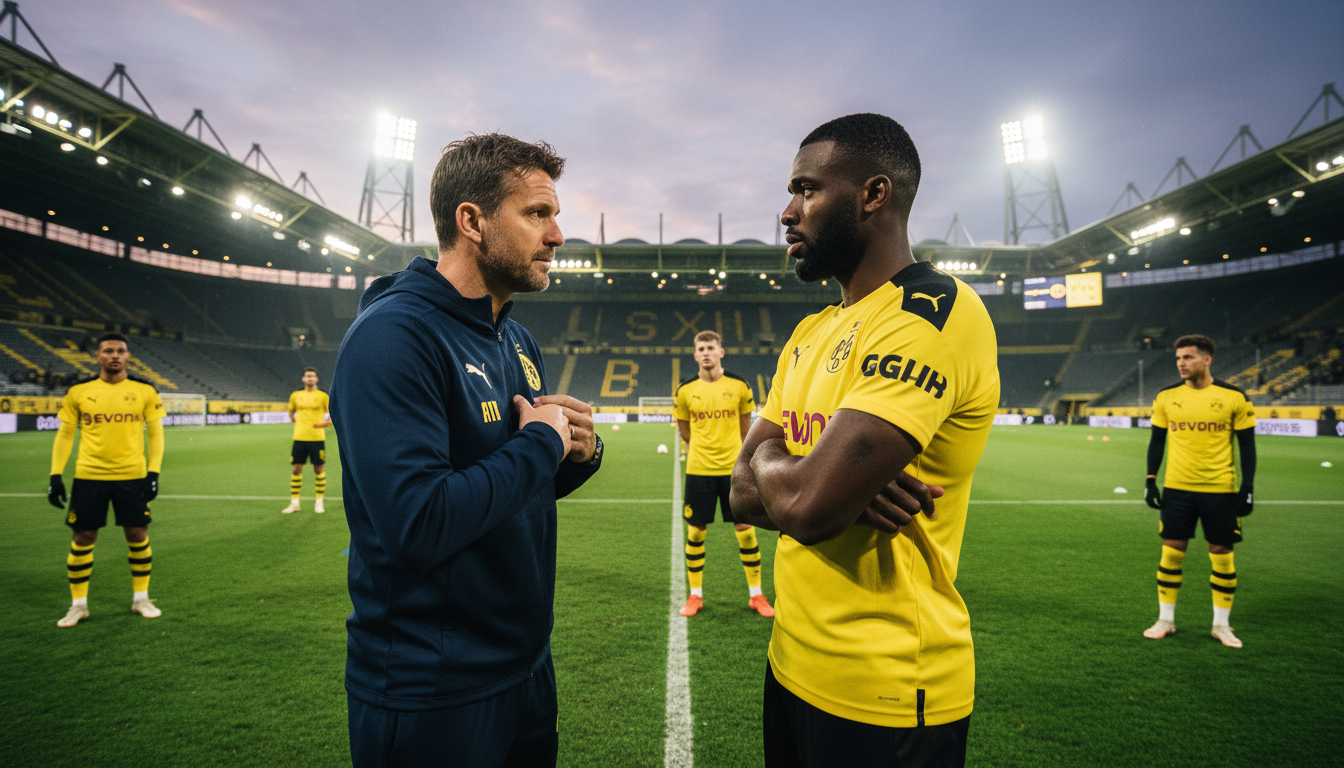
Guirassy’s Dortmund Future in Focus as Sporting Director Signals Desire to Keep Striker
Ole Book says Serhou Guirassy is keen to stay at Borussia Dortmund and remains a key asset as the club prepares for summer transfer activity amid World Cup-driven market shifts.


Borussia Dortmund sporting director Ole Book on May 12, 2026, insisted that Serhou Guirassy is still very much part of the club’s plans despite persistent summer exit speculation. Guirassy’s name has been linked with moves away from the Westfalenstadion, but Book told reporters he believes the striker wants to remain and can contribute to Dortmund next season. The comment reframes talk of an inevitable sale and places the player at the center of Dortmund’s transfer calculus.
Book: Guirassy wants to stay and is a "very important" player
Book said in a media briefing that he has regular, substantive conversations with Serhou Guirassy and sees a clear willingness in the player to continue at Dortmund. He stressed the striker’s on-field output and influence as key reasons the club does not start the summer intent on selling him. The sporting director left room for the realities of the transfer market, acknowledging that exceptional proposals could force a reassessment.
The tone from the club is cautious but deliberate: Dortmund are not categorically closing the door on offers, yet they are not preparing for an immediate departure either. Book’s remarks suggest a posture of measured confidence, positioning Guirassy as a retained asset unless market conditions or a standout bid change the calculus. That stance will shape negotiations and messaging toward interested clubs over the coming weeks.
Statistical case: why Guirassy matters to Dortmund
Guirassy’s scoring record and contributions in key fixtures have been offered by Dortmund sources as evidence of his value to the squad’s short-term ambitions. Beyond goals, his ability to hold up play and create opportunities for teammates is cited internally as part of the striker’s merit. These performance indicators factor into Dortmund’s reluctance to treat him as a simple sale candidate.
The club’s evaluation combines tangible metrics and qualitative judgment from coaching staff and recruitment analysts. Book referenced statistics in his briefing to underline that the club sees ongoing utility in Guirassy’s presence. That approach reflects modern transfer strategy, where data-driven assessments are married to fit within tactical systems and squad balance considerations.
Transfer strategy: “exceptional offers” and the club’s bargaining position
Book framed Dortmund’s summer moves as governed by pragmatism and flexibility, saying the club is not starting from a point of needing to sell. His use of the phrase “exceptional offers” signals a willingness to listen should dramatically lucrative proposals arrive. That language is calibrated to protect Dortmund’s negotiating leverage while acknowledging that market dynamics can supersede internal plans.
The club also emphasized alternative transaction structures and creativity in the market, indicating openness to loans, exchange deals, or structured payments rather than only straight sales. This prepares Dortmund to respond to a range of approaches from other clubs and agents while preserving squad options. It also underlines that Guirassy’s future may depend as much on bid structure as headline fee.
World Cup implications: how late-season form could alter plans
Book warned that the upcoming international tournament presents a variable that could reshape the summer market, noting many players will be on show at the World Cup. Strong performances at the tournament can rapidly inflate interest and valuations, shifting priorities for both buying clubs and Dortmund itself. That possibility complicates planning for players like Guirassy, whose stock could rise or fall based on late-season and tournament displays.
The sport director acknowledged that the World Cup effectively extends the scouting window and can produce unexpected suitors. Dortmund must therefore balance short-term squad continuity with readiness to respond if a player’s market changes abruptly. This uncertainty is a common theme across Europe’s clubs as national team showcases intersect with transfer windows.
Squad management and incoming recruitment: Gadou and resource planning
Book confirmed that Dortmund’s transfer business will not end with the acquisition of Joane Gadou and that the club will continue to manage resources across the roster. He indicated the club has some financial leeway but must still be creative, suggesting a dual focus on strengthening and maintaining squad depth. That means any decision over Guirassy will be weighed against broader recruitment plans and budgetary constraints.
Managing departures and arrivals is a balancing act for Dortmund, particularly with competition for top targets and the need to ensure cover across positions. The club’s willingness to explore different deal types implies an intent to preserve flexibility while pursuing reinforcements. For Guirassy, this could translate into a period of extended negotiation rather than an immediate transfer conclusion.
Scenarios for Guirassy: staying, selling, or structured moves
There are three practical scenarios for Serhou Guirassy this summer: he remains at Dortmund and features in the manager’s plans, he departs following an exceptional bid, or a structured move such as a loan or phased transfer is agreed. Dortmund’s public posture favors retention unless a proposal both significantly benefits the club and aligns with the player’s wishes. The sporting director’s comments suggest the club will prioritize competitive balance over a fire-sale approach.
Any sale would have to satisfy multiple stakeholders at Dortmund, including coaching staff, recruitment leadership, and the sporting director’s office. Conversely, the player’s own preference—Book said he senses Guirassy’s desire to stay—will carry weight in talks. That dynamic means negotiations could hinge as much on personal terms and project convincedness as on pure financials.
Commercial and sporting considerations shaping negotiations
Dortmund will also factor in commercial impacts and squad rhythm when assessing offers for Guirassy, weighing potential transfer income against on-field consequences. The club’s brand and ambitions in domestic and European competitions inform whether a striker of Guirassy’s profile is expendable. Additionally, agents and potential buyers will monitor Dortmund’s public statements as signals of opening price and appetite.
Book’s repeated emphasis on wanting to retain talent unless exceptional bids arise functions as both a statement of intent and a negotiation tactic. It sets a baseline for valuation while keeping the door open enough to avoid alienating prospective suitors. This strategic ambiguity is common among clubs that aim to maximize return without undermining competitive plans.
Dortmund’s measured messaging around Serhou Guirassy frames the summer as a period of possibility rather than inevitability, and the final outcome will reflect a mixture of market offers, the player’s ambitions, and the club’s broader recruitment strategy.