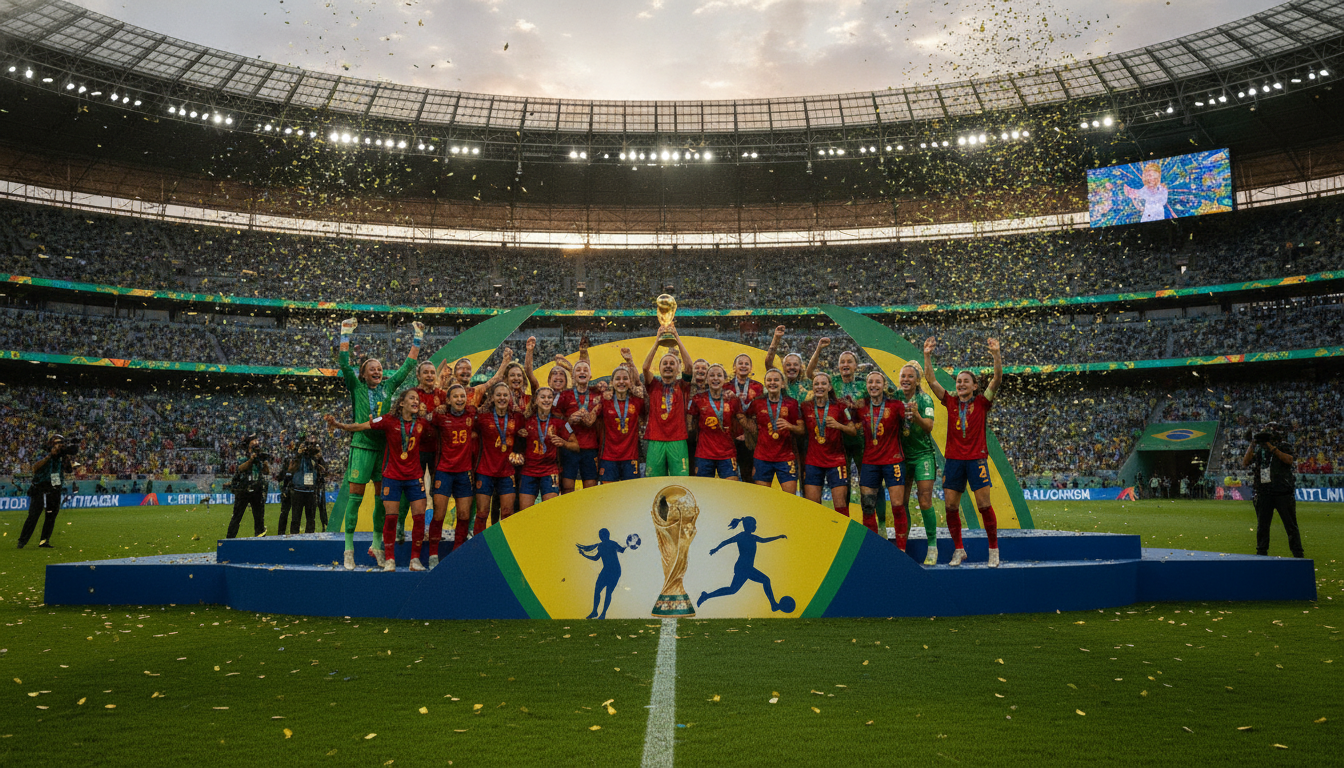
2027 Women’s World Cup in Brazil: Spain return as reigning champions while hosts ready for a showcase
Spain enter the 2027 Women’s World Cup in Brazil as reigning champions, setting up a high-stakes defence amid growing global attention on the tournament. The 2027 Women’s World Cup keyword sits at the centre of preparations, with host cities and national teams ramping up logistics, squads and legacy planning ahead of next summer. Expectations are high for full stadiums, competitive qualifiers, and a tournament that could further accelerate investment in the women’s game worldwide.


Spain enter as reigning world champions
Spain will arrive in Brazil carrying the title they secured at the 2023 Women’s World Cup, a victory that reshaped expectations for tactical and technical standards in the women’s game. That Spain side blended experienced Ballon d’Or winners with emerging stars and remains the benchmark other nations measure themselves against. Players such as Aitana Bonmatí and Alexia Putellas, alongside rising forward Salma Paralluelo, form a spine that teams will study closely as the 2027 Women’s World Cup approaches. Spain’s success has sparked debate over squad continuity, tactical evolution, and whether other nations can close the gap before the tournament.
Qualification progress and the early field
Qualification is well under way for the 2027 Women’s World Cup, with multiple confederations already confirming a substantial number of participants and 14 teams reported to have sealed their places. Brazil qualifies automatically as host, which opens continental qualification paths and reshapes playoff dynamics for other South American nations. For many countries, the qualifying campaign has become a critical period for integrating younger players and testing tactical systems under pressure. The early qualifiers have highlighted both established powers and emerging programs that could spring surprises in Brazil.
Brazil’s preparations and legacy commitments
Brazil’s organizing authorities have emphasized stadium readiness, fan experience and a long-term legacy for women’s football as central goals for the 2027 Women’s World Cup. Former national team defender Aline Pellegrino, who now serves as executive director for legacy and stakeholder affairs for the tournament, has stressed a focus on equality and infrastructure designed to outlast the event. Organizers say they are coordinating closely with FIFA and the federal government to deliver efficient operations across host cities and to ensure strong attendance. Officials are framing the tournament as an opportunity to consolidate recent progress in Brazilian women’s football and to expand participation at the grassroots level.
Tactical trends and players to watch
Technical versatility and possession-based approaches have become increasingly prominent at the top level of women’s international football, trends that Spain helped define and other nations are adapting to. Attacking midfielders and versatile forwards who can interchange positions will be central to many teams’ plans for the 2027 Women’s World Cup. Aitana Bonmatí’s influence on Spain’s midfield and the contributions of players who starred at the Paris Olympics and other major tournaments underline the depth of talent likely on display. Coaches will also monitor physical conditioning and squad rotation strategies as they prepare for the condensed international calendar leading into the tournament.
Host cities, stadiums and matchday experience
Organizers are promoting a host-city model that prioritizes full stadiums and vibrant matchday atmospheres, with investments targeted at transport, security and fan zones. Brazil’s experience staging large sporting events is being leveraged to streamline logistics, but officials say local coordination remains a priority to avoid last-minute disruption. The aim is to offer supporters a seamless experience from arrival to matchday services, while ensuring facilities meet FIFA standards. Local authorities are also designing cultural and community programs to connect the tournament with broader social initiatives.
Commercial outlook and broadcast interest
Commercial partners and broadcasters have signalled strong interest in the 2027 Women’s World Cup, reflecting sustained growth in audience appetite for women’s football since the early 2020s. Sponsorship deals and media rights negotiations are shaping promotional campaigns that position the tournament as a marquee global event. Increased broadcast coverage is expected to expand the tournament’s reach into markets that have only recently boosted investment in women’s sport. Organizers are balancing commercial objectives with commitments to accessibility and affordable ticketing to maintain diversity among match attendees.
The broader implications for the sport are significant, with federations and clubs watching closely to learn from Brazil’s staging and from the tactical developments on show. If the 2027 Women’s World Cup delivers competitive matches, robust attendances and a smooth operational record, it could accelerate funding and professionalization in domestic leagues around the world.
Spain’s status as defending champion adds a compelling narrative to the tournament, but the field is deeper and more unpredictable than in previous cycles. Teams that have invested in youth development and in extending professional pathways at club level could produce breakout performances. Coaches will have to manage form, injuries and the psychological pressure that comes with major-tournament scrutiny.
The Olympic cycle, regional championships and club seasons that precede the 2027 Women’s World Cup will shape final rosters and tactical plans. Players returning from tournaments such as the Paris Olympics have shown the value of big-match experience, and national team staffs will weigh that background when finalizing squads. For fans and analysts, the run-up to Brazil offers a series of narrative threads — rising stars, tactical experiments, and the persistent question of which country can dethrone Spain.
Public messaging from organizers has emphasized inclusivity, safety and sustainability as pillars of the event, with programs intended to amplify participation by women and girls across host communities. Legacy initiatives are being designed to translate the global spotlight into long-term benefits for domestic competitions and coaching pathways. If successful, the 2027 Women’s World Cup could leave an infrastructure and cultural impact that extends well beyond the tournament schedule.
Spain’s recent international results, Brazil’s organizing blueprint, and developing narratives across confederations all point to a tournament that will be closely watched by stakeholders across the sport. As preparations continue, the 2027 Women’s World Cup in Brazil is shaping into both a sporting contest and a test case for global investment in the women’s game.
Looking ahead, teams, fans and organizers are counting down to a summer in Brazil that promises competitive football and an opportunity to further elevate women’s sport on the world stage.