Albert Riera’s Future at Eintracht Frankfurt Left Uncertain After Season-Ending Draw
Markus Krösche declined to confirm Albert Riera’s future at Eintracht Frankfurt after the 2-2 draw with Stuttgart, saying the club will review the season.


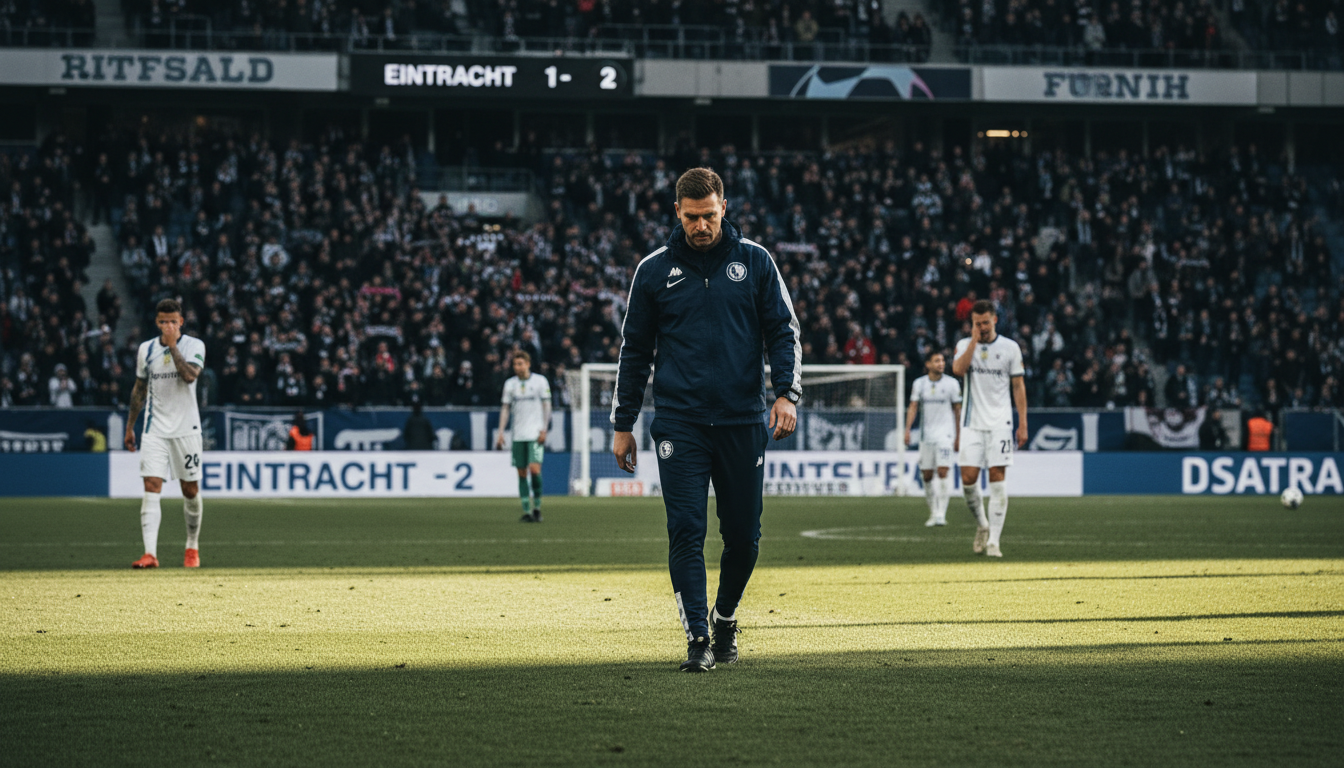
Eintracht Frankfurt sporting director Markus Krösche refused to commit to a decision on Albert Riera’s position after the club closed the Bundesliga campaign with a 2-2 draw against VfB Stuttgart on Saturday. The board member stressed that personnel matters would not be discussed immediately and that the club needs time to reflect before moving forward. Reports circulating in the German media have suggested a change is imminent, but Krösche kept the possibility open while promising a formal analysis in due course.
Krösche’s remarks were relayed to reporters by DPA, and they came amid growing scrutiny of Riera’s short spell in charge, which began at the end of January. Eintracht finished the league season in eighth place and missed out on European qualification, an outcome that leaves the club below its stated ambitions. The sporting chief acknowledged the difficulty of the situation and indicated that any final decision will follow a thorough review.
Krösche declines to discuss personnel on matchday
When asked whether Saturday’s fixture was Albert Riera’s final game as head coach, Markus Krösche declined to provide a definitive answer and said he would not discuss personnel matters immediately. He emphasized that the club would allow time for reflection before entering a formal evaluation of the season. Krösche’s restraint underscored the board’s intention to handle the matter internally and with procedural care.
The refusal to confirm reports of Riera’s removal came despite widespread media coverage suggesting that a parting of ways had already been decided. Krösche framed the situation as one that requires perspective, saying he wanted to let the events “sink in” before moving to analysis. That language suggested the possibility of changes but avoided the finality of a public dismissal on the day the campaign closed.
End of season: draw with Stuttgart and an eighth-place finish
Eintracht’s 2-2 draw with VfB Stuttgart concluded a campaign that left the club outside the European places and short of internal targets. The result captured the mixed form and inconsistency that punctuated the latter stages of the season under Riera’s stewardship. Finishing eighth means Eintracht will reassess both squad and staff amid the summer planning window.
Missing out on continental competition has broader implications for recruitment, budgeting and the club’s ability to retain or attract players. European qualification has been a regular aim for Eintracht in recent years, and falling short places immediate pressure on sporting leadership to define a path back to the continental stage. The context of the season’s end sharpens the significance of any decision over the head coach.
Tense moments: reported clashes with players and the media
Albert Riera’s tenure was marked, according to multiple reports, by tensions inside the squad and strained exchanges with the media. Those incidents contributed to a narrative in the press that the Spaniard’s relationships at the club had become frayed over the course of a truncated spell. Krösche acknowledged publicly that Riera had faced a difficult environment during his time at the club.
Coaching changes are often driven by a complex mix of results, dressing room harmony and alignment with the board’s strategic vision. Eintracht’s leadership will weigh the reported discord alongside on-field performance when deciding whether to retain Riera or seek a fresh start. Any confirmation of a split would likely reference both sporting outcomes and interpersonal dynamics as part of the rationale.
Club outlines planned post-season review process
Krösche made clear that the next step for Eintracht will be a comprehensive post-season analysis, with the club leadership set to examine performances and structures before finalizing personnel decisions. That approach indicates a methodical review rather than an immediate, reactionary change. The review is expected to cover coaching, recruitment, and the wider sporting setup.
Timing will be important for Eintracht as they aim to resolve questions around the head coach before the summer transfer window gathers pace. A deliberate review gives the club the opportunity to map potential candidates, assess contractual obligations and plan a transition that aligns with long-term objectives. The board’s message was one of caution: decisions will follow analysis, not headlines.
Potential timelines and succession considerations
If the club decides to part ways with Albert Riera, Eintracht will need to establish a clear timeline for appointing his successor ahead of pre-season preparations. Clubs in Eintracht’s position typically aim to resolve managerial uncertainty early in the summer to allow a new coach time with the squad. That window will shape both the selection process and the club’s transfer strategy.
Eintracht’s scouting department and sporting leadership are likely to compile a shortlist reflecting the board’s expectations for style of play and development priorities. The question of whether an internal interim solution will be used or an external appointment sought remains open, and the board’s preference for a strategic, rather than hurried, appointment was signalled by Krösche’s comments. Any successor will face pressure to restore momentum and secure European qualification.
Implications for Riera’s career and Eintracht’s short-term planning
For Albert Riera personally, the outcome of the club’s review will shape the next chapter of his coaching career, whether that means a return to the market or the challenge of rebuilding at Eintracht. His time in Frankfurt has been brief and turbulent, and prospective employers will consider both the results and the context in which they occurred. Riera’s subsequent choices will reflect how he and his representatives interpret the signals from the club and the league.
From Eintracht’s standpoint, the summer represents a pivotal planning period that must reconcile competitive ambitions with financial realities. Missing European competition alters the club’s immediate resources and could influence transfer targets and wage decisions. The board’s handling of the coaching situation will be judged on how well it enables Eintracht to reposition themselves for the coming season.
A final decision on the coaching role will follow Eintracht Frankfurt’s internal analysis, with the club indicating a preference for a measured approach rather than an instantaneous reaction to media reports. The coming days and weeks will be closely watched by supporters and pundits as the club balances the need for stability with the desire to return to European competition.