Dangote Abandons Arsenal Takeover Bid to Prioritise $20bn Refinery and Industrial Projects
Aliko Dangote says his $20bn refinery and petrochemical plans forced him to abandon a bid for Arsenal, choosing to finish industrial projects over club ownership

Aliko Dangote has confirmed that his long‑rumoured interest in buying Arsenal was set aside because of the demands of his $20 billion refinery and related industrial ventures. Dangote told a recent podcast that, although he seriously considered an Arsenal takeover when the club was valued around $2 billion, he concluded that diverting those funds would jeopardise completion of the Lagos refinery, fertiliser plant and petrochemical investments. He said he elected to remain a devoted supporter rather than a principal owner while his businesses reached maturity.
Dangote confirms abandoned Arsenal takeover bid
When pressed about earlier reports linking him to a takeover of the North London club, Dangote said financial realities dictated his decision and that the refinery project was the deciding factor. He described weighing the prospect of committing roughly the club’s market value at the time against the risk of slowing progress on projects deemed fundamental to his broader industrial strategy. The businessman added that remaining a supporter allowed him to sustain his interest without compromising his corporate commitments.
Scale and stakes of the $20 billion refinery project
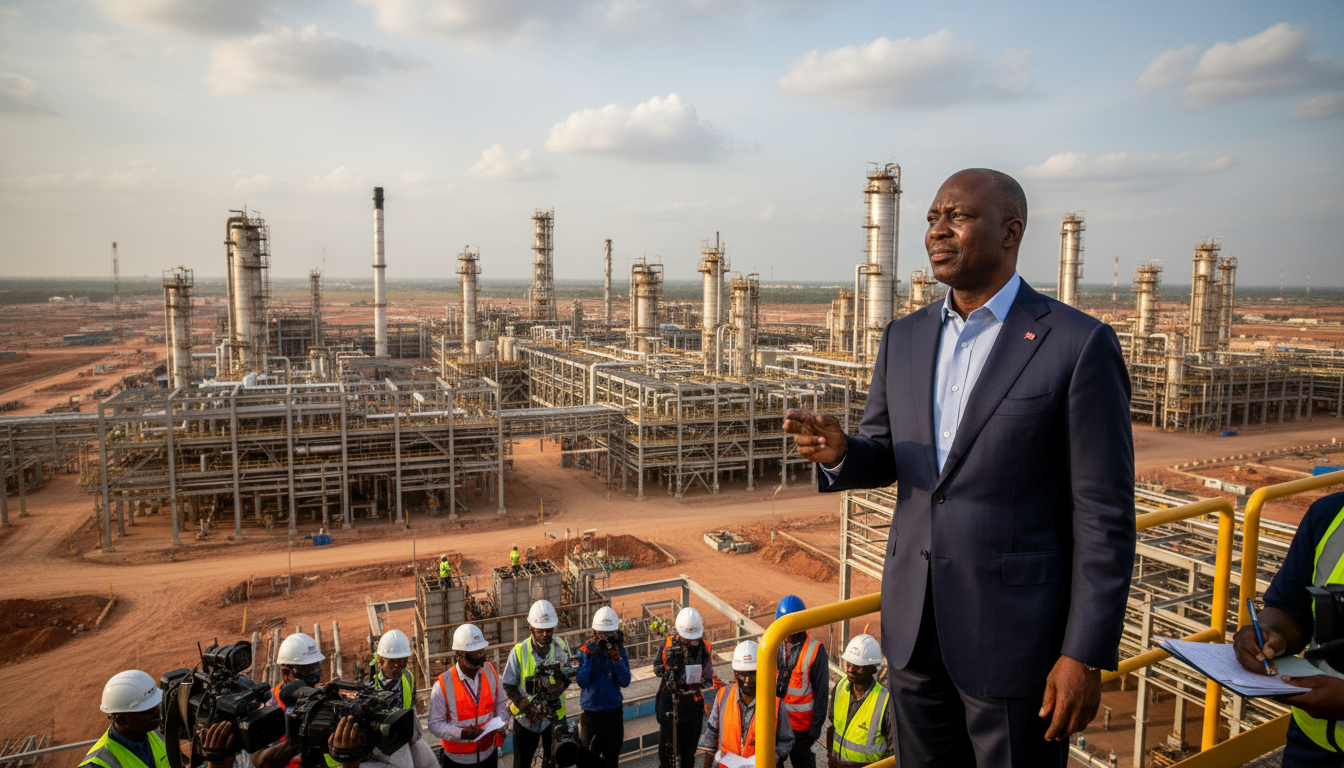
The refinery at the centre of Dangote’s calculations is one of the largest privately financed industrial undertakings in Africa’s history, built with the explicit aim of reducing Nigeria’s dependence on imported fuel. Alongside refining capacity, Dangote’s programme includes a fertiliser complex and a suite of petrochemical operations that are intended to underpin regional industrialisation. Those projects required sustained capital allocation, long construction timelines and close managerial attention, the billionaire said, making large diversion of funds into a football acquisition impractical at that stage.
Timing and Arsenal’s valuation then and now
Dangote first publicly acknowledged an interest in Arsenal in 2015 and reiterated that intention in interviews in subsequent years, specifying he planned to act once his industrial projects were generating returns. At the time he first explored a bid the club’s valuation was widely reported to be near $2 billion. Since then Arsenal’s value has climbed substantially on the back of improved results, commercial growth and global brand expansion, a trend Dangote acknowledged would have made a later approach far more costly than earlier estimates.
Dangote’s long-standing personal connection to Arsenal
Beyond the financial calculations, Dangote’s affinity for Arsenal is well documented and personal. He has described himself repeatedly as a passionate fan, attending matches when possible and wearing a jersey signed for him by the club captain. That personal allegiance helped frame his decision: rather than assume the burdens of ownership while his industrial projects remained unfinished, he chose to continue as a committed supporter and observer of the club’s progress.
Commercial and symbolic implications for club ownership
The revelation underscores how major infrastructure commitments in emerging markets can redirect capital that might otherwise flow into global sports assets. For clubs seeking new investors, the episode illustrates the trade-offs prospective buyers face when they hold competing large-scale obligations. At the same time, it highlights the growing pool of potential investors from Africa whose acquisition interests may be constrained by domestic investment priorities and the scale of projects they undertake at home.
Dangote’s message to young Africans and legacy focus
During the same conversation, Dangote used his experience to encourage young Africans to consider opportunities at home, urging them to believe in the continent’s long‑term prospects. He framed the refinery and related ventures as evidence that patient, large‑scale investment can transform national and regional capacity, even where the short‑term gains are uncertain. That appeal reflects a wider narrative among some African business leaders who prioritise industrial development and job creation over outward capital deployment.
The decision to prioritise industrial completion over football ownership also speaks to how personal ambition and public responsibility can converge in the leadership choices of major investors. Dangote’s statement offers a clear example of a businessman weighing philanthropic or symbolic gestures against the practical imperatives of national economic projects and choosing the latter when the stakes are judged higher. The outcome leaves Arsenal without one of the continent’s most prominent potential suitors, while reinforcing the scale and ambition of Dangote’s industrial programme.
For Arsenal observers, the disclosure adds context to past reports and highlights how club ownership conversations often intersect with very different business logics elsewhere in the world. For policymakers and investors across Africa, the story underlines the importance of creating environments that enable domestic projects to mature while also facilitating cross‑border commercial engagements. The broader lesson embedded in Dangote’s choice is that the demands of nation‑building investments can reshape global investment flows, even in high‑profile arenas such as Premier League football.