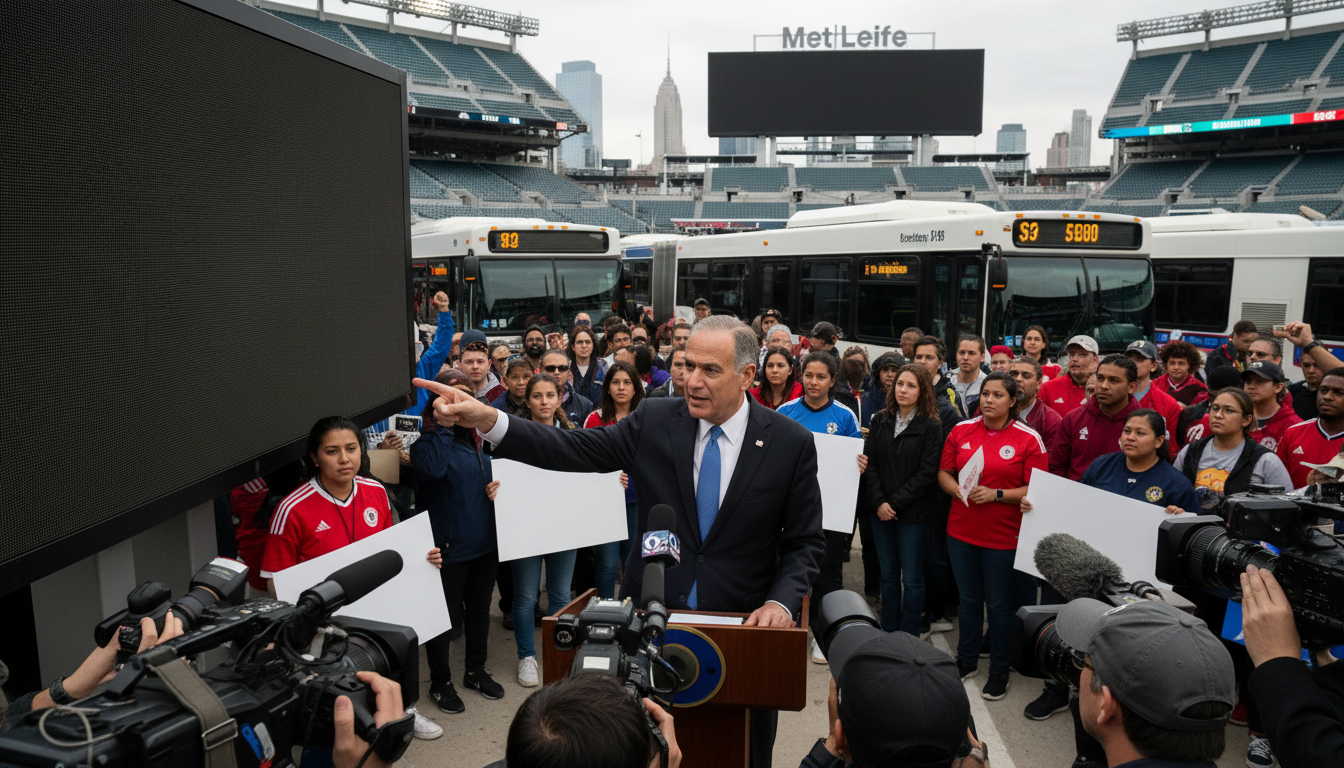
Schumer Demands FIFA Cover World Cup Transport Costs After Report of Steep NJ Transit Fares
Senate leader Chuck Schumer has called on FIFA to pay World Cup transport costs after a report said New Jersey Transit may charge more than $100 for round trips from Penn Station to MetLife Stadium.
The demand comes as scrutiny grows over who will shoulder extra expenses for local residents and commuters during the tournament.


Schumer’s public demand on social media
Schumer used his social platform to publicly press FIFA to assume responsibility for transport costs tied to the tournament.
He argued that the global governing body, which stands to collect billions from hosting rights and commercial revenue, should not leave local taxpayers and commuters to absorb large one-off fares.
The senator framed the issue as a matter of fairness to New York area residents who will face disruption and potential price spikes during World Cup match days.
Report outlines proposed NJ Transit surcharge
A report in a national sports publication said New Jersey Transit is examining plans to impose a special-event fare exceeding $100 for a return trip between Manhattan and MetLife Stadium.
By contrast, the usual round-trip price for that journey is about $12.90, a difference that would dramatically raise the out-of-pocket cost for fans and local passengers.
The proposed surcharge reportedly applies to timed services on match days and would be layered on top of existing ticketing structures.
Potential toll on fans, commuters and local economies
If implemented, the higher fares could deter some local residents from attending matches and create added strain for regular commuters sharing trains with event crowds.
Local businesses expecting World Cup-driven foot traffic could see uneven patterns as fans weigh travel costs against ticket prices and other expenses.
Advocates for public transit warn that sudden fare spikes risk alienating riders and complicating broader mobility plans for the region during the tournament.
FIFA revenue and host-city obligations under scrutiny
Schumer’s call referenced estimates that FIFA will collect roughly $11 billion from this World Cup cycle, drawing attention to the allocation of windfall revenues.
Critics say that if organizers profit heavily, a proportionate contribution to cover incremental costs for host cities — including public transport — is reasonable and logistically sensible.
The issue raises broader questions about the financial model for mega-events and how costs and benefits are distributed between governing bodies, host governments, and local communities.
Transit agencies and local officials face logistical choices
State and local transit authorities must balance operational needs for moving tens of thousands of fans with concerns about affordability and equity for daily riders.
Options to manage demand include temporary increased service, special-event pricing, subsidized shuttle services, or fare caps for residents and season-ticket holders.
Officials will also need to consider crowd control, staffing, and capacity limitations that accompany major international fixtures at stadiums like MetLife.
Political and legal ramifications of fare decisions
The dispute has quickly moved from transport planning into the political sphere, with elected officials framing fare policy as a matter of public interest.
Calls for FIFA to contribute directly could spur negotiations over host-city agreements or prompt legislative scrutiny of event contracts and municipalities’ preparedness.
Legal questions could emerge if emergency fare measures are adopted without adequate public consultation or if they clash with existing transit regulations.
Possible solutions and precedents from past events
There are models for mitigating transport costs during major sporting events, including negotiated subsidies, dedicated event shuttles, and temporary fare reductions for residents.
Host cities in previous international tournaments and major championships have secured contributions from organizers to offset security, transit, and sanitation costs.
Advocates suggest a mix of short-term measures for match days and longer-term infrastructure investments to leave a positive legacy for local transit networks.
Fans, commuters and officials are now watching for responses from FIFA, New Jersey Transit and state authorities as the tournament approaches.
How those parties resolve the tension between revenue generation and local affordability will shape both the immediate experience of match-goers and perceptions of the World Cup’s impact on host communities.