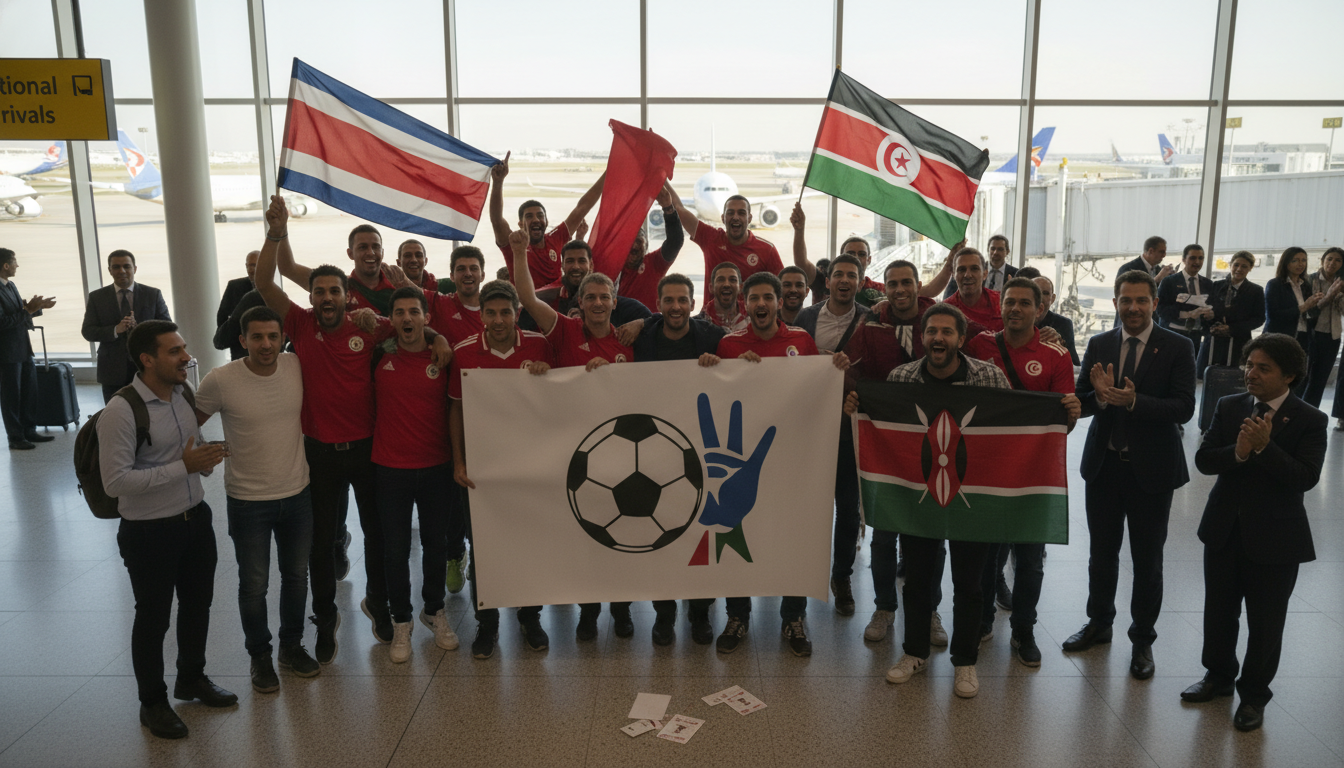
US waives World Cup visa bonds for some ticketed fans but many supporters still face entry bans
US waives World Cup visa bonds for ticketed fans from five African qualifiers who registered in FIFA PASS, yet several nations’ supporters remain barred.


The United States has announced a targeted waiver of World Cup visa bonds for certain ticketed supporters, a move that eases travel for fans of five African qualifying nations but leaves significant barriers in place for others. The waiver applies to ticket holders who registered through FIFA PASS by April 15, 2026, and it addresses the bond requirement introduced by the US government last year. While the measure removes an immediate financial hurdle for some, travel restrictions and full visa suspensions continue to prevent many fans from attending the tournament matches held across North America.
Waiver details and eligibility
The State Department said the bond requirement will be waived for fans who purchased valid World Cup tickets and enrolled in FIFA PASS by April 15, 2026. The waiver specifically targets those subject to the bond scheme introduced during 2025 and expanded in 2026.
US Assistant Secretary of State for Consular Affairs Mora Namdar confirmed the policy in a public statement, saying the administration is "waiving visa bonds for qualified fans who bought World Cup tickets and opted in to FIFA PASS as of April 15, 2026." Eligible applicants will still need to complete standard visa procedures but will not be required to post bonds of $5,000 to $15,000 for entry.
Which countries benefit and which remain blocked
Five countries that qualified for the World Cup are covered by the bond waiver: Algeria, Cape Verde, Ivory Coast, Senegal and Tunisia. Fans from those nations who meet the ticket and FIFA PASS criteria can seek visitor visas without the additional bond expense.
However, the waiver does not alter broader restrictions affecting some teams’ supporters. Senegal and Ivory Coast remain on lists of countries with partial restrictions instituted in December 2025, and supporters from Haiti and Iran continue to face full visa suspensions that bar travel for tourism to the United States.
Practical limits of the waiver
The waiver removes the bond cost but does not guarantee visa issuance for all applicants from the listed countries. For countries under partial restrictions, such as Senegal and Ivory Coast, the rule of thumb remains that nationals who did not hold a valid US visa before December 2025 are unlikely to be granted new visitor visas solely to attend matches.
Fans who are eligible must still satisfy standard visa requirements, including demonstrating intent to return home and meeting admissibility criteria. The requirement to have a valid match ticket and an approved FIFA PASS registration by the April 15 cutoff is non-negotiable under the announced policy.
FIFA PASS: streamlining or bottleneck?
FIFA PASS was established to expedite visa processing for tournament attendees by pre-collecting fan information and confirming ticket purchases. The US concession ties the bond waiver to enrollment in that system, effectively making FIFA PASS a gatekeeper for the exemption.
Officials say the system is designed to accelerate interview scheduling and background checks, shortening processing times for qualified applicants. Critics argue that linking relief to FIFA PASS creates a separate administrative hurdle and can exclude fans who buy tickets late or encounter technical barriers when registering.
Broader context: bond scheme and travel policy changes
The requirement for some visitors to post bonds of between $5,000 and $15,000 originated under the US administration in 2025 and was broadened in 2026 to cover a list of approximately 50 countries. The expansion drew immediate criticism from rights groups and foreign governments for effectively pricing out ordinary travelers from many nations.
The World Cup waiver represents a narrow carve-out from that broader policy, aimed at facilitating attendance for bona fide ticket holders while maintaining the administration’s wider immigration enforcement posture. It does not reverse the bond policy itself, nor does it lift other visa suspensions or partial bans enacted in recent months.
Security, enforcement and calls for an ICE truce
Human Rights Watch and other advocacy organizations urged FIFA to press the US to establish an "ICE Truce" for the World Cup, seeking assurances that Immigration and Customs Enforcement would not carry out enforcement operations at stadiums, fan zones or official venues. Those calls intensified after reports of ICE raids that swept up people with legal status and some citizens during enforcement actions elsewhere.
The Department of Homeland Security has assured visiting fans with lawful status they “have nothing to worry about,” but rights groups say public guarantees and operational limits are needed to prevent intimidation and to protect attendees. The bond waiver does not address those enforcement concerns, which remain a central anxiety for supporters traveling to matches in the United States.
Logistics and impact on attendance ahead of June kickoff
The 2026 World Cup begins on June 11 and is co-hosted by Canada, Mexico and the United States, with 78 of the tournament’s 104 matches scheduled in venues across the United States. Organizers and host cities have signaled readiness for a large international turnout, but visa restrictions and bans risk reducing attendance by supporters from affected countries.
For fans from the five African qualifiers covered by the waiver, the measure can significantly lower the cost and complexity of applying for visitor visas. Yet for many others—including fans from nations under full suspensions or newly restricted lists—the path to stadiums remains effectively blocked despite the tournament’s regional scale.
The waiver is likely to benefit those who met the FIFA PASS deadline and who can complete consular processing quickly, but its effect will be uneven and dependent on consular capacity and local adjudications in embassies and consulates.
Final paragraph without title
The United States’ targeted waiver of World Cup visa bonds offers relief to some ticketed supporters, but it stops short of a broader reopening that would allow all fans to travel freely to matches on American soil; as the tournament approaches, practical hurdles and lingering bans will determine which supporters can join their teams in person and which will be left watching from afar.