Sadibou Kamaso Pledges Dalasi Prizes for First Division Clubs Ahead of GFF Presidential Election
Kamaso vows two million dalasi for First Division champions and preseason support if elected in the 2026 GFF presidential election, outlining funding plans at his manifesto launch.

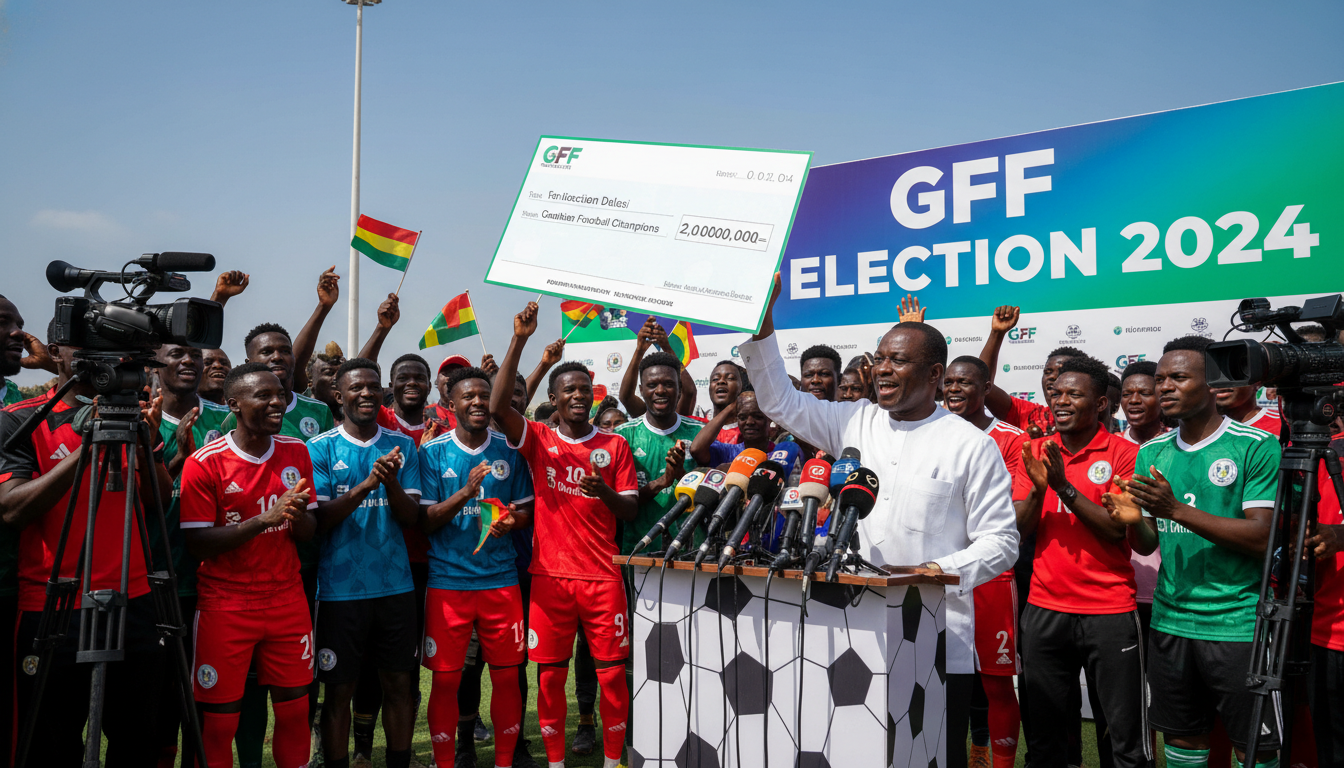
Kamaso pledges cash windfall for First Division champions
Sadibou Kamaso, leader of the Team Restore Confidence slate, announced a package of financial incentives for domestic clubs as part of his bid in the GFF presidential election.
Speaking at the launch of his manifesto at the President’s International Award Conference Hall in Bakau, Kamaso said the First Division League champions would receive two million dalasi should stakeholders elect him as GFF president.
He told assembled delegates and press that the runners-up and third-place clubs would also receive significant sums, part of a broader plan to increase club revenues.
Kamaso described the payments as a priority to boost competition, club stability, and the professionalisation of the Gambian domestic league.
Breakdown of the proposed prize money and preseason grants
Under Kamaso’s proposal, the league runners-up would receive one million five hundred thousand dalasi, while the third-place finisher would be awarded one million dalasi.
He also committed to a uniform preseason preparation grant of two hundred and fifty thousand dalasi to every First Division club to cover training camps, logistics, and equipment ahead of each season.
Kamaso framed the payments as both prize money and operational support, intended to reduce financial pressure on clubs and improve match readiness.
He said the funds would be delivered through mechanisms to be detailed in his administration’s operational plan if he wins the election.
Context of the manifesto launch and campaign timetable
The manifesto event took place in Bakau on a Saturday and formed part of the campaign run-up to the GFF presidential election scheduled for August 2026.
Kamaso used the launch to set out his platform publicly and to invite questions from clubs, stakeholders, and the media ahead of the vote.
The winner of the GFF presidential election will lead The Gambia Football Federation for a four-year term and will be responsible for the governance, development, and international representation of Gambian football.
Campaign pledges such as Kamaso’s prize-money proposal are likely to shape discussions among delegates tasked with choosing the next federation president.
Other candidates and the composition of the race
Kamaso will face several challengers in the GFF presidential election, including Kemo Ceesay, Amadou LS Jaiteh, and Colonel Musa Jammeh.
Each candidate has begun presenting platforms aimed at addressing governance, infrastructure, youth development, and competitive performance on the continental stage.
The presence of multiple contenders raises the prospect of a contested vote and comparisons of policy detail during the campaign.
Observers say voters will weigh immediate financial promises against longer-term plans for institutional strengthening and grassroots investment.
Governance responsibilities and what the new president must deliver
The incoming GFF president will be charged with stewarding national team programs, league structures, club licensing, and international relations with CAF and FIFA.
Key responsibilities also include securing sponsorship, managing federation finances transparently, improving coaching and refereeing standards, and advancing facilities and youth academies across the country.
Candidates’ pledges will be assessed not only for their headline figures but also for feasibility, funding sources, and mechanisms that ensure proper distribution and accountability.
Stakeholders including clubs, regional associations, and government representatives will look for clear timelines and safeguards before endorsing large-scale financial commitments.
Potential reactions from clubs, coaches and stakeholders
Club officials welcomed the headline sums publicly as an incentive to raise competitive standards, while some administrators called for more detail on funding sources.
Coaches noted that reliable preseason grants could enable more robust preparation and improved conditioning, but they cautioned that money alone would not resolve deeper structural issues.
Several club executives emphasized the need for transparent disbursement procedures and independent auditing to prevent delays or misallocation.
Regional association members asked for assurances that investments would be accompanied by technical assistance, such as coaching courses and facility upgrades, to convert funding into sustained sporting gains.
Financial feasibility and oversight concerns
Observers and governance experts stressed that the credibility of Kamaso’s proposal will depend on how the funds are sourced and managed within the federation’s budget.
Potential funding avenues discussed during the launch included sponsorship deals, government partnerships, increased commercial revenue, and reallocation within the GFF’s financial plan.
Governance advocates recommended establishing an oversight committee and published reporting schedules to ensure clubs receive promised payments on time.
They also urged candidates to present contingency plans showing how commitments would be honored in the event of shortfalls or delayed revenue streams.
Implications for competitiveness and player development
If implemented, the prize money and preseason grants could raise the competitiveness of the First Division by enabling clubs to retain talent and invest in preparation.
Financial improvements at club level may reduce player migration pressures and encourage longer-term contracts, which in turn can stabilise team rosters and coaching strategies.
However, analysts pointed out that sustainable player development requires parallel investments in youth systems, coaching education, and scouting networks.
A balanced approach that combines immediate financial support with long-term developmental programs would be necessary to produce durable improvements in Gambian football standards.
Next steps for the candidates and federation stakeholders
With the GFF presidential election set for August 2026, candidates will continue to present detailed plans and engage with voters across regional associations and clubs.
Kamaso and his rivals are expected to submit formal manifestos to federation delegates, participate in debates, and outline monitoring frameworks for their proposals.
Clubs and stakeholders will likely demand written commitments and verifiable timelines before fully endorsing monetary pledges.
The federation’s election commission and relevant committees will be responsible for administering the vote and ensuring a transparent process.
The GFF presidential election campaign has now moved from promise to scrutiny, with Kamaso’s financial pledges sharpening the focus on club funding and federation accountability.
How candidates translate campaign rhetoric into actionable, audited plans will determine whether Gambian football can secure both short-term relief for clubs and long-term growth across the game.