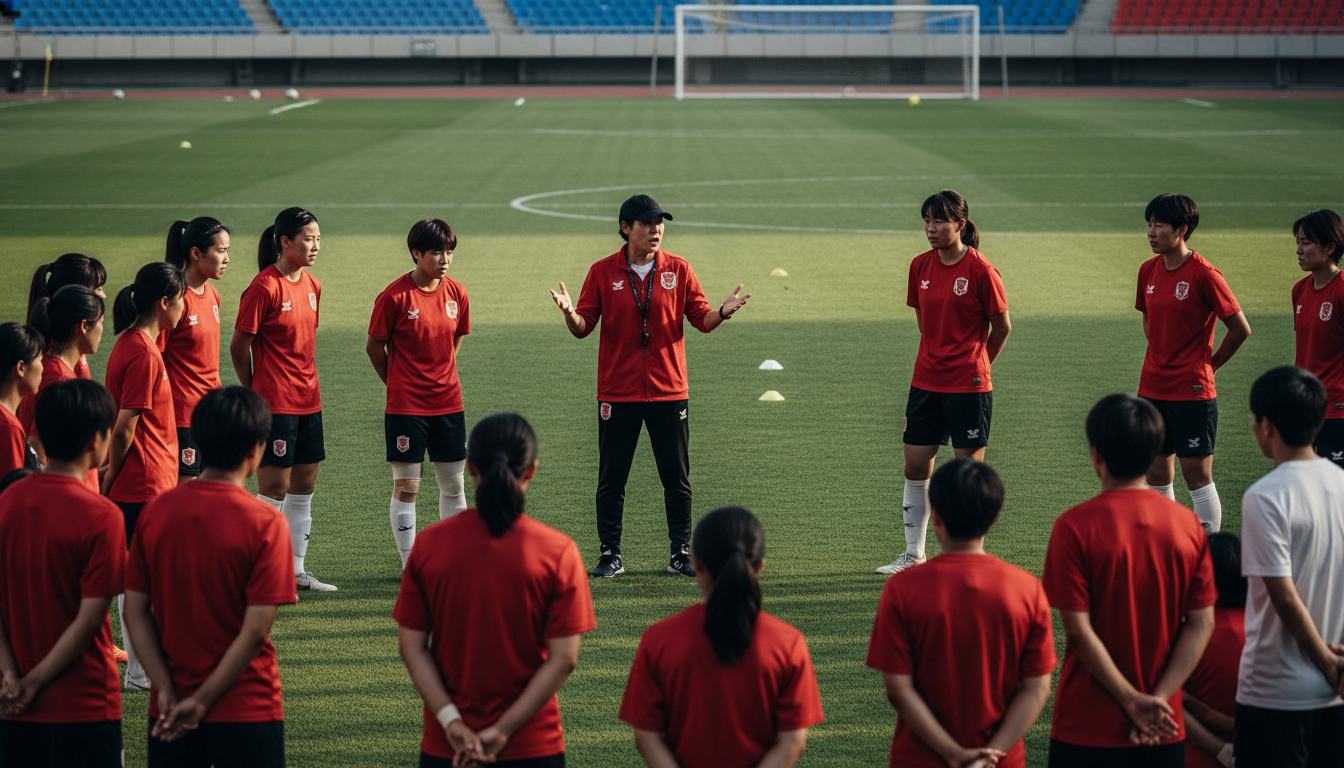
Naegohyang Women’s FC set for Asian Women’s Champions League final in Suwon
Naegohyang Women’s FC reach Asian Women’s Champions League final in Suwon, facing Tokyo Verdy Beleza after a rain-soaked semi; coach Ri rejects ‘rough’ label.


Naegohyang Women’s FC will contest the Asian Women’s Champions League final in Suwon on Saturday after edging past Suwon FC Women in a rain-lashed semi-final earlier this week. The North Korean side’s appearance marks the first visit by a North Korean sports team to South Korea in eight years, drawing intense attention to both the match and the broader diplomatic context. Coach Ri Yu-il said his players were not "rough" and expected the final to be conducted strictly within the rules of the game.
Naegohyang reach Asian Women’s Champions League final
Naegohyang secured their place in the final with a victory over Suwon FC Women at the Suwon stadium, overcoming difficult conditions to reach the championship match. The win set up a title showdown with Japan’s Tokyo Verdy Beleza and capped a run of results that has drawn widespread scrutiny because of the fixture’s historical and political undertones.
The team’s progress in the tournament has been followed closely by fans and officials across the peninsula, with officials noting the rare nature of a North Korean sporting delegation playing on South Korean soil. The successful semi-final performance offered a sporting narrative that has, at least for the moment, superseded off-field tensions.
Semi-final in Suwon marked by physical contest and fair play
The semi-final was contested in torrential rain, making footing and ball control a challenge for both sides and forcing referees to manage an unusually physical game. Over the course of 90 minutes three players from Naegohyang and two from Suwon received yellow cards, reflecting a match that was competitive but did not escalate into major incidents.
Local reports and match footage indicated a hard-fought encounter played largely in a spirit of sportsmanship despite tempers flaring on a handful of challenges. Referees maintained control and the game concluded without any sending-offs or prolonged stoppages, allowing the focus to remain on the sporting outcome.
Coach Ri Yu-il rejects ‘rough’ label and praises discipline
Ahead of the final, Naegohyang coach Ri Yu-il addressed comments by some opponents and members of the public who described the semi-final as a "rough match." Ri said he had heard such descriptions since the team’s arrival but pushed back, emphasizing his squad’s discipline and adherence to the laws of the game.
Ri also signaled confidence in how the final will be officiated, stating that he expected the match to be played "according to the letter of the law." His remarks sought to frame Naegohyang’s approach as professional and rule-abiding, while defusing narratives that could inflame tensions ahead of the high-profile contest.
Security and diplomatic backdrop for North Korean delegation
The visit of Naegohyang to Suwon carries diplomatic weight as the first tour by a North Korean sports team to the South in eight years, a fact that has shaped planning and public commentary around the fixture. Organizers and local authorities coordinated logistics and security to ensure the matches proceeded without incident, mindful of the heightened attention.
Officials also worked to separate sporting arrangements from political messaging, aiming to keep the focus on competition and the welfare of players and staff. The absence of major off-field disruptions during the semi-final suggested the measures in place were effective in preserving the integrity of the tournament.
Tokyo Verdy Beleza arrive as tactical and technical challenge
Tokyo Verdy Beleza, the Japanese champions waiting in the final, are widely regarded as a technically proficient and well-organized side who will test Naegohyang across multiple phases of play. Their experience in continental competition and domestic success provide a clear benchmark for the level of performance required to win the title.
Analysts anticipate that Tokyo Verdy Beleza will seek to control possession, probe for openings on the flanks and use quick transitions to unsettle Naegohyang’s defensive shape. The final will offer a contrast in styles and a chance to see how Naegohyang adapts tactically against a team with a strong continental pedigree.
What to watch tactically and in player matchups
Weather is set to be a factor again, with the semi-final played in heavy rain that influenced the tempo and physicality of play; any continuation of poor conditions could favour teams that thrive in direct, robust contests. Set-pieces and second-ball situations also loom large as decisive moments in matches played on slick surfaces.
Key individual matchups to monitor include midfield battles where Tokyo Verdy Beleza’s technical control may clash with Naegohyang’s intensity in closing down space. Discipline will be important for both sides given the caution shown by the referee in the semi-final and the potential impact of accumulated bookings on team selection.
Both managers will weigh choices between tactical continuity and reactive changes as they seek to exploit perceived weaknesses while limiting exposure to counterattacks. The mental aspect of the game—managing pressure in a final that carries symbolic as well as sporting weight—could be as decisive as any formation or personnel decision.
Naegohyang’s run to the final has already resonated beyond sport, offering a momentary bridge between communities and drawing attention to the role of football as a stage for rare cross-border competition. As the teams prepare for Saturday’s showdown in Suwon, the final promises a high-stakes contest between contrasting football philosophies and a chance to settle the championship on the pitch.