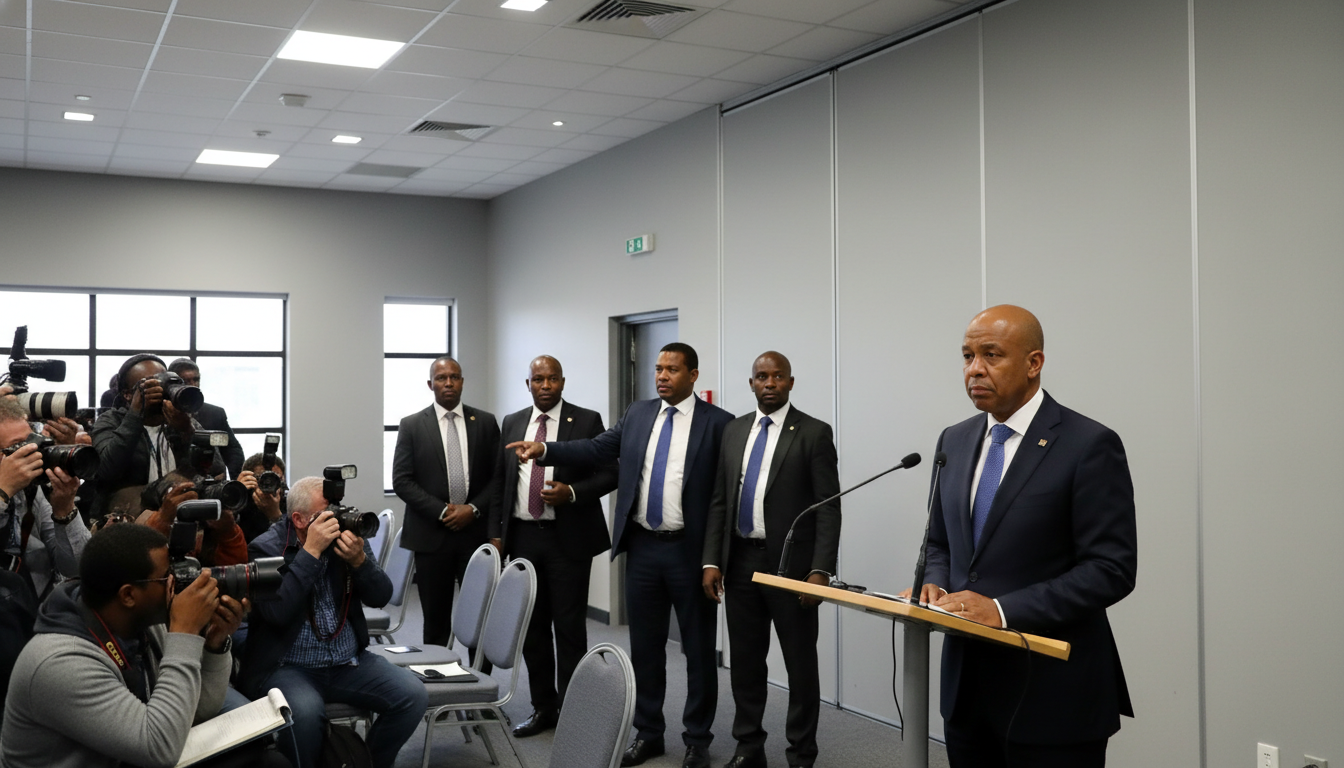
Danny Jordaan fraud case postponed to August 27 as SAFA ousts four critics ahead of September elective congress
Danny Jordaan fraud case postponed to August 27 as SAFA removed four critics at the May 24 congress; federation now prepares for an elective congress penciled for September 2026.


Danny Jordaan’s fraud case, which dates back to arrests in December 2024, was again adjourned after a brief appearance at the Palm Ridge Magistrate’s Court on May 25, 2026, with the matter set down for August 27, 2026. The court appearance came a day after the South African Football Association (SAFA) held an ordinary congress in Kempton Park on May 24, 2026, where delegates voted to permanently remove four individuals described by critics as opponents of the federation’s leadership. The developments have deepened a period of political tension inside SAFA as the body moves toward an elective congress penciled for September 2026.
Court hearing and new adjournment
The brief hearing at Palm Ridge Magistrate’s Court on May 25, 2026, once again delayed the prosecution of corruption and fraud allegations involving Jordaan and several co-accused. Those appearing alongside Jordaan included SAFA chief of finance Gronie Hluyo, PR specialist Trevor Neethling, and former CEO Russell Paul, according to court records and federation statements. The matter was postponed until August 27, 2026, continuing a pattern of repeated adjournments that has marked the case since the initial arrests in December 2024.
Defense counsel had proposed an earlier postponement, suggesting late July 2026, after the 2026 FIFA World Cup in June–July, but the magistrate set the later August date instead. Legal teams for both sides are expected to exchange further papers and prepare pre-trial statements in the intervening months. The recurring delays mean the case will remain live and unresolved for the immediate run-up to SAFA’s planned elective congress.
Kempton Park congress and the expulsion vote
SAFA’s ordinary congress in Kempton Park on May 24, 2026, produced one of the most consequential internal outcomes to date when delegates voted to permanently expel four individuals characterized by some delegates as vocal critics of the current administration. The expulsions were announced at the meeting and took place less than 24 hours before the court appearance involving Jordaan and his co-accused. Federation officials framed the vote as a governance decision, while detractors described it as a move that further consolidates the leadership’s grip on internal structures.
The congress followed a national executive committee (NEC) meeting held two days earlier, and the pace of activity inside the federation has intensified as SAFA approaches the elective congress window. Delegates at the ordinary congress also considered routine reports and administrative business, but the removal of the four critics dominated post-meeting coverage and prompted questions about internal dissent and due process.
NEC meeting and elective congress timetable
SAFA’s national executive committee met on May 22, 2026, setting an administrative and procedural agenda that fed directly into the May 24 congress outcomes. NEC members discussed preparations for the elective congress that is currently penciled in for some time in September 2026, along with governance matters and ongoing legal challenges facing the federation. According to sources within the organization, the NEC sought to ensure compliance with statutes and to manage the calendar of meetings leading to the election period.
President Danny Jordaan has not ruled out standing for another term, and federation officials said discussions about nominations and eligibility criteria would accelerate in the coming weeks. The proximity of the criminal case’s next court date and the internal disciplinary decisions passed at the May congress have introduced new uncertainty into the timetable and the environment in which candidates will make their bids.
Reactions inside SAFA and among critics
The expulsions and the court adjournment have drawn varied reactions across South African football circles. Supporters of the current administration argued that the congress and NEC acted within their mandate to preserve institutional integrity and enforce federation rules. Opponents and civil society observers, however, questioned whether the removal of dissenting voices ahead of contentious legal proceedings risked narrowing internal debate at a sensitive moment.
A phrase that circulated among critics—“Why bend backwards for Jordaan?”—captured the tone of some opposition within the wider football community. That sentiment highlights growing frustration among those who believe the federation’s governance structures should be more transparent and less influenced by personalities. At the same time, a number of provincial affiliates and stakeholders urged calm and adherence to established legal and procedural remedies, calling for processes to run their course before drawing broader conclusions.
Impact on governance, sponsors and national priorities
The combination of pending criminal proceedings and internal disciplinary measures creates a challenging backdrop for SAFA as it seeks to maintain sponsor confidence and to focus on football development objectives. Commercial partners typically seek stability and certainty, and prolonged legal disputes at senior leadership levels can complicate contract negotiations and activation plans. Federation executives acknowledged the need to reassure stakeholders that the administration remains committed to delivering on sponsorship obligations and running competitions effectively.
Beyond commercial concerns, the governance tensions have raised questions about how SAFA will balance internal politics with operational responsibilities, including national team programs and grassroots initiatives. Officials insisted that technical operations and team preparations will continue unaffected, while independent analysts said the organization must demonstrate clear separation between legal matters and sporting administration if it is to avoid reputational damage.
Legal outlook and possible scenarios ahead
With the next hearing scheduled for August 27, 2026, the criminal case against Jordaan and others will likely remain a feature of South African football news through the late summer and into the autumn. Legal commentators note several possible paths forward: further adjournments as both sides prepare, pre-trial applications that could narrow issues before the magistrate, or, ultimately, a trial if the prosecution proceeds. Each path carries different implications for timing, media attention, and how the federation navigates its electoral calendar.
From a governance perspective, allegations alone do not automatically disqualify officeholders from standing for elective positions unless federation statutes or criminal findings specify otherwise. That legal nuance means that the question of candidacy and eligibility could become a focal point in the months leading to the elective congress in September 2026. Observers expect affiliates, external watchdogs, and rival candidates to scrutinize SAFA’s electoral rules closely as nomination windows approach.
Next steps for SAFA and key dates to watch
SAFA stakeholders will watch several key dates in the coming months: the next court appearance on August 27, 2026; the windows for nomination and campaigning that precede the elective congress; and the elective congress itself, currently penciled for September 2026. In the short term, the federation has signaled that routine operations and competitions will continue, while internal committees are expected to finalize procedural guidelines for the election period. How the organization manages transparency around those processes will be closely watched by affiliates and the public.
The sequence of events that began with the NEC meeting on May 22, followed by the ordinary congress on May 24 and the court appearance on May 25, demonstrates how legal and governance matters are now intertwined in SAFA’s calendar. With the matter adjourned and internal disciplinary decisions already implemented, the federation moves into a period where political maneuvering and legal strategy will shape the lead-up to September’s elective congress.
The coming months will reveal whether SAFA can reconcile the competing demands of legal clarity, internal democracy, and continuity of football operations, and whether those dynamics will influence decisions about leadership and the future direction of the federation.