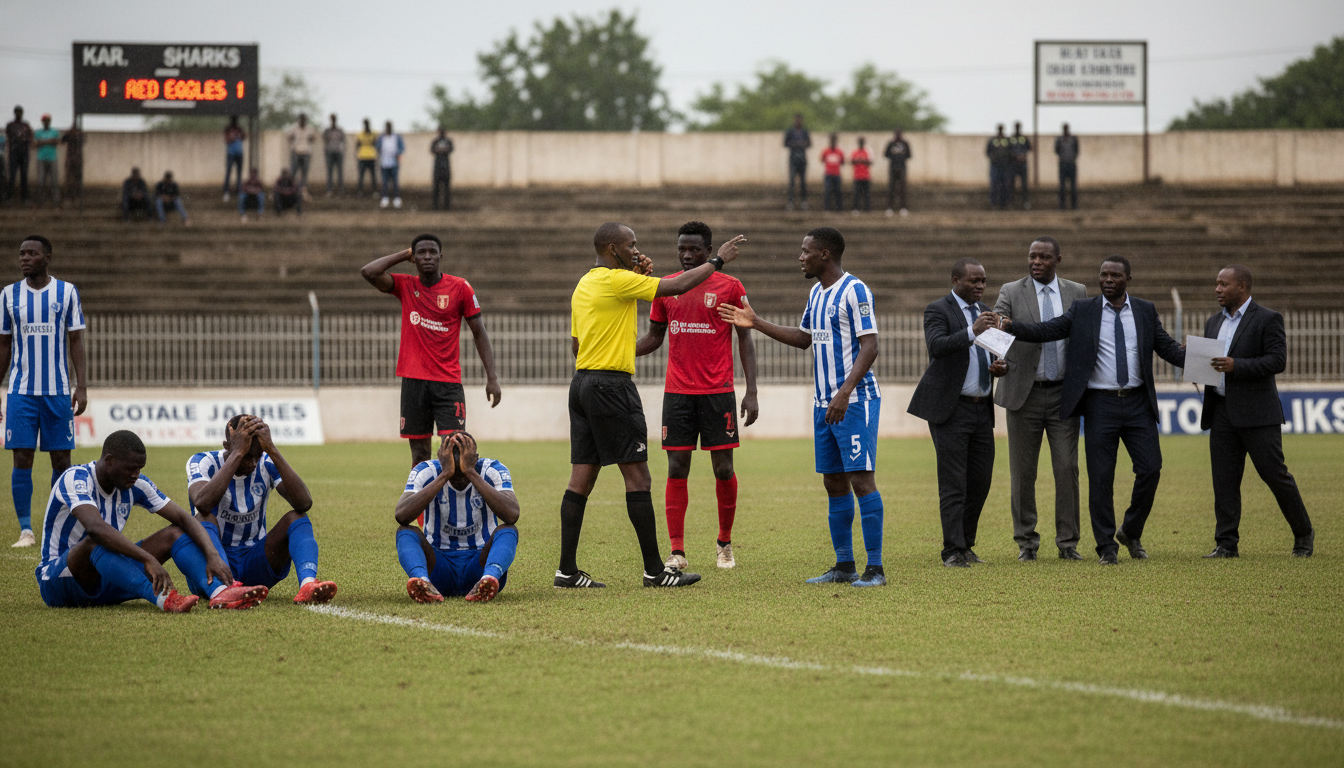
Kariobangi Sharks relegation hangs after 1-1 draw with Kenya Police as Ulinzi secure safety and FKF heads to High Court
Kariobangi Sharks relegation hangs in the balance following a 1-1 draw with defending champions Kenya Police, while Ulinzi Stars’ victory over Tusker reshaped the battle to stay in the FKF Premier League. The result leaves Sharks facing a likely drop but a pending legal challenge could yet alter the final outcome.


Police take lead through own goal, Sharks fight back
Ally Awesu’s misdirected clearance in the 68th minute handed Kenya Police the lead at the Police Sacco, putting the defending champions on course to fend off late pressure. Kariobangi Sharks, who were promoted to the top tier in 2017, responded 11 minutes later when Patilla Omotto converted to level the game and briefly revive survival hopes.
The draw left Sharks needing help from other results to avoid automatic relegation, and those hopes were extinguished when results elsewhere did not go their way. The collective outcome on the night pushed the relegation narrative from pitch performance to administrative dispute.
Ulinzi’s win over Tusker seals their status
At the Ulinzi Sports Complex, Bildad Abonga’s header in the 55th minute put Ulinzi Stars in front and set the tone for a tense second half. Paul Okoth added a late, decisive strike in the 88th minute to make it 2-0 and secure the soldiers’ return to safety in the top flight.
The victory moved Ulinzi to 14th place with 38 points from 33 matches, the same tally as Mathare United, who slipped to 15th on goal difference or head-to-head criteria. That narrow escape underscored how a single result across the division can determine survival.
Standings fallout and immediate implications for Sharks
Kariobangi Sharks’ draw, coupled with Ulinzi’s success, leaves Sharks effectively outside the automatic safety positions and facing relegation under the league regulations currently in force. The club’s supporters and officials face the prospect of life outside the FKF Premier League unless a legal intervention changes the framework that decides which teams go down.
Beyond the emotional and sporting consequences, relegation carries financial and operational ramifications for Sharks, who would have to restructure budgets, player contracts and community programmes if they drop to the National Super League. For a club that returned to the top tier in 2017, demotion would be a significant setback.
Legal challenge could reopen the relegation picture
Complicating the immediate sporting verdict is an ongoing legal dispute between the Football Kenya Federation (FKF) and the Sports Disputes Tribunal (SDT). The SDT previously ruled that the federation should apply the 2019 regulations, which call for two automatic relegations with a playoff between the third-bottom Premier League side and the NSL third-placed team.
FKF has lodged an appeal with the High Court seeking to overturn the SDT decision and reinstate the current regulations that mandate automatic relegation for the bottom three teams. That appeal places Kariobangi Sharks’ fate in the hands of the judiciary and means on-field outcomes may not be the final determinant of league membership for next season.
How the 2019 regulations would affect the playoff picture
Under the 2019 framework endorsed by the SDT, the third-from-bottom Premier League team would not face automatic relegation but would instead contest a two-legged playoff with the third-placed side from the National Super League. That scenario would offer Kariobangi Sharks a potential route back into the top flight through on-pitch competition rather than direct demotion.
If the High Court upholds the SDT’s position, Sharks could be elevated from a doomed finish to a lifeline in the form of a relegation playoff. Conversely, a successful FKF appeal would likely confirm automatic relegation for the clubs finishing in the bottom three under the federation’s existing regulations.
Next steps, timelines and what stakeholders face
Both legal teams are expected to submit further filings as the case progresses, and the High Court’s timetable will determine whether a decisive ruling arrives before the FKF can complete end-of-season administrative processes. The uncertainty places clubs, players and sponsors in a holding pattern and complicates planning for the forthcoming season.
For Kariobangi Sharks, the immediate priorities will be stabilising the squad and retaining key personnel while preparing contingencies for either outcome. For Ulinzi, Tusker, Mathare and other clubs near the drop zone, the result of the court case could alter recruitment plans, budget allocations and preseason scheduling.
Broader consequences for Kenyan football governance
The dispute highlights tensions between sporting bodies and dispute-resolution mechanisms over which regulatory framework should apply, and it raises questions about clarity and consistency in league administration. Clubs are now contending with both competitive and legal uncertainty, and the episode may prompt calls for clearer rules and timetables going forward.
At stake is more than a single season; the way this dispute is resolved could set a precedent for how future regulatory conflicts are handled and for the balance of authority between FKF and adjudicating bodies. Stakeholders across Kenyan football will be watching the High Court closely for a ruling that could influence governance standards.
Kariobangi Sharks now await both legal and sporting developments as their top-flight future remains unresolved pending the High Court appeal and the finalization of season standings.