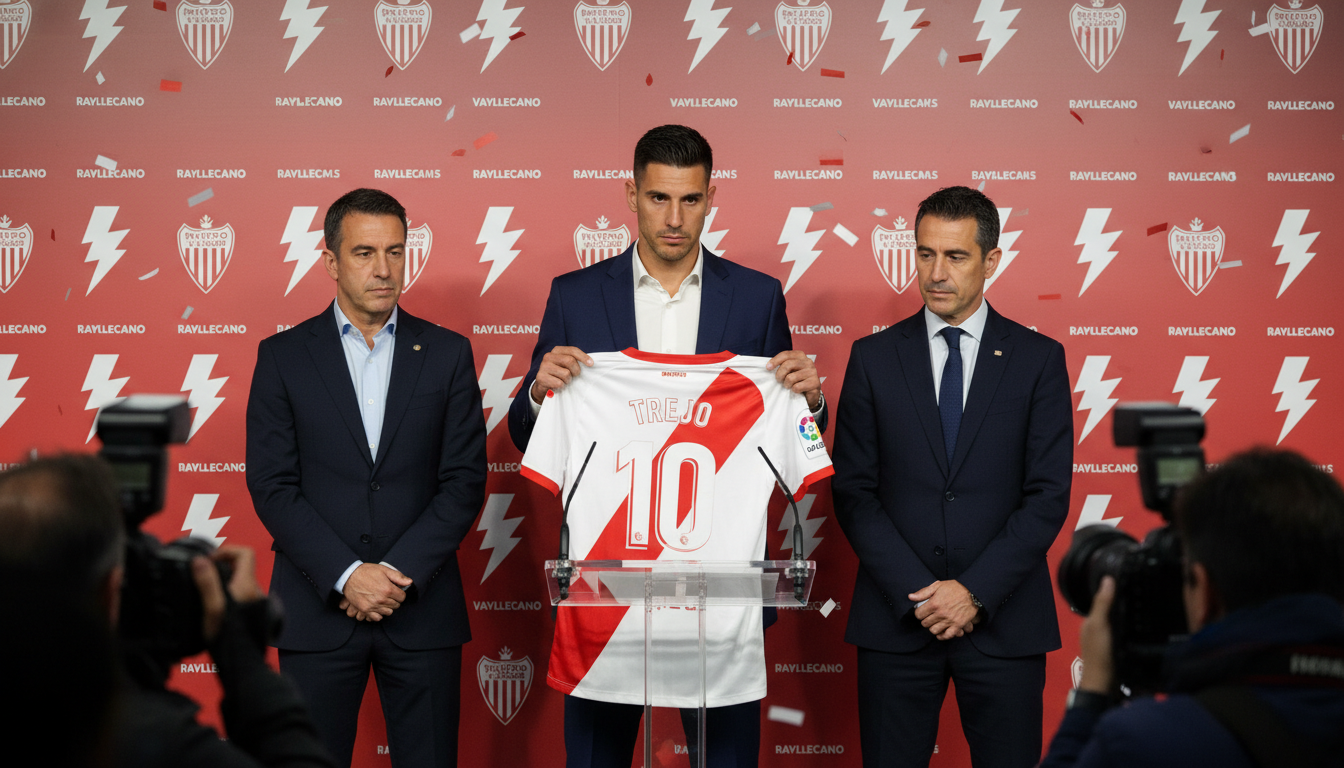
Oscar Trejo Leaves Rayo Vallecano After 10 Seasons, Ending a Decade of Service
Oscar Trejo exits Rayo Vallecano after ten seasons and 334 appearances. Teammates, club and fans pay tribute as the captain closes a defining chapter in Madrid


Trejo ends a decade at Rayo Vallecano
Oscar Trejo has formally closed his ten-year spell with Rayo Vallecano, bringing to an end a period marked by promotion, cup runs and continental qualification. The club icon departs after 334 appearances, three promotions and a pivotal role in Rayo’s rise through the Spanish leagues.
His final campaign included a run to the Conference League final and helped solidify his status as one of the most recognizable figures at the club. The announcement signals one of the most significant exits in Rayo’s recent history and begins a summer of transition for the side.
Player message mixes disappointment and gratitude
In a farewell message shared with supporters, Trejo acknowledged the pain of losing the European final while underlining pride in his years with the club. He emphasized lessons learned, the importance of humility and the bonds formed with teammates, staff and the barrio that embraced him.
Trejo framed his decision as the close of an important personal chapter rather than a single sporting result, thanking the club and supporters for their role in his journey. He insisted that while trophies are important, the human connections and values developed over a decade will endure.
Reactions from the dressing room and club circle
Tributes poured in quickly from teammates and colleagues, with a string of messages highlighting Trejo’s influence on and off the pitch. Several current players described him as a friend and a legend, expressing affection and recognition for his leadership across seasons.
Notable responses came from squad members who are themselves at pivotal contract crossroads, underscoring the moment’s emotional and sporting weight. The consensus in the dressing room was clear: Trejo leaves as a defining figure whose presence shaped the club’s recent identity.
Impact on Rayo’s roster and the club’s upcoming season
Trejo’s departure comes as Rayo Vallecano prepares for a summer of considerable turnover, with multiple first-team contracts set to expire or be renegotiated. The squad faces a reshuffle that could alter tactics, leadership roles and recruitment priorities for the next campaign.
Sporting directors will need to balance replacing experience with investing in younger options, while supporters and analysts debate whether the club should promote from within or chase reinforcements externally. The exit of a long-serving captain always carries practical consequences, from set-piece organization to dressing-room dynamics.
Legacy in the neighborhood and the club’s culture
More than statistics, Trejo’s legacy is tied to his relationship with the Vallecas neighborhood and the identity of Rayo as a club rooted in local pride. His decade-long commitment helped cement a narrative of resilience and connection between the team and its supporters.
Fans remember not only his on-field contributions but also his presence at community events and the way he represented the club in public. That bond with the barrio means his departure will be felt across more than just the matchday squad.
A farewell with symbolism and future questions
Trejo accompanied his farewell post with a carefully chosen song, a detail that immediately fueled conversation among supporters and pundits. The gesture was read by many as a layered goodbye — emotional but open-ended — and prompted speculation about whether the player might return in another capacity.
Despite public expressions of mutual respect between player and club, Trejo said he had not received a formal offer to remain in a non-playing role. That omission leaves his post-playing plans uncertain and has generated discussion about how clubs manage transitions for long-serving figures.
As Rayo Vallecano prepares for the next season, the club must address immediate sporting needs while also honoring the thread of continuity Trejo embodied. Decisions on recruitment, leadership appointments and squad structure will be watched closely by a fan base still processing the farewell.
For Trejo himself, the options are varied: continuing to play elsewhere, moving into coaching, or taking up an off-field position that leverages his deep knowledge of the club. His public remarks stressed readiness to embrace new challenges while remaining grateful for his time in Vallecas.
The departure underscores a broader phase of change at Rayo, where several experienced players are due to leave and younger talents will be asked to step up. Balancing respect for the club’s past with the practicalities of building a competitive squad will be the immediate task for those in charge.
Across social media and on the terraces, supporters have begun to compile memories that span promotions, late victories and defining moments influenced by Trejo’s presence. Those recollections form part of a living archive that will shape how the club narrates this era in years to come.
While the scoreboard recorded results, the deeper measure of Trejo’s impact will be how future squads reference his example in moments of pressure. The combination of longevity, on-field contribution and neighborhood attachment is rare and will inform how Rayo markets itself and moves forward.
Trejo departs as a symbol of continuity in a club that prides itself on character and community. His exit crystallizes both an ending and a prompt for renewal as Rayo prepares to chart the next phase of its competitive history.
There is, finally, the personal dimension: Trejo spoke of leaving with pride and the certainty that he had given everything he could. Whether he returns to Vallecas in a new role or takes a different path, his decade at Rayo Vallecano will remain a defining chapter for player and club alike.