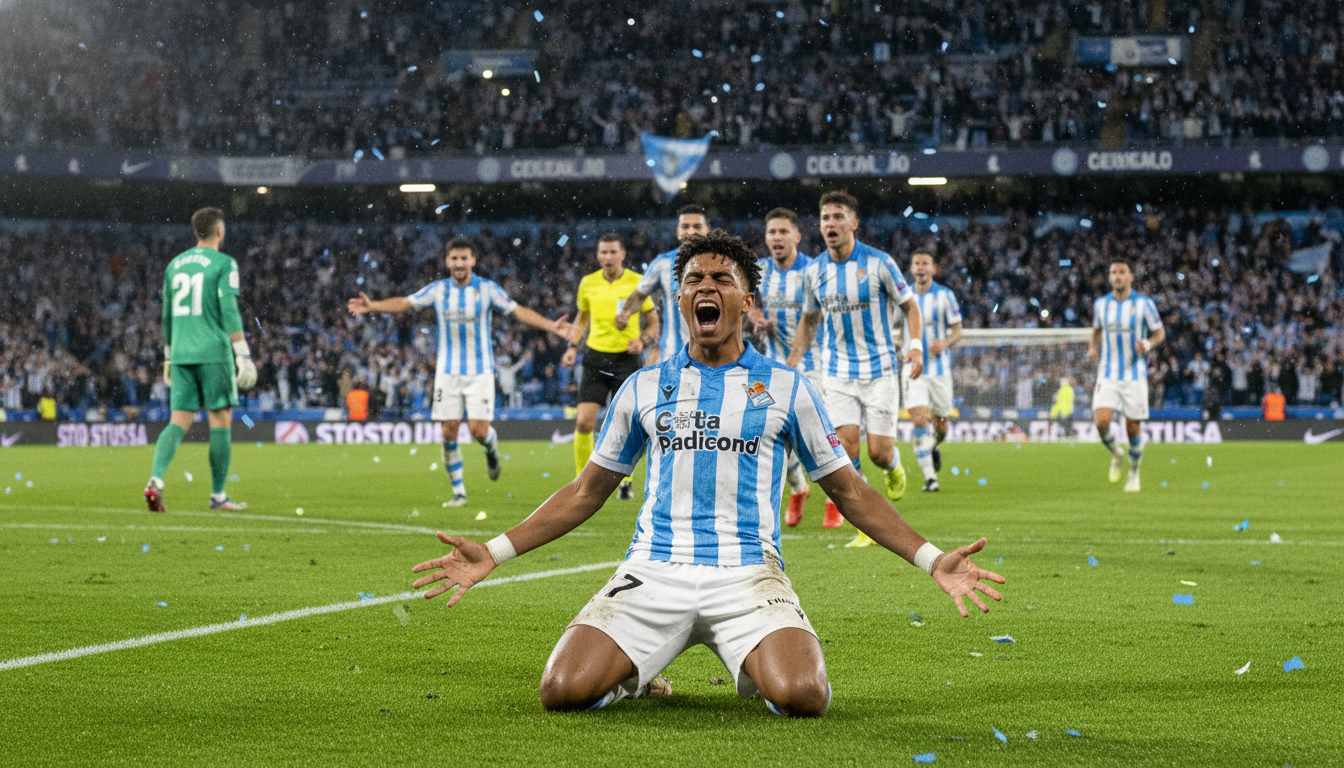
Celta de Vigo 1-0 Sevilla: Ilaix Moriba’s strike secures narrow home victory
Celta de Vigo 1-0 Sevilla — Moriba’s long-range finish from a Fer López free kick proved decisive as Celta held on for a victory.


Celta de Vigo edged Sevilla 1-0 in a tightly contested match that turned on a solitary strike from Ilaix Moriba. The goal came from outside the area after a set-piece delivery by Fer López and proved enough amid multiple stoppages and late Sevilla pressure. The result was shaped by a combination of clinical set-piece execution, timely defensive interventions and a series of tactical substitutions from both benches.
Ilaix Moriba’s long-range strike decides fixture
Ilaix Moriba scored the only goal of the game with a low, driven effort from outside the area that nestled by the left post. The move originated from a foul awarded to Celta, with Fer López standing over the free kick and finding the rebound that Moriba struck home. That single moment of quality separated the sides on a night defined by narrow margins and few clear-cut chances.
The finish underlined Celta’s set-piece preparation and Moriba’s ability to strike from distance with accuracy. Sevilla scrambled to react but could not fashion an equaliser despite sustained spells of pressure later in the match. For Celta, the strike rewarded a game plan that relied on controlled build-up and moments of directness from midfield.
Fer López’s role in the goal was decisive, both in winning the free kick and in the delivery that led to the finish. His influence continued until he was forced off injured, a factor that required Celta to reconfigure their midfield later in the contest. The free-kick goal illuminated the fine margins that so often decide fixtures between evenly matched opponents.
First half: chances and nervy moments
The opening 45 minutes passed without a goal but with multiple opportunities for both teams to take the lead. Sevilla came closest on a few occasions, including a dangerous Alexis Sánchez effort that forced a near-post response from Celta’s backline. Isaac Romero also had a header that flew over, while Celta’s forwards tested Sevilla’s organisation on several set-piece situations.
Celta created opportunities of their own, with Sergio Carreira and Fer López combining to produce a threat from wide positions and crosses into the area. Defending was robust at both ends, and the referee added two minutes of stoppage time before the break to account for interruptions. Neither side could find the decisive edge in open play before the teams returned to the tunnel.
The first half featured a competitive midfield battle, with fouls and short stoppages interrupting sustained rhythm on both sides. Ilaix Moriba was shown a yellow card for dangerous play, reflecting the physical nature of the fixture. That caution signalled refereeing vigilance and hinted at the tensions that would surface again after the interval.
Second half: decisive set-piece and game control
The second half saw Celta convert their set-piece opportunity into the match-winning goal, forcing Sevilla into a more urgent posture. After Moriba’s strike, Celta shifted into a protective mode, seeking to manage the game while still probing for counter opportunities. Sevilla’s response involved personnel changes and a more forward-leaning approach, but chances were limited by organised Celta defending.
Play was interrupted multiple times by injuries and stoppages, including a notable halt after an incident involving Celta goalkeeper Ionut Radu. Those breaks disrupted momentum and complicated Sevilla’s attempts to build sustained attacking sequences. As the match entered its final phase, the fourth official signalled five minutes of additional time, giving Sevilla a brief window to overturn the deficit.
Celta’s commitment to defending the lead was evident in their structure and in the allocation of players behind the ball. The hosts absorbed pressure and managed set-piece situations effectively, while attempting to relieve pressure through selective clearances and counter transitions. The tactical focus on compactness and clearing second balls ultimately preserved the 1-0 margin.
Tactical changes and key substitutions
Both managers turned to their benches as the match evolved, seeking fresh energy and tactical adjustments. Celta introduced Ferran Jutglà for Iago Aspas and later brought on Pablo Durán for Borja Iglesias, moves designed to maintain offensive threat while conserving defensive shape. Hugo Álvarez and Óscar Mingueza were also introduced to shore up wide and central areas, reflecting a pragmatic shift after the goal.
Sevilla responded with multiple substitutions aimed at increasing attacking tempo and variety. Neal Maupay and Akor Adams were introduced as options to lead the line, while Rubén Vargas and Nemanja Gudelj were brought on to influence wide play and midfield stability respectively. Chidera Ejuke also entered proceedings to offer additional width and directness in the final third.
Some substitutions were enforced by injury rather than purely tactical choice, most notably Matías Vecino replacing the injured Fer López for Celta. The timing and nature of the changes produced fresh match-ups and altered the balance in midfield, but the replacements were unable to create the clear chances required to change the scoreline. That underscored the difficulty of unpicking Celta’s compact defensive setup once they retreated to protect the lead.
Sevilla’s late pressure and thwarted chances
Sevilla increased their intensity in the closing stages, producing several attempts that tested Celta’s goalkeeper and defenders. Nemanja Gudelj had a shot from distance that was repelled, while Rubén Vargas produced a couple of efforts that went narrowly wide or were blocked. Akor Adams and Isaac Romero also looked to exploit aerial opportunities and work overloads in the box, but decisive touches were missing.
Sergio Carreira’s strike that hit the post was one of several near-misses that demonstrated how fine the margins were on the night. Sevilla fashioned set-piece opportunities of their own, and a corner routine forced defensive reactions, but clear-cut opportunities were either repelled or failed to find the target. Celta’s backline and goalkeeper collectively minimized high-quality chances as the clock ran down.
The pattern of late pressure without a match-winning shot was indicative of Sevilla’s frustrations in the final third. They created peripheral threats and forced blocks and saves, yet lacked the effective finish required to alter the outcome. As the final whistle approached, Celta’s defenders remained composed enough to see out the result.
Discipline, stoppages and other match incidents
The game featured a steady flow of fouls and interruptions that influenced tempo and tactical planning for both teams. Ilaix Moriba received a yellow card for dangerous play during the match, and Neal Maupay was also booked as tensions rose in contested duels. A handball by César Azpilicueta and several tactical fouls punctuated the contest, contributing to frequent stoppages.
Injuries played a notable role in the afternoon’s narrative, with Fer López withdrawing through injury and Ionut Radu requiring treatment that led to stoppages. Those incidents required both sides to adapt swiftly and disrupted the rhythm of play at key moments. The referee added two minutes of stoppage time at the end of the first half and five minutes at the end of the match, reflecting the cumulative impact of these interruptions.
Both teams accumulated fouls in the middle third as they fought for control, and set-pieces were a recurring feature as a result. The cautious use of aggression and careful management of discipline proved important for Celta in protecting their narrow lead. For Sevilla, bookings and stoppages limited the ability to sustain longer offensive spells when they needed them most.
Celta de Vigo will take confidence from a performance that combined decisive set-piece execution with resolute defending. The 1-0 scoreline rewards a game plan focused on structure and opportunism, while Sevilla will reflect on missed chances and the need for sharper finishing in tight fixtures. The match underlined how single moments of quality can determine outcomes in deeply competitive encounters.
Celta’s victory hinged on a moment of individual quality and team discipline, and the hosts will look to build from this performance in forthcoming fixtures.