Scotland fans set to roar in Boston and Miami as Tartan Army returns to World Cup after 28 years
Scotland fans are heading to Boston and Miami for World Cup 2026 after a 28-year absence, bringing the Tartan Army’s celebrated atmosphere despite ticket and travel hurdles.


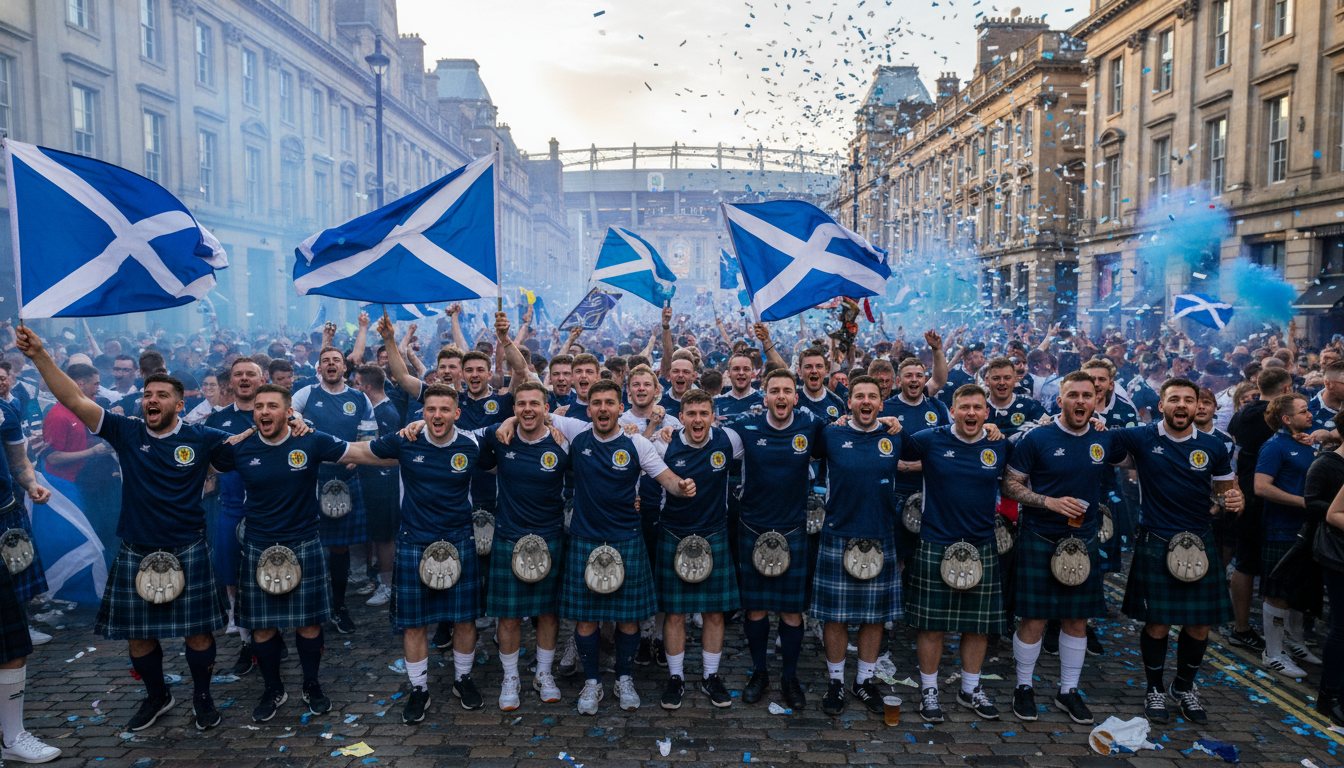
Scotland fans will make a conspicuous return to the World Cup stage in the United States this summer, marking the nation’s first appearance at the tournament since 1998. The long-awaited comeback has galvanized supporters at home and abroad, who plan to travel in large numbers to host cities including Boston and Miami. The Tartan Army’s reputation for colorful displays and vocal support precedes the team, and organizers on both sides of the Atlantic are preparing for a lively arrival.
The build-up has been shaped as much by fan momentum as by the national side’s on-field record, with supporters determined to translate the Euro 2024 atmosphere into a World Cup setting. Scotland’s squad will face pressure to match fan expectations, yet much of the immediate story revolves around the logistics, economics and cultural impact of this return. Local authorities, hospitality businesses and supporter groups are already coordinating to manage the influx.
Tartan Army’s return after a 28-year World Cup absence
Scotland’s qualification for the 2026 World Cup ends a 28-year hiatus from football’s biggest tournament, a gap that has intensified anticipation among supporters. The last Scottish presence at a World Cup was in 1998, and for many fans this tournament represents a generational moment. Travel groups and supporter clubs report surges in registrations and waiting lists.
The return has symbolic significance for Scottish football, rekindling memories of past tournaments while presenting fresh opportunities to showcase national culture abroad. For some fans, attending a World Cup has been a lifelong ambition deferred by decades of near-misses in qualifying campaigns. Organizers of official fan zones and private gatherings expect large, visible contingents of Scottish supporters in key match cities.
Fan numbers and the Euro 2024 precedent
Scotland’s presence at Euro 2024 offered a preview of what to expect in 2026, with roughly 200,000 supporters traveling to Germany and earning praise for their conduct and atmosphere. Observers credited the Tartan Army with energizing host cities despite the national team failing to win a match. That episode strengthened the brand of Scotland supporters as among world football’s most passionate and well-organized.
Event planners say the Euro 2024 turnout has informed preparations for Boston and Miami, particularly around crowd control, transportation and hospitality demand. Local businesses in both U.S. cities have taken note of the potential boost to bars, restaurants and hotels when Scotland’s matches fall on the schedule.
Cost and logistics confronting supporters
Even as enthusiasm climbs, significant logistical and financial barriers are shaping the fan story. Airfares and accommodation rates have surged in many host cities, and the seasonal spike for travel to the U.S. has compounded costs. Fans and travel companies report that many supporters are weighing options between direct trips to match cities and regional itineraries that include multiple fixtures.
Supporter groups are responding with pooled transport, shared accommodation and scaled fundraising campaigns to offset expenses. Several charities and fan associations have launched initiatives to help young or lower-income fans attend, and separate packages offer staged travel plans to reduce individual costs.
Local preparations in Boston and Miami
City officials in both Boston and Miami have begun co-ordinating with Scottish supporter representatives and tournament organizers to prepare for the influx. Public safety briefings, temporary fan zones and transport adjustments are among measures being discussed to accommodate large groups of visiting supporters. Authorities emphasize planning for peak match days when crowds and demand for services will be highest.
Hoteliers and hospitality managers in both cities expect a noticeable uptick in reservations tied to Scotland’s fixtures, and many venues are planning themed events to attract the Tartan Army. Tourism officials note that a well-managed fan presence can deliver substantial economic benefit while also challenging local infrastructure and public transport capacity on busy days.
Scotland’s historical World Cup record and contemporary expectations
On paper, Scotland’s tournament history presents clear challenges: across all prior World Cup and European Championship appearances, the national team has never advanced beyond the group stage. That record has long shaped narratives about Scotland’s international competitiveness and will be a point of focus as the team prepares for 2026. Analysts stress that group-stage performance will shape both fan morale and media coverage.
Nevertheless, supporters and neutral observers point to a deeper context: qualification itself is a milestone after many near-misses. The players and coaching staff face the dual task of managing on-field performance while harnessing the motivational boost the fans provide. How the team translates that energy into results will determine whether the Tartan Army’s long-awaited World Cup return includes sporting as well as cultural triumphs.
Voices from Hampden Park and supporter sentiment
Back home, the mood among supporters at Hampden Park and in community hubs has been one of relief and excitement. Fans spoken to after recent friendlies described a mix of retrospective emotion and forward-looking optimism, noting that the chance to see Scotland on football’s largest stage has renewed domestic interest. Supporter groups have ramped up membership drives and volunteer recruitment for overseas coordination.
Individual fans emphasize the social and communal aspects of travel, from shared chants to coordinated displays and local meetups. While some express pragmatic concerns about costs and logistics, many describe the trip as a once-in-a-lifetime experience that justifies personal sacrifice. Fan leaders stress responsible behavior, aiming to preserve the Tartan Army’s positive reputation while maximizing the cultural impact of their presence.
Final paragraph
Scotland fans will arrive in the United States with a clear identity and high expectations, and their presence will shape the atmosphere of World Cup 2026 as much as any match result. Whether the Tartan Army’s return turns into a wider story of sporting success will hinge on the national team’s ability to convert support into points, but in the meantime the cultural and economic ripple effects of this long-awaited homecoming are already taking shape.