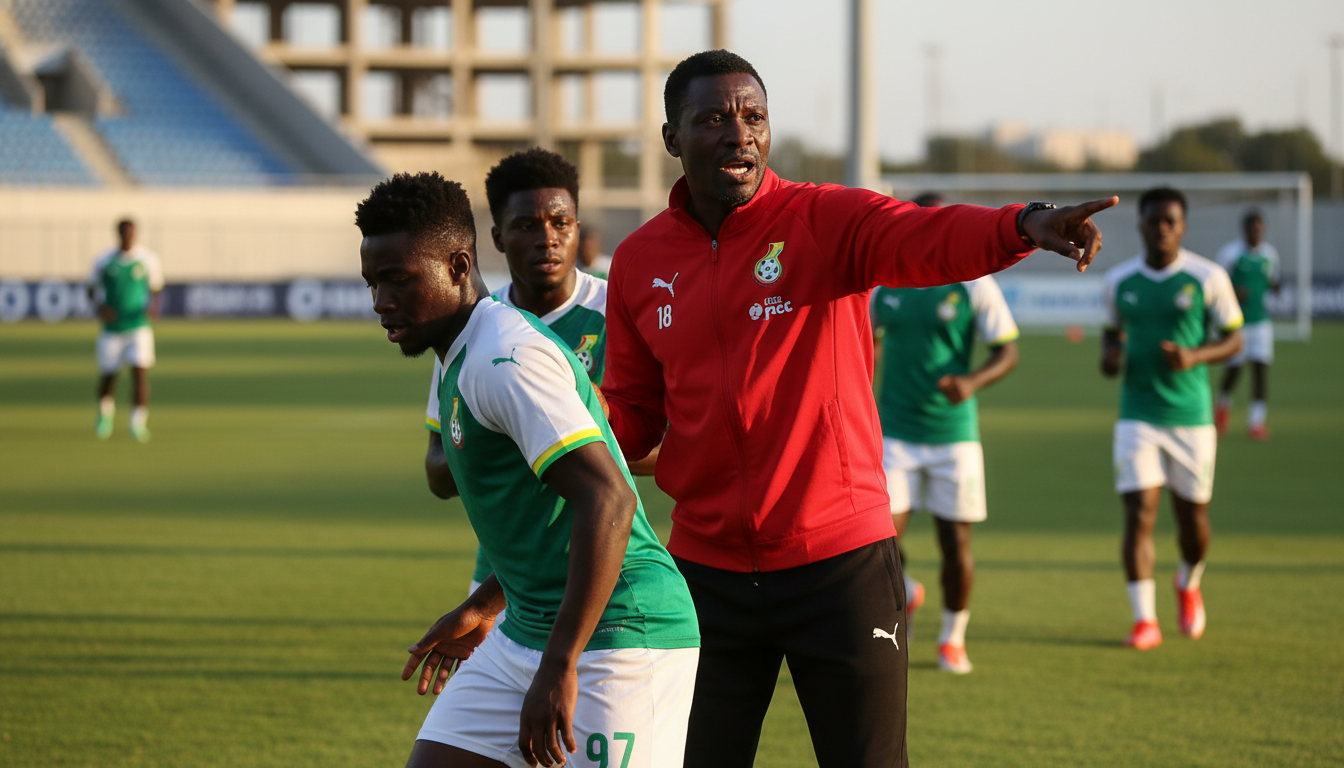
Antoine Semenyo Faces World Cup Spotlight as Asamoah Gyan Warns of Pressure Ahead of Ghana Tie
Antoine Semenyo faces high expectations for Ghana at the 2026 World Cup after a standout season with Manchester City, Asamoah Gyan warns before the June 23 tie.


Antoine Semenyo arrives at the World Cup buoyed by a breakthrough club season and seen as Ghana’s focal point in a challenging group stage. Former Black Stars striker Asamoah Gyan has publicly cautioned that the Manchester City forward will carry intense scrutiny and responsibility for Ghana’s hopes. The remarks came during a PUMA event unveiling Ghana’s World Cup kit, where Gyan reflected on Semenyo’s rapid rise and the weight of national expectation.
Gyan Frames Semenyo as Ghana’s Leading Figure
Asamoah Gyan said the transfer to Manchester City has elevated Semenyo’s profile and, with it, the demands placed on him by supporters and media. He argued that playing for one of Europe’s elite clubs changes public perception and raises immediate expectations for international performances. Gyan suggested that how Semenyo handles this newly concentrated pressure will be decisive for Ghana’s campaign.
Gyan also drew on his own experience facing England to underline what such fixtures mean to Ghanaian players and fans. He recalled scoring against England in a friendly and used that memory to illustrate how single matches can define national narratives and player legacies. The message was clear: club form gives stature, but tournaments bring a different kind of spotlight.
Club Form That Propelled the Move to City
Semenyo’s season before joining Manchester City was notable for its goals and momentum, creating the conditions for a high-profile January move. He had found the net regularly for Bournemouth earlier in the campaign, attracting interest that culminated in a midseason transfer to the Etihad. At City he continued to contribute goals and played a role in decisive moments, reinforcing the argument that he can influence big games.
That club form provides Ghana with a forward who enters the World Cup battle match-fit and confident in front of goal. Coaches and teammates will expect Semenyo to translate that rhythm to the national setup, even if international chemistry and tactical roles differ. How manager Carlos Queiroz — newly appointed in April — chooses to integrate Semenyo will be watched closely.
Attributes That Make Semenyo a Threat
Observers point to a blend of pace, strength and finishing that makes Semenyo difficult for defenders to contain at club level. He offers versatility in front of goal, capable of using either foot and creating chances through movement and direct running. Those attributes suit fast transitional attacks and could be a tactical asset for Ghana against more possession-oriented opponents.
Semenyo’s aerial presence and ability to hold up play can also create space for supporting midfield runners, a quality Ghana will aim to exploit. Yet translating club virtues into international success often depends on role clarity, supply lines from wide players, and the collective discipline demanded by tournament football. The responsibility on Semenyo is therefore both individual and systemic.
Coaching Change and Its Implications for Selection
Ghana’s preparations have been conducted under a new head coach, Carlos Queiroz, who took charge in April after Otto Addo’s departure. Queiroz arrives with a long track record at international level and a reputation for organizing teams defensively, which may alter how Ghana deploys its attacking resources. The change in leadership introduces questions about continuity, selection priorities and tactical shape heading into the World Cup.
Addo’s tenure delivered World Cup qualification despite mixed results in other competitions, and Queiroz inherits a squad with established stars alongside emerging talents like Semenyo. The Portuguese coach’s immediate tasks include settling the defensive structure and deciding how much creative freedom to grant his forwards. Those decisions will determine whether Semenyo plays as the central focal point or as one of several interchangeable attacking options.
Group Stage Challenge Including England on June 23, 2026
Ghana’s group pits them against heavyweight opponents, with a marquee match against England scheduled for June 23, 2026 in Boston. That fixture promises global attention and will be treated as a high-stakes test for both sides, amplifying the scrutiny on Ghana’s most prominent players. For Semenyo, the England game represents both a personal benchmark and a national spotlight in which performance will be judged intensely.
Gyan emphasized that while England is the headline opponent, Ghana’s primary objective must be progression from the group, not fixation on a single match. Tournament football rewards consistency across three games, and Ghana will need points from each fixture to secure advancement. Managing energy, maintaining tactical discipline and coping with external expectations will be central to their approach.
Public Expectation and Internal Pressure Back Home
Supporters in Ghana and the diaspora have raised their hopes after Semenyo’s high-profile club move, creating an intense set of expectations that extend beyond the pitch. Commentators and social media will scrutinize every touch, and the national narrative can swing quickly with a single performance. Former players like Gyan have urged understanding of the unique pressures players face when club stature changes faster than international experience.
The federation and coaching staff can moderate that pressure by setting clear objectives and protecting players from unnecessary distractions. Team leaders will be responsible for shielding Semenyo from off-field noise while ensuring he feels supported on it. That balance between expectation and support will play out publicly and privately over the tournament period.
Ghana’s pathway to the knockout rounds will depend on cohesive defending, reliable set-piece delivery and the capacity of forwards to convert limited chances. Semenyo’s playing time and role could evolve across the group stage depending on match situations and tactical adjustments. The history of tournaments is full of players who peaked at the right moment and those who struggled under the weight of pre-tournament hype.
Queiroz’s tactical blueprint will be tested early, and his handling of star players will be scrutinized by fans and pundits alike. He must weigh Semenyo’s club rhythm against the chemistry and balance required for international fixtures. The manager’s decisions could either unleash Semenyo’s best qualities or constrain them to defensive necessity.
Ghana’s preparation time will be used to refine attacking patterns and to build understanding between Semenyo and his midfield partners. Training drills, friendly matches and internal simulations offer opportunities to iron out pressing triggers and positional exchanges. How quickly Semenyo adapts to those nuances will influence his effectiveness once the tournament begins.
The psychological dimension cannot be overlooked either; playing in the global arena brings heightened emotions for players and staff. Sports psychologists, senior players and the coaching team will likely play a role in maintaining focus and composure. Experience can be simulated through rehearsed responses to setbacks, a key element in tournaments where margins are thin.
Ghana has a proud World Cup record and a passionate support base that expects competitive showings at major tournaments. Success will require collective responsibility across the entire squad, not just reliance on one forward, however talented. Semenyo’s emergence adds a new layer of optimism, but the final verdict will rest on results on the field.
Expectations set now will harden into judgment quickly during match play, especially in headline fixtures like the game against England on June 23, 2026. How Semenyo responds to that testing environment will shape narratives about his international legacy and influence selection debates in subsequent cycles. For the Black Stars, balancing ambition with realism will be essential as they aim to move beyond the group stage.
Public figures who know the pressures of elite football have urged measured support rather than heightened criticism in the early days of the tournament. Their perspective is that talent must be coupled with patience, particularly when players are adapting to new tactical responsibilities. This view advocates for collective backing to maximize the squad’s chances.
As Ghana prepares to meet global opponents, attention will remain fixed on how club momentum translates to international impact. Antoine Semenyo’s form at Manchester City gives him the platform to make a difference, but the tournament context demands more than club statistics. The coming weeks will reveal whether he can shoulder the expectations and help steer Ghana through a demanding World Cup group.
Ghana heads into the World Cup with a mix of experience, fresh talent and a new managerial direction, and Semenyo stands at the intersection of those narratives as both a symbol of progress and a test of adaptability. The team’s opening matches will provide early answers, and by the time the group stage concludes, clearer judgments will have formed about whether the promise surrounding Semenyo converts into decisive impact on football’s biggest stage.