Girona relegation: club leaders set out recovery plan after drop to Segunda
Girona relegation leaves the club regrouping as ownership, executives and sporting directors outline financial losses, stadium plans and a targeted route back to LaLiga.

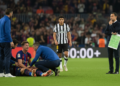
The Girona relegation, confirmed after a 23 May draw at Montilivi that left the club unable to beat Elche when salvation was in its own hands, has prompted a full review of leadership, budget and sporting strategy. The immediate aftermath saw manager Míchel exit for Ajax and the club convene a press briefing where presidents, directors and owners acknowledged failure but pledged to rebuild. Officials stressed that staying competitive and returning to LaLiga are top priorities even as they prepare for a compressed, difficult transfer market and a substantial revenue shortfall.
Girona relegated after home draw with Elche
The result at Montilivi on 23 May sealed Girona’s drop to Segunda despite the team entering the fixture with control of its destiny. Supporters watched a campaign that began with high hopes end in disappointment, and the club has since sought to manage the emotional and operational fallout. Leadership conceded errors on the sporting side while underlining that the infrastructure and ownership framework remain intact.
In the immediate wash of the relegation, the club also lost its head coach as Míchel accepted a move to Ajax, leaving the sporting leadership to accelerate plans for a successor. Sporting director Quique Cárcel emphasized that talks about the coaching future were always contingent on survival, and the descent changed those dynamics overnight. The club now faces the dual task of appointing the right coach for Segunda and retaining the spine of a squad built for top-flight competition.
Board accepts responsibility and defends project continuity
At a packed press conference, president Delfí Geli and members of the board publicly took responsibility for failing to maintain top-flight status. Geli acknowledged the pain felt by fans and framed the outcome as a setback rather than a derailment of a long-term project that has delivered promotion to Primera and European competition in recent seasons. He appealed for calm, reminding stakeholders of the club’s rapid rise and the institutional foundations that have underpinned that progress.
Pere Guardiola, president of the board, reiterated unity among the main shareholders and stressed the board’s long-term commitment to the club’s development. He pointed to a decade of steady investment and professionalization as a reason to expect recovery, while conceding that a mix of factors — injuries, lack of goals and other on-field issues — combined to produce relegation. Both officials framed the current moment as one of regrouping and hard work rather than panic.
Financial impact quantified and budget adjustments planned
Chief executive Ignasi Mas-Bagà set out the scale of the economic adjustment Girona will face after relegation, noting a steep fall in revenue is expected. The club’s turnover, reported at roughly €75 million this season, is projected to halve to around €37 million once the accounting of parachute payments and reduced commercial income is taken into account. Mas-Bagà also explained that Champions League income received the previous cycle had been amortized over two years to avoid unsustainable expenditure, but that reality now forces tighter fiscal choices.
A reduced income base will also affect the club’s salary limit under LaLiga rules, and the leadership acknowledges the roster currently exceeds likely thresholds. Mas-Bagà warned that while the club will aim to retain core players, careful, efficient market decisions must be made and sales may be necessary to rebalance the books. He stressed that Girona’s shareholders have historically reinvested funds rather than extracting profit, which the board expects will continue to provide a financial cushion in the short term.
Sporting director outlines coach search and transfer priorities
Quique Cárcel, Girona’s sporting director, described a recruitment process driven by the need to identify a coach who can lead immediate promotion efforts and manage the psychological reset of a squad recently relegated. Cárcel said the club will prioritize a manager convinced by the challenge of Segunda and willing to work closely in shaping a squad suited to the division’s demands. He indicated the search would be active through June and that the incoming coach’s preferences will be decisive in unblocking possible moves.
On player retention and acquisitions, Cárcel signaled that Girona will not accept hasty fire-sales but acknowledged that a constrained market and contractual commitments mean some departures are likely. He highlighted the advantage of having many players still under contract, which provides negotiating control, but warned that replacing revenues lost from European participation and Primera status will complicate reinvestment. Cárcel also rejected simplistic comparisons to fantasy football, urging supporters to appreciate transfer market realities such as inflated asking prices and timing windows.
Ownership and infrastructure commitments remain in place
Throughout the briefing, club officials repeatedly referenced the continued commitment of major shareholders, including the investment groups that have backed Girona’s recent growth. Board members emphasized that the City Football Group, Marcelo Claure and Pere Guardiola remain aligned with the club’s vision and that their support provides stability amid the sporting setback. Officials framed ownership unity as a crucial asset for planning both in the short term and for medium-term infrastructure projects.
Pere Guardiola provided an update on the Ciudad Deportiva development, underlining that delays caused by bureaucracy and rising costs had increased the projected budget for phase two. The board has approved an expanded investment to complete the project, which remains a pillar of the club’s long-term strategy for youth development and sustainable competitiveness. On the stadium front, the club reiterated it does not own Montilivi and must continue to coordinate with municipal authorities on upgrades and the installation of planned improvements.
Operational timeline and season-ticket approach for Segunda campaign
With the reality of Segunda confirmed, the club plans to launch the season-ticket campaign soon and to retain much of the existing retail and supporter engagement activity. Management expects a challenging market for season renewals but expressed confidence that the fan base will largely stand by the team. Prices will be adjusted to reflect the new competition level, while the club intends to keep as many retractable stands in place as feasible to maximize attendance revenue.
Executives have made clear the immediate weeks are dedicated to appointing a coach, clarifying the roster and beginning a market that will be both long and delicate. The club anticipates needing to balance short-term competitiveness with longer-term financial prudence, preserving key assets while identifying targeted reinforcements. Leadership stressed that, should no credible offers arrive for important players, Girona will opt for stability and retain personnel to mount a promotion bid.
Despite the setbacks, the board set a firm objective to return to LaLiga as soon as possible, ideally within a single season if conditions allow. Officials acknowledged the challenge but framed ambition, humility and hard work as non-negotiable elements of the recovery plan. They urged supporters to remain engaged, promising transparent communication as decisions about the coach, squad and budgets unfold.
The club’s sporting and executive teams must now translate intent into measurable action over the coming weeks, balancing fiscal constraints with the imperative to field a squad capable of contending in Segunda. The choice of coach will influence everything from tactical identity to transfer priorities, making that appointment the fulcrum of Girona’s short-term future. With ownership backing and a clear, if difficult, roadmap, the club has signaled determination to rebuild swiftly and sustainably.
Girona’s relegation has produced a stark reassessment, but leaders insist the project that delivered top-flight football and European nights remains the basis for recovery and a renewed push for promotion. The next weeks will test that resolve as the club names a new manager, shapes a retooled squad and navigates a transfer market constrained by reduced revenue yet propelled by the ambition to return to Primera at the earliest opportunity.