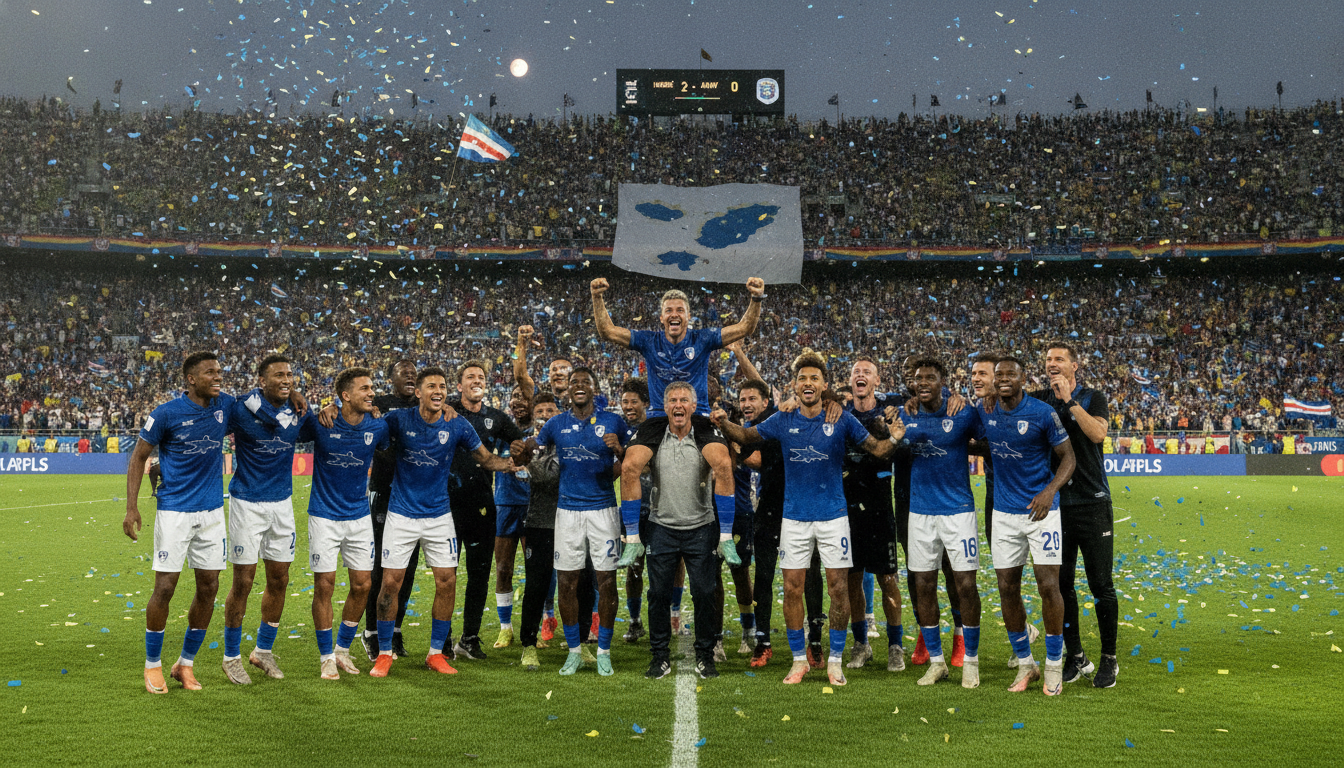
Cape Verde World Cup Debut: Blue Sharks Make History with 2026 Qualification
Cape Verde World Cup debut confirmed as the Blue Sharks secure their first-ever FIFA World Cup berth, setting up Group H fixtures against Spain, Uruguay and Saudi Arabia.


Historic World Cup qualification secured
Cape Verde will make their FIFA World Cup debut in 2026 after a landmark qualifying campaign that capped a decade of steady progress for the island nation. The Cape Verde World Cup appearance is the first in the country’s history and crowns sustained growth in player development and international competitiveness.
The achievement reflects a small nation punching above its weight, drawing on a global diaspora and professionals based in Europe to assemble a disciplined, cohesive squad. For a population of roughly half a million, qualifying for the World Cup represents an unparalleled milestone in national sport.
Bubista’s leadership and team identity
Head coach Pedro Brito, known as Bubista, has presided over the most successful era in Cape Verdean football and is widely credited with building the side’s collective identity. Under his stewardship the team combined experienced European-based professionals with a clear tactical framework emphasizing organisation and defensive solidity.
Bubista’s methods delivered a quarter-final appearance at the 2023 Africa Cup of Nations and have now delivered World Cup qualification, illustrating continuity and progress within the program. The coach’s emphasis on teamwork, situational discipline and set-piece preparation has become a defining feature of the Blue Sharks.
How Cape Verde sealed qualification
Cape Verde finished atop their qualifying pool with 23 points from 10 matches, losing only once in the campaign and demonstrating consistency both at home and on the road. The Blue Sharks won four of five home games and accumulated 10 points from five away fixtures, an away record that proved decisive for their top-of-group finish.
Their lone defeat was a 4-1 loss in Cameroon, but the team responded with a string of results that included wins over regional rivals and steady defensive performances. Libya, Angola, Mauritius and Eswatini were the other teams in the group, and Cape Verde’s ability to manage results across diverse conditions underpinned their success.
World Cup Group H draw and qualification pathway
Cape Verde were drawn into Group H alongside Spain, Uruguay and Saudi Arabia, a grouping that mixes European technical talent, South American history and Middle Eastern recent World Cup experience. Spain enter as favourites on paper, while Uruguay carry tournament pedigree as a two-time world champion, making the group challenging for a debutant.
The expanded 48-team format for the 2026 tournament advances the top two teams from each group plus the eight best third-placed sides to the Round of 32, giving Cape Verde a realistic route to the knockout phase if they can secure points at key moments. The Blue Sharks’ pragmatic style means they will target specific fixtures to maximise their chances of advancing.
Fixture breakdown and match dates
Cape Verde’s Group H schedule begins with a June 15, 2026 assignment against Spain at Atlanta Stadium, a high-profile opener that will test the visitors’ organisation and defensive resolve. A strong showing in that match could establish belief and momentum, even if a surprise result is unlikely against a top European side.
Their second group match is scheduled for June 21, 2026 in Miami against Uruguay, another stern test which will demand tactical discipline and tight defensive work from Cape Verde. The group stage concludes with a June 27, 2026 fixture versus Saudi Arabia in Houston, a match widely seen as Cape Verde’s best opportunity to secure the points needed for progression in the expanded format.
Key players to watch and tactical approach
Ryan Mendes, the veteran forward and team captain, remains central to Cape Verde’s leadership on and off the pitch, offering goal threat, set-piece delivery and organisational presence in attack. Mendes’ experience will be critical in high-pressure moments and in guiding younger teammates through the unique demands of a World Cup campaign.
Jovane Cabral represents the squad’s primary match-changing talent, capable of producing moments of individual brilliance with his pace and dribbling on the flank. The Blue Sharks will rely on Cabral’s ability to unsettle defenders and create openings while maintaining the team’s collective defensive responsibilities.
Tactically, Cape Verde are likely to set up with compact defensive blocks, disciplined midfield coverage and swift transitions on the counterattack. Their success in qualification hinged on organisation and minimising defensive lapses, so the coaching staff will emphasise structure, set-piece vigilance and exploiting space behind opposition full-backs.
Expectations and strategic priorities for the tournament
Cape Verde must avoid a debutant mentality limited to participation and instead adopt an assertive, result-oriented approach that seeks tangible points in every match. Realistic expectations involve targeting Saudi Arabia as a pivotal fixture while aiming to frustrate and limit opportunities against Spain and Uruguay.
Given the tournament format, a draw against any higher-ranked opponent combined with a victory over Saudi Arabia could place Cape Verde in contention for one of the best third-place berths. The team’s planning will therefore prioritize defensive stability, efficient use of attacking possessions and disciplined game management.
Cape Verde’s World Cup debut is a milestone moment for the nation and for African football, reflecting years of incremental development and intelligent squad building that have delivered a place on the global stage. The Blue Sharks arrive in 2026 with a clear identity and the belief that careful preparation and tactical discipline could translate into a memorable tournament.