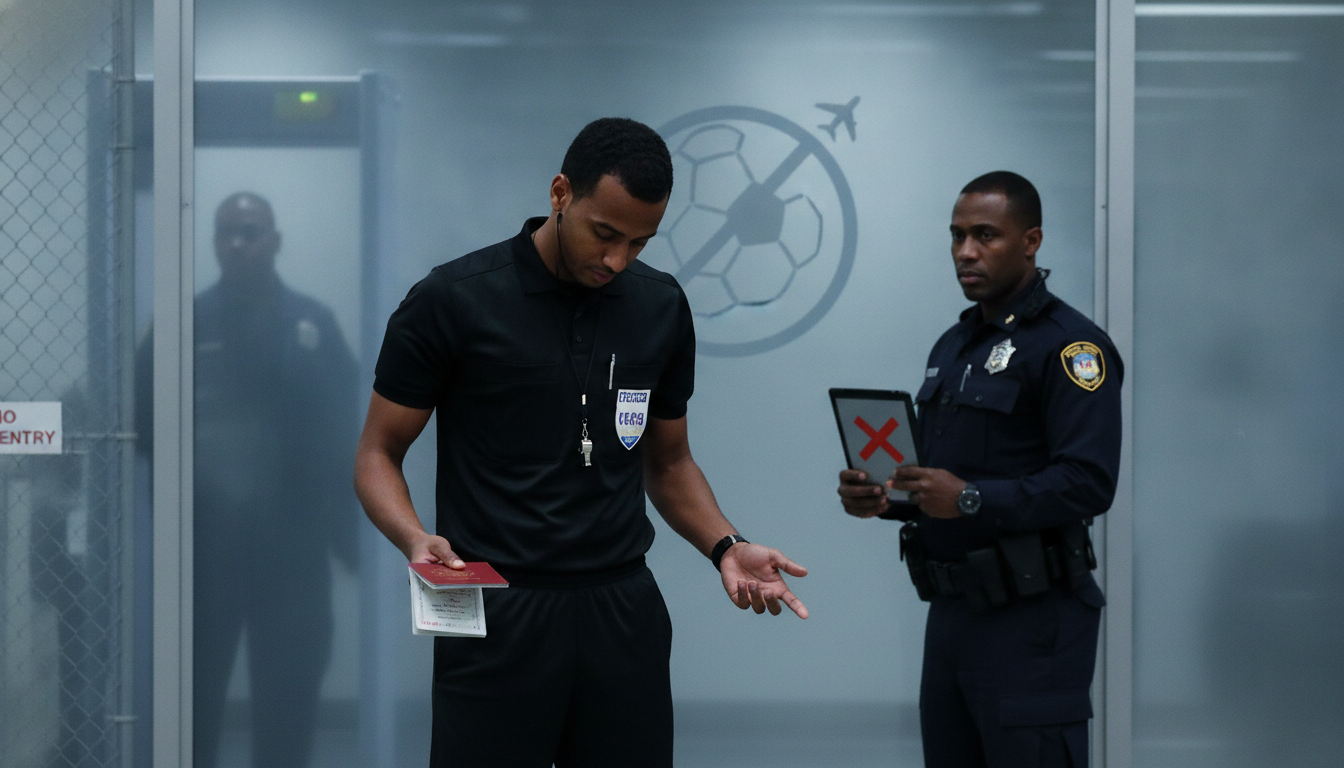
Somali referee Omar Abdulkadir Artan barred from World Cup after U.S. border refusal
Somali referee Omar Abdulkadir Artan barred from the World Cup after U.S. border officials turned him away despite a reportedly valid visa, FIFA said on Monday.


U.S. border turns away Somali official
The United States denied entry to Somali referee Omar Abdulkadir Artan over the weekend, preventing him from training or officiating at the upcoming World Cup. Artan had been due to take part in tournament preparations and would have become the first Somali official to oversee a World Cup match.
FIFA confirmed that Artan was turned away at the border and that tournament organizers had been informed his status “would not be changed at present”. The world governing body reiterated it does not manage host nation immigration decisions, leaving the referee unable to participate.
FIFA clarifies role in immigration decisions
A FIFA spokesman said the organization is not involved in visa adjudication or immigration procedures carried out by the host country. FIFA’s statement underscored that while it selects match officials, clearance to enter and remain in the host nation rests with national authorities.
The clarification followed mounting scrutiny over who is responsible when officials and delegation members are denied entry. FIFA’s separation from immigration processes means it has limited leverage to overturn such decisions directly.
Visa status and airport detention details
According to information provided to FIFA, Artan reportedly held a valid visa at the time he was refused entry. Despite that, U.S. immigration authorities informed the federation that his status would not be changed, effectively barring him from the tournament site.
The decision echoes other recent airport detentions that have affected players and staff, highlighting the opaque nature of immigration enforcement for visiting delegations. Those incidents have included prolonged inspections and device searches that created delays and diplomatic concerns.
Pattern of entry denials affecting teams and officials
The refusal to admit Artan is the latest in a series of border incidents involving officials, players and fans arriving for the World Cup. One notable case involved Iraq forward Aymen Hussein, who was held for several hours at Chicago’s O’Hare airport while officers inspected his phone, according to reports.
Teams have also raised complaints about restricted entry and limited movement, with some squads saying their delegations were allowed into the country only for official match days. These occurrences have prompted questions about consistency and transparency in the host nation’s treatment of visitors.
Reactions from Confederation and FIFA leadership
Confederation of African Football delegates addressed the matter during a meeting in Kenya, emphasizing the need for clear assurances that officials and teams will be treated fairly. CAF representatives made inquiries to FIFA and returned with statements indicating concern about the pattern of detentions.
FIFA president Gianni Infantino, speaking at the CAF meeting, reiterated the organization’s aim to use the World Cup to bring nations together next year. Infantino emphasized unity as a guiding principle, even as delegations seek concrete protections from host country immigration actions.
Operational and representational consequences for the tournament
Artan’s exclusion has tangible implications for World Cup preparations and representation. His absence not only deprives Somalia of a historic first but also reduces the pool of match officials available for assignments, complicating scheduling and training plans.
Tournament organizers must now adjust officiating rosters and cover preparatory duties that Artan would have fulfilled. The incident raises broader operational questions about contingency plans when a selected official is denied entry at short notice.
Legal and diplomatic routes under consideration
Football governing bodies and national associations are expected to explore diplomatic channels and legal avenues to resolve entry disputes where possible. While FIFA may not control immigration decisions, federations can engage host country authorities and their own governments to seek clarifications or reversals.
Such interventions can be slow and are not guaranteed to succeed, particularly when immigration actions are characterized as administrative or security-based. Nevertheless, affected associations are likely to press for clearer protocols ahead of the tournament to prevent further disruptions.
Broader concerns about tournament reputation and fairness
Repeated incidents of denied entry and prolonged inspections threaten to tarnish the World Cup’s image as an inclusive global event. Delegations and supporters have raised concerns that uneven treatment undermines the principle of equal access for teams, referees and fans from all nations.
Organizers face pressure to ensure that the competition’s operational environment matches FIFA’s stated aim of uniting the world through football. For many stakeholders, the credibility of the event depends on transparent, consistent and respectful treatment of international visitors.
The referee ban comes amid heightened attention on border enforcement practices and their impact on international sport, prompting calls for clearer guidelines and better coordination between sporting bodies and host governments. The outcome of any diplomatic discussions over Artan’s case may set a precedent for how similar issues are handled as the tournament approaches.