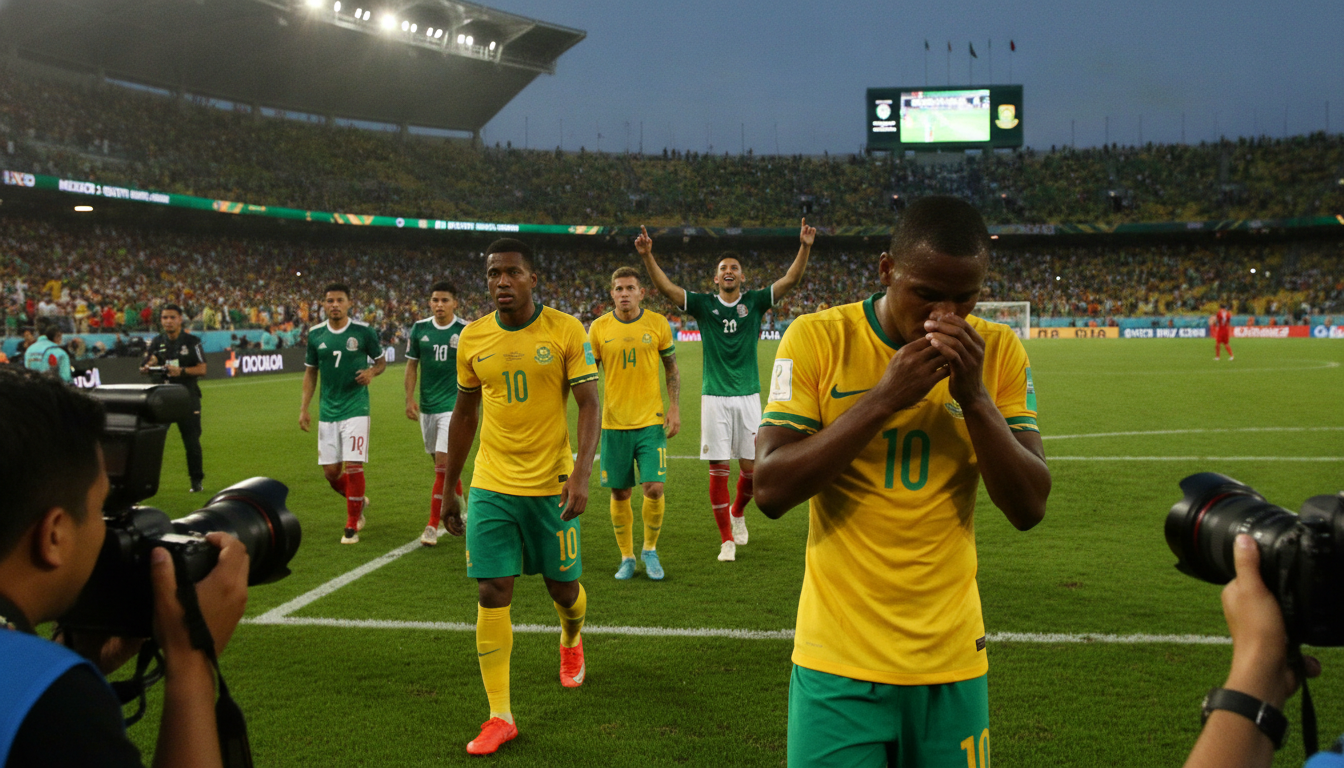
Bafana Bafana vs Mexico: South Africa lose 2-0 in 2026 World Cup opener at Estadio Azteca
Bafana Bafana vs Mexico ended 2-0 as South Africa fell in the 2026 World Cup opening match at Mexico City’s Estadio Azteca, a result that echoed the 2010 Johannesburg opener.


Match summary and final score
Bafana Bafana’s long-awaited return to the World Cup stage concluded in disappointment as Mexico secured a 2-0 victory at the iconic Estadio Azteca. The match, which kicked off at 9pm local time, saw Captain Ronwen Williams lead South Africa onto the pitch for their Group A encounter.
The result leaves South Africa with an immediate uphill task in the group stage and hands Mexico a vital opening victory on home soil. Fans and players alike will now turn quickly to the next fixtures as the tournament, hosted by the United States, Canada and Mexico, runs from June 11 to July 19, 2026.
Key moments that decided the game
The opening match was tightly contested and the scoreline reflected moments of decisive play rather than prolonged dominance by either side. Mexico broke the deadlock and converted a second opportunity to secure a two-goal cushion that South Africa could not overturn.
South Africa created opportunities and showed glimpses of the attacking intent that earned them a place at the finals. However, the margin proved decisive and Mexico were able to manage the game tempo in the closing stages to protect their lead.
Historic resonance with the 2010 opening fixture
Thursday’s match carried additional weight for South Africa because it fell exactly 16 years after the team participated in the opening match of the 2010 FIFA World Cup. On June 11, 2010, South Africa hosted Mexico in Johannesburg to launch the first World Cup staged on African soil.
That historical symmetry — South Africa facing Mexico in the opening match of two different World Cups, 2010 and 2026 — lent a poignant subtext to the Estadio Azteca meeting. For many supporters, players and officials, the date offered both reflection on how far South African football has come and a reminder of the unpredictable nature of football’s biggest tournament.
Tactical patterns and game management
Mexico showed a measured approach in controlling key phases of the match, particularly in transitions and game management after taking the lead. Their ability to convert critical moments into goals proved the decisive factor in an otherwise balanced encounter.
South Africa’s tactical setup aimed to balance defensive solidity with quick forward movement, but challenges in the final third limited the number of clear-cut chances. The match highlighted areas where Bafana Bafana will seek improvements, notably in maintaining possession under pressure and turning territorial gains into sustained attacking sequences.
Captaincy, leadership and squad response
Ronwen Williams led the South African side onto the field and provided experience at the back, but leadership on the pitch could not ultimately prevent the two-goal loss. The squad’s collective response in the aftermath will be a focal point for coaching staff in the days ahead.
Players who featured will carry the lessons of competing at a high-altitude, high-pressure environment into forthcoming group fixtures. Modern tournament campaigns are often decided by how teams recover from early setbacks, and South Africa’s reaction in training and in match preparation will be closely watched.
Group A implications and the path forward
The defeat means South Africa must recalibrate their approach as the group stage progresses to remain competitive for qualification. Early tournament losses increase the margin for error, so each subsequent match will carry added significance for Bafana Bafana’s hopes of advancing.
For Mexico, the win provides momentum and an early statistical advantage in Group A, but the tournament remains long and requires sustained performances. Both teams now turn their attention to the remaining matches in the group phase, where consistency and squad management will be critical.
South Africa’s technical staff will use the interval before the next fixture to address tactical adjustments and player rotation, aiming to sharpen attacking patterns and reduce turnovers in midfield. The squad’s physical and mental recovery will be monitored closely, given the condensed nature of World Cup scheduling.
Atmosphere at Estadio Azteca and fan reaction
Estadio Azteca offered a charged backdrop for the opening match, with passionate support and national pride on display. The stadium’s history as a World Cup venue amplified the significance of the fixture for both sets of supporters.
South African fans at the ground and following from abroad will take heart from the fact that qualification itself represents progress for football in the country. Nevertheless, the immediate reaction centered on the missed opportunities and the urgent need to regroup ahead of the next challenge.
South Africa’s participation in the 2026 World Cup will continue to attract attention from domestic and international media, and the team’s ability to translate preparation into results will shape narratives in the weeks ahead.
The players and coaching staff have an opportunity to draw positives from the performance despite the scoreline, focusing on tactical cohesion, set-piece discipline and clinical finishing as areas for rapid improvement.
In the coming days, training sessions and team meetings will set the tone for South Africa’s response, while supporters will hope the squad channels disappointment into determination for the remaining group fixtures.