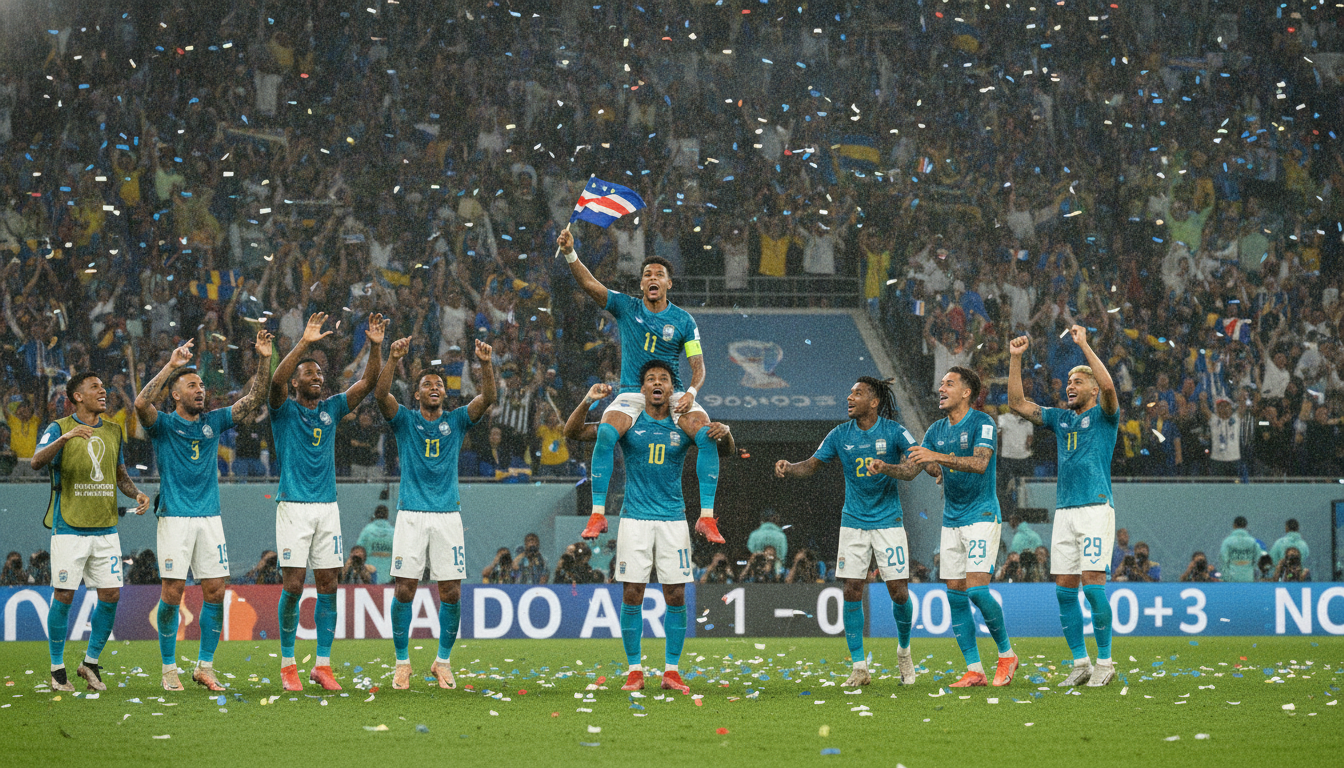
Cabo Verde’s World Cup Debut Stuns Tournament as Early Shocks Reshape Group Races
Cabo Verde’s shock rise in their World Cup debut has punctured early assumptions, as surprise results in Atlanta, a swift managerial exit in Tunisia and tense matches in Miami shift group dynamics.


Cabo Verde’s debut at the World Cup has become one of the tournament’s earliest talking points, delivering a performance that forced a reappraisal of expectations across several groups. The small island nation’s display combined organisation and daring, and it arrived amid a cluster of results that has made the opening phase far less predictable than many anticipated. With 14 matches completed, tournament favourites have offered some underwhelming displays and underdogs have seized the moment, leaving group races wide open.
Cabo Verde’s unexpected impact on the early tournament
Cabo Verde arrived at the finals with scant fanfare, yet their opening showing took the spotlight and challenged the idea that they would be little more than an exotic curiosity. Their tactical discipline, direct attacking intent and refusal to be overawed by the occasion were evident throughout the match. The result and performance immediately altered the calculus in their group, forcing rivals to prepare for a side that can disrupt plans rather than simply soak up pressure.
Across the squad, players displayed a mix of European-based professionals and homegrown talent, blending familiarity with a clear plan from the coaching staff. That cohesion has rare potency in a short tournament where clarity of roles often decides outcomes. Opponents now must allocate scouting resources and adjust match plans to account for a team that has momentum and belief on its side.
Atlanta draw reverberates through tournament narratives
A remarkable draw played out in Atlanta, producing a late twist that reshaped expectations for the teams involved and the balance of power in their group. The scoreline — and how it was achieved — served as a reminder that early rounds can produce results that ripple through standings and tactics. For several teams, what looked like a routine victory turned into a simmering question about defensive resolve or game management.
That match also underscored how venue and travel can influence outcomes, with changing time zones and stadium atmospheres testing familiar routines. Coaches will revisit footage to work on subtle details that can swing narrow matches, while analysts will highlight the small margins that separate confident winners from those who leave a point behind. The draw bolstered the argument that no result in the opening fixtures should be dismissed as insignificant.
Tunisia’s swift managerial move prompts scrutiny
In a development that raised eyebrows, Tunisia made a rapid managerial change in the wake of their opening fixture, a decision that has sparked debate about timing and proportionality. The dismissal arrived within the tournament’s first week and prompted questions about whether a single result should trigger such decisive action. Supporters and pundits alike split between sympathy for an owner’s desire for rapid correction and concerns about the long-term disruption such choices create.
The change carries practical consequences for Tunisia’s preparation, from training routines to tactical continuity, and may affect player morale in subsequent matches. Interim leadership will be judged on how quickly it can steady the squad and establish a coherent approach under pressure. For the wider tournament, the episode is an early example of the volatility that can accompany high-stakes international competition.
Egypt and Belgium serve up tactical and emotional intensity
Egypt and Belgium produced an absorbing clash that illustrated the contrasting footballing philosophies on display at the World Cup. The match mixed tactical adaptation, individual moments of creativity and a high degree of emotional investment from both camps. Belgium leaned on structured possession and probing wide play, while Egypt opted for compact defending and sharp transitions, creating an engrossing contest.
Key moments were defined more by intent than skill alone, as both sides searched for openings and reacted to the evolving pattern of play. Coaches will take lessons from the encounter about personnel choices and pressing triggers, while players will reflect on fine margins that determined possession swings and scoring opportunities. The game reinforced that group standings can pivot on single matches that combine tactical nuance and raw intensity.
Uruguay and Saudi Arabia battle under Miami’s heat
Uruguay and Saudi Arabia met in Miami in a match where environmental factors played a visible role, prompting hydration breaks and careful management of player fitness. The contest saw Uruguay try to impose a measured build from the back, while Saudi Arabia pursued quick transitions to exploit space in behind. The temperature and humidity required both teams to balance aggression with conservation, influencing substitutions and tempo.
Physical conditioning and bench depth were decisive elements as the game progressed, highlighting the premium on squad management in early tournament fixtures. Coaches face the twin demands of securing points while protecting players from the cumulative fatigue of a grueling schedule. The match in Miami illustrated how external conditions — travel, climate and match timing — can be as influential as tactics in shaping outcomes.
Early tournament trends and implications for group stages
Across the opening slate of matches, a series of trends has begun to emerge that will shape the narrative for the remainder of the group stage. Upsets and narrow margins have amplified the value of pragmatic, organised football over pure flair, and teams that adapt quickly to opponents’ strengths have gained an advantage. The performances of debutants like Cabo Verde show that preparation, structure and belief can overcome pre-tournament hierarchies.
Meanwhile, coaching instability and rapid personnel changes remind observers that administrative decisions have immediate competitive consequences. Teams that maintain tactical clarity and continuity are better positioned to absorb setbacks and mount sustained campaigns. For neutral observers, the variety of match profiles — from tactical chess to frenetic counterattacks — offers a reminder that the early tournament is fertile ground for shifting expectations.
What rivals must do differently against rising threats
Opposing teams now face a practical dilemma: whether to treat rising sides like Cabo Verde as flukes or to approach them with full tactical respect. The safer path is to assume opponents will replicate their opening performance and prepare defensive plans accordingly. Analysts stress the importance of early-season scouting, focused training sessions on likely formations and rehearsals of pressing triggers to neutralise quick transitions.
For favourites who have yet to find rhythm, the challenge is to rediscover coherence without exposing vulnerabilities in search of a quick fix. Incremental adjustments — whether in personnel, pressing intensity or set-piece routines — are often more effective than wholesale tactical overhauls. Coaches will be mindful that a single loss in a short group can upend qualification trajectories, so marginal gains in preparation are now at a premium.
Cabo Verde’s appearance as a credible competitor is both a sporting achievement for the nation and a strategic message to the rest of the field: preparedness and belief can outweigh reputational advantage. As the tournament progresses, how teams respond to that lesson will shape the next round of fixtures and the broader narrative of this World Cup.