World Cup match day six: France, Argentina, Norway and Austria return as groups heat up
France, Argentina, Norway and Austria take centre stage on World Cup match day six, with Mbappé, Messi and Haaland among the stars set to shape group standings.


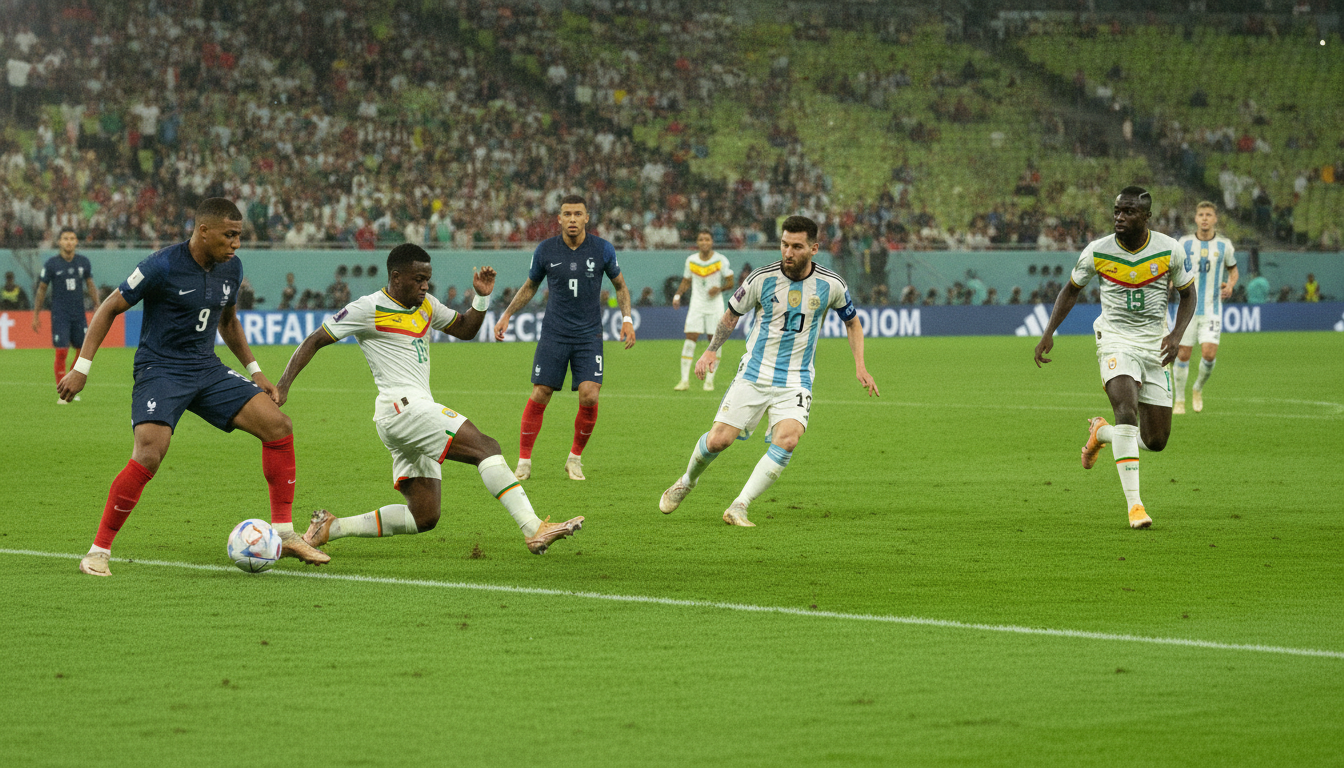
Opening night test for France against Senegal
France arrive at MetLife Stadium under fresh scrutiny after mixed pre-tournament form, and their Group I meeting with Senegal promises intensity and tactical probing.
Les Bleus retain status as one of the favourites, but a surprise friendly defeat to Ivory Coast and an unconvincing win over Northern Ireland have raised selection questions and tactical debate.
Senegal will not be content to role-play underdogs; their African qualifying run and the presence of Sadio Mané give them the firepower to unsettle France and complicate coach Didier Deschamps’ plans.
Mbappé and Senegal’s frontline set to clash
Kylian Mbappé is expected to lead France’s attack and carry much of the creative and finishing burden in a match where margins will be fine.
Senegal will look to exploit transitions and set-piece opportunities, asking whether France’s defence can handle physicality and pace from the African side.
This fixture will be as much about midfield control and defensive discipline as it is about moments of individual brilliance from Mbappé or Mané.
Argentina open title defence versus Algeria
Argentina begin their World Cup title defence against Algeria in a fixture that carries both historical resonance and immediate group-stage importance.
Lionel Messi remains the focal point of Argentina’s ambitions, but this match will test the squad’s depth and readiness to manage heavy expectation across the tournament.
Algeria, with a mix of experienced internationals and emerging talent, are expected to adopt a compact, counter-attacking approach aimed at disrupting Argentina’s rhythm.
Messi’s role and Argentina’s tactical balance
Messi’s capacity to influence games remains unparalleled, but coach Lionel Scaloni faces the perennial task of balancing creative freedom with defensive responsibility.
Argentina’s supporting cast must perform consistently to create space and mitigate the physical challenges Algeria will present.
How Argentina handle midfield duels and transitions could define their path through the group stage and set the tone for their title defence.
Haaland headlines Norway’s return against Iraq
Erling Haaland steps onto the World Cup stage as Norway’s talisman in Boston, where a rejuvenated Norwegian side meets Iraq in a fixture packed with narrative.
Norway’s qualification has reignited expectations at home, and Haaland’s presence adds a concrete threat capable of deciding tight matches.
Iraq will approach the match with caution and ambition, seeking to exploit set pieces and counter-attacks against a Norway side that may dominate possession.
Tactical matchups and Haaland’s influence
Norway’s game plan is likely to center on supplying Haaland with the service and space he needs, while also protecting the backline against quick breaks.
Iraq’s defensive organisation and willingness to press in phases will be critical if they are to frustrate Norway and limit Haaland’s immediate impact.
Coaches on both sides will weigh risk and reward carefully; an early goal could force tactical shifts and alter the tempo of the encounter.
Austria to open Group with Jordan encounter
Austria begin their campaign in a Group stage opener that pairs them with Jordan, a game that offers both sides distinct opportunities to claim momentum.
Austria enter as a disciplined, organized outfit with players capable of controlling midfield tempo and creating chances from structured play.
Jordan will aim to stay compact and seek moments to counter, hoping to nick a result that would dramatically reshape expectations in the group.
Players to watch and set-piece importance
Key Austrian playmakers and Jordan’s counter-attacking threats will be decisive, with coaches likely to emphasize set-piece preparation given how tournaments are often decided by fine margins.
Individual duels and the ability to convert limited chances into goals will carry outsized significance in a match where neither side can afford a slow start.
Match fitness, substitutions and in-game management will test coaching staffs and could determine which team leaves the opening day with confidence.
Group implications as match day six unfolds
Results across these fixtures will ripple through the early standings, clarifying qualification paths and forcing managerial recalculations for the second round of group matches.
A surprise result — such as Senegal beating France or Norway being held by Iraq — would immediately alter the expected hierarchy and create pressure for favourites in subsequent games.
Teams with early wins can rotate and manage player workload more freely, while those dropping points will face tactical and psychological challenges to recover.
Injuries, selections and managerial questions
Several squads face selection dilemmas influenced by pre-tournament form, minor injuries and the need to balance experience with youthful energy across the 23-man rosters.
Coaches must decide how aggressively to press for victory versus conserving key players, especially with a congested schedule and knockout rounds looming.
Any late changes or fitness concerns revealed in the build-up could prove decisive, emphasizing the importance of medical briefings and squad depth.
Broadcast, scheduling and fan expectations
Matches on World Cup match day six are staged in prominent U.S. venues, drawing global audiences and large fan contingents for both established and emerging national teams.
Organizers expect robust attendances and television viewership, and broadcasters will highlight player storylines and tactical narratives to frame each contest.
For neutral fans, the card presents a concentrated showcase of top-level talent and contrasting styles, making it a compelling midweek lineup.
What to watch after the final whistle
Beyond the scores, attention will focus on goal differences, disciplinary records and injury statuses, all of which can prove crucial in tight group tables.
Coaches’ reactions in press conferences and early statistical indicators — possession share, expected goals, set-piece success — will shape narratives ahead of matchday seven.
Individual performances on this day have the potential to elevate players into tournament-long conversations or relegate them to tactical footnotes.
France’s match with Senegal, Argentina’s opener against Algeria, Norway versus Iraq and Austria’s clash with Jordan will provide immediate answers about form, resilience and tactical intent on World Cup match day six.
Expect bold individual moments, tactical adjustments and managerial gambits; the outcomes will offer a clearer map of who is well-placed to progress and who must regroup quickly.