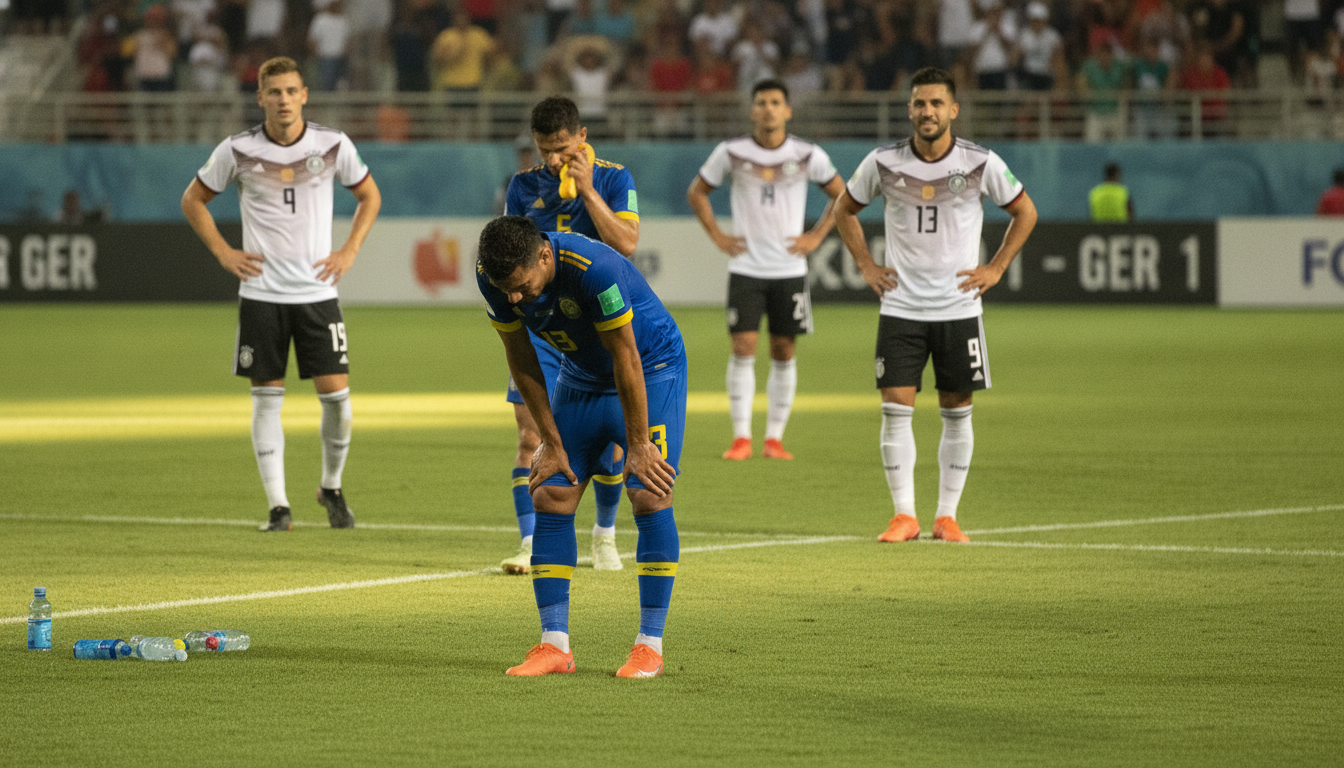
Hydration breaks under scrutiny after Curacao’s brief lead against Germany ends in 7-1 rout
Hydration breaks at the World Cup are under scrutiny after Curacao briefly led Germany in Houston, then lost momentum during a mid-half stoppage that preceded a 7-1 defeat.


Historic goal puts Curacao in a global spotlight
Livano Comenencia’s strike sent Curacao supporters into raptures and briefly transformed the fixture into one of the tournament’s most memorable moments. The goal made the small Caribbean nation — the smallest by population to ever reach the World Cup — a global talking point and offered a startling counterpoint to Germany’s four-time champion status.
For nearly a minute after the equaliser the match felt poised for an upset, with Curacao displaying urgency and belief against a heavyweight opponent. Fans and neutrals alike fancied the possibility of an unforgettable Cinderella story until play was halted for a mid-half hydration break.
Hydration break interrupts play and shifts momentum
The stoppage came a matter of seconds after Comenencia found the net and it coincided with a clear swing in the match’s dynamic. Former England striker Alan Shearer reflected on the timing, noting that the delay appeared to blunt Curacao’s momentum and give the more experienced coaching staff time to reorganise.
FIFA introduced hydration breaks across games in the United States, Canada and Mexico to help players cope with summer heat, and this tournament is their first major appearance at a World Cup. While the stated aim is player welfare, the pause in play produced a tactical window that some argue altered the contest’s flow.
Germany respond quickly and convert momentum into goals
After the resumption, Germany regained control and struck twice before the interval, a sequence that eroded Curacao’s early composure and opened the floodgates. The hosts’ technical depth and experience surfaced as opportunities multiplied, culminating in a comprehensive 7-1 victory.
The scoreline masked the brief phase in which Curacao had looked competitive, but also underlined the gulf that reemerged once Germany imposed their game plan. The tactical reset afforded during the stoppage allowed substitutions and adjustments that Germany exploited to decisive effect.
Pundits and coaches raise concerns about tactical use of breaks
Broadcasters and former players quickly debated whether hydration breaks create an unfair tactical tool for coaches, rather than serving purely medical and welfare purposes. Critics argue the interlude provides a de facto timeout in which managers can alter shape, deliver extended instructions and stem an adverse run, changing the natural momentum of a match.
Supporters of the measures counter that player safety must come first in conditions where heat and humidity can pose real risks. Nonetheless, the episode in Houston has intensified calls from observers for clearer protocols to limit coaching activity during the stoppage and preserve the contest’s continuity.
FIFA’s rationale and tournament context
FIFA has framed the hydration breaks as a pragmatic response to environmental conditions across multiple host venues and has stressed their role in reducing heat-related incidents. The World Cup’s geography and June weather created a unique context that organisers say justified the novel on-field pauses.
The implementation this tournament has exposed practical and perceptual issues that were not fully visible in smaller competitions. Organisers now face questions about how to balance player health with the integrity and flow of elite-level matches, and whether further guidance or constraints are necessary.
Possible adjustments and what stakeholders are asking for
Voices from coaching circles and media coverage have proposed a range of adjustments, from shortening the breaks to establishing strict rules that limit tactical communication and on-field instruction. Some suggest timing the stoppages at pre-determined moments to reduce their influence on match momentum, while others call for monitoring to ensure they remain medical in purpose.
Any change would require consultation among FIFA, teams and medical experts, and might be trialled in subsequent fixtures if consensus emerges. The debate in the wake of Curacao’s encounter with Germany has accelerated that discussion and placed greater scrutiny on how and when the interruptions are used.
The Curacao experience has crystallised the tension between player welfare and sporting continuity, and it has given the tournament an early flashpoint over competition rules. As the World Cup progresses, tournament organisers, broadcasters and national associations will be watching whether similar incidents recur and how public and professional opinion shapes any policy response.