DR Congo claim historic first World Cup point with 1-1 draw against Portugal
DR Congo earn a historic first World Cup point with a 1-1 draw against Portugal; Yoane Wissa cancelled João Neves’ opener and Group K is left wide open.
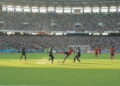

The Democratic Republic of Congo secured its first ever FIFA World Cup point on Wednesday after a resilient 1-1 draw with Portugal in the Group K opener.
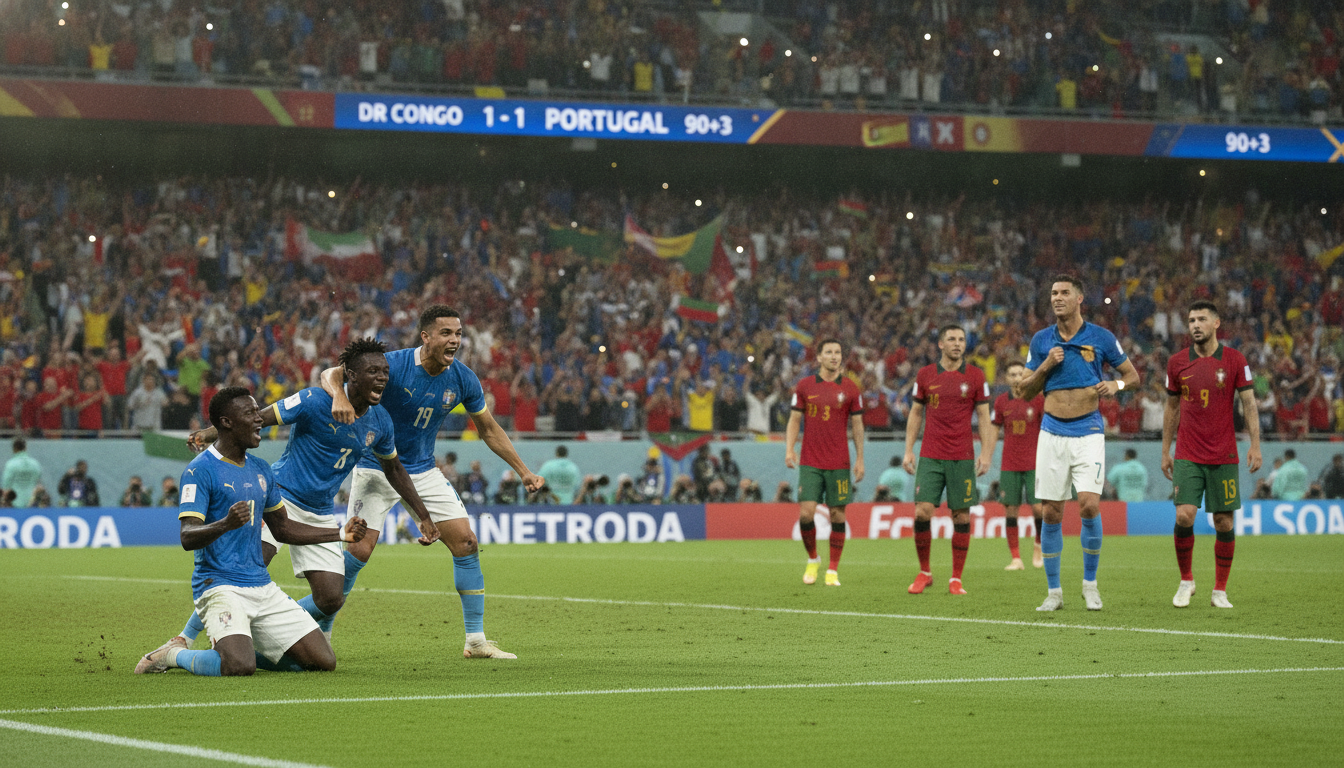
DR Congo’s World Cup campaign was marked by a late first-half equaliser from Yoane Wissa that silenced a stadium full of Portuguese supporters.
The result ends a 52-year wait since the nation’s lone previous finals appearance in 1974, when it competed as Zaire, and hands the Leopards a landmark moment on football’s biggest stage.
Historic milestone after half-century absence
The draw represents the first point in World Cup history for DR Congo, a milestone that carries symbolic weight for the country and its supporters.
Zaire’s participation in 1974 yielded only defeats, making this result the first time a Congolese side has avoided defeat at a World Cup.
Players and staff celebrated on the pitch, underlining how significant the achievement is for a national programme returning after a prolonged absence.
The moment also resonated with fans watching at home and in the stadium, many of whom had long anticipated a competitive return to the finals.
For a nation rebuilding its football infrastructure, the point is likely to be seen as tangible progress and an encouragement for further investment at youth and domestic levels.
Officials and supporters will view the match as proof that DR Congo can compete with established European sides on the world stage.
Match flow and Portugal’s early control
Portugal controlled large portions of possession and pushed the tempo from kickoff, probing the Congolese backline with quick passing and movement.
The European side fashioned several promising openings but were kept at bay by disciplined defending and a series of timely interventions from DR Congo’s backline.
João Neves eventually broke the deadlock when he converted Portugal’s pressure into a first-half lead, a goal that appeared to put Portugal on course for victory.
Despite the scoreboard, Portugal continued to dominate the ball and sought a second goal that would secure three points and assert early control of Group K.
High-profile names such as Cristiano Ronaldo, Bruno Fernandes, Bernardo Silva and Nuno Mendes were heavily involved in Portugal’s attacks, but clear-cut chances were hard to come by.
Portugal’s inability to turn possession into a decisive second goal ultimately allowed DR Congo to grow into the contest.
DR Congo’s tactical resilience and growing belief
DR Congo showed considerable tactical organisation, remaining compact without the ball and quick to transition when possession was won.
The Leopards’ midfield worked hard to disrupt Portugal’s rhythm, while their full-backs balanced defensive duties with occasional forays forward.
As the match progressed, DR Congo gained confidence and began creating their own opportunities against a team widely regarded as one of the tournament favourites.
Physical commitment and concentration were evident throughout the Congolese ranks, and several moments of fine defending kept the scoreline within reach.
Goalkeeper saves and last-ditch blocks preserved the team’s defensive shape and allowed them to threaten on counters and set plays.
That resilience set the stage for the equaliser that would follow in first-half stoppage time.
Yoane Wissa’s leveller sparks celebrations
With time running down before halftime, Yoane Wissa produced the match’s defining moment by finding the net to make it 1-1.
The goal triggered exuberant celebrations among the Congolese players and travelling supporters, encapsulating the emotional significance of the moment.
Wissa’s strike not only altered the scoreline but also shifted momentum, giving DR Congo renewed belief heading into the second half.
For the player himself, the goal will be remembered as a career highlight and a contribution to his country’s growing World Cup story.
The equaliser proved significant beyond the single match, offering a psychological boost to a squad facing two more group fixtures against strong opponents.
Coaches and analysts will examine the goal as evidence that DR Congo can capitalise on brief windows of opportunity against top-tier teams.
Portugal left to rue missed chances
For Portugal, the draw will be viewed as a missed opportunity to take all three points and establish early dominance in Group K.
The team’s possession superiority and spell of control did not translate into a decisive advantage on the scoreboard, a shortcoming that will provoke tactical reassessment.
Players and staff may reflect on finishing and creativity in the final third as areas requiring improvement before the next fixture.
Portugal’s star names worked to create and exploit openings, but the Congolese defensive effort blunted several promising moves.
The result places pressure on Portugal to respond in the coming matches and to convert control into tangible results when opportunities arise.
Coaches will weigh squad rotation and tactical adjustments as they prepare for Colombia and Uzbekistan, who remain in contention in the same group.
Group K dramatically opened up
The 1-1 draw leaves Group K more open than expected after the first set of fixtures, increasing the stakes for the remaining matches.
DR Congo’s point injects unpredictability into the group and forces other teams to treat encounters with the Leopards with greater caution.
Colombia and Uzbekistan, who meet later in the group stage, will now play with the knowledge that early points are crucial and that the group can yield surprise outcomes.
Mathematical permutations mean that a single win or defeat in the next round could have significant consequences for qualification hopes.
For DR Congo, the result offers a realistic pathway to the knockout phase if they can maintain defensive discipline and extract points from the remaining games.
For Portugal, the draw is a reminder that group-stage complacency can be costly, and that rival teams will prepare to take advantage of any dropped points.
Outlook for DR Congo and next steps
The Leopards will aim to build on this historic result by maintaining the defensive structure and belief that produced a positive outcome against Portugal.
Coaches will likely focus on fine-tuning their transition play and set-piece threats to convert defensive solidity into attacking returns.
Players will take confidence from the draw while recognising the need for consistency across the tournament to keep qualification hopes alive.
Supporters and federation officials will view the point as validation of the national team’s resurgence and a springboard for future development.
The wider football community may also pay closer attention to DR Congo’s talent pool after the team’s display against a high-profile European side.
If the Leopards can replicate aspects of this performance—discipline, work rate and opportunism—they will remain a competitive presence in Group K.
The match against Portugal will be remembered as a landmark moment for DR Congo’s football history, delivering not just a valuable World Cup point but a boost to national pride and belief.
As the group stage progresses, both teams must respond to the result: DR Congo by seeking further points and Portugal by converting control into wins.
What was clear on the night was that the Leopards belong at this level, and their draw with Portugal will be cited as evidence that football’s global landscape continues to produce unexpected and meaningful outcomes.