DR Congo World Cup Wissa header secures historic 1-1 draw with Portugal
DR Congo World Cup breakthrough as Yoane Wissa heads a 1-1 equaliser against Portugal in Houston, giving the Leopards their first ever World Cup goal and point

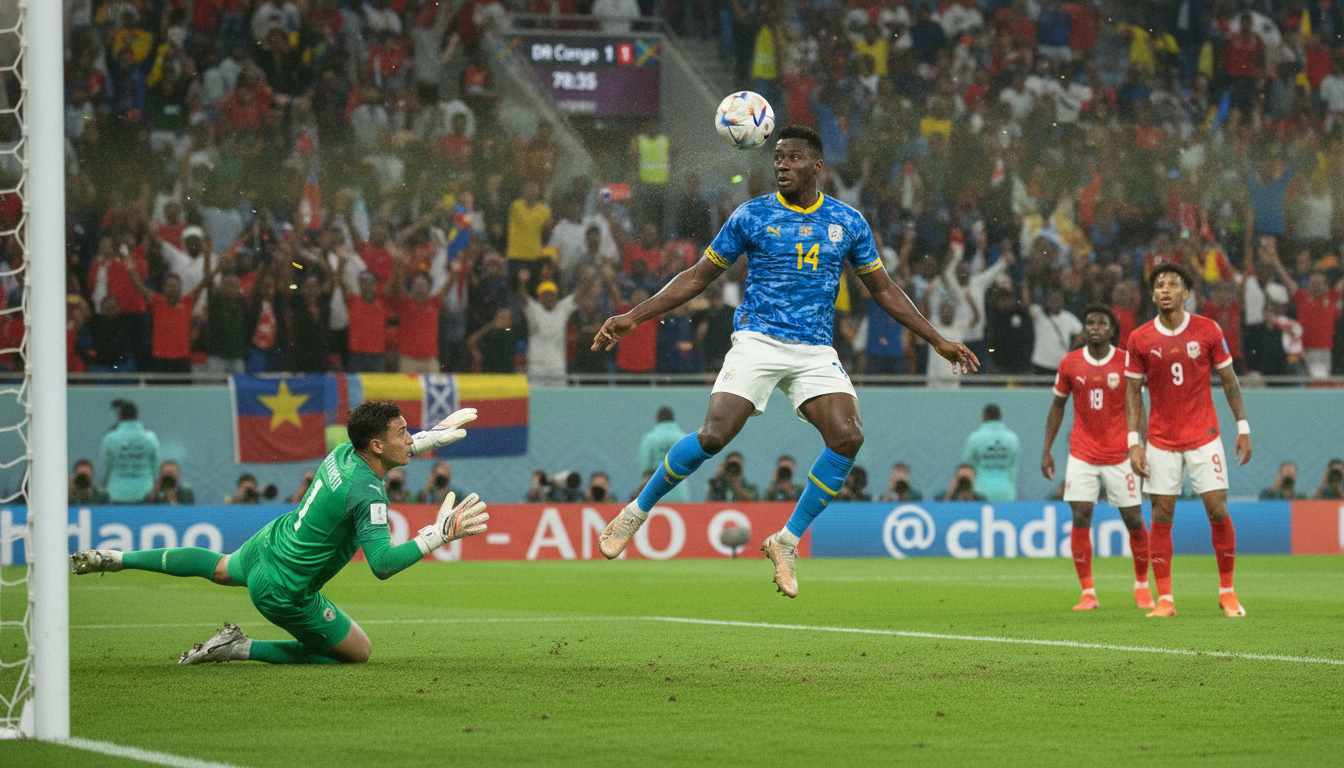
Yoane Wissa scored a headed equaliser to give DR Congo a landmark 1-1 draw with Portugal in Houston and to secure the nation its first World Cup goal and point. The result arrived on a night charged with emotion for the Leopards and for Wissa personally, who celebrated a moment decades in the making. The draw marked DR Congo’s return to the global stage and a tangible sign that the nation can compete at the highest level.
Historic moment at Houston Stadium
Wissa’s header ensured DR Congo left Houston with a share of the spoils in what will be remembered as a defining match for the country. It was the team’s first appearance at the World Cup since 1974 and the first time the Leopards have avoided defeat at the finals. The goal and the point combine to create a milestone that will be recorded in the history books of Congolese football.
The match took place in front of a crowd dominated numerically by Portugal supporters, yet the Congolese presence was vocal and visible throughout. Supporters chanted "Congo eloko ya makasi" and followed the team with sustained energy that had an infectious effect on the players. That backing was frequently cited by participants afterwards as a decisive factor in the performance.
This result alters expectations in Group K and gives DR Congo a platform to build from rather than a mere experience to learn from. With the mechanics of tournament football unforgiving, the Leopards now possess both belief and a measurable reward. That combination can change how opponents approach them in the remaining matches.
Wissa reflects on family and sacrifice
After the final whistle Wissa described the moment as one he had waited for since childhood and said his whole life flashed before his eyes. Born in France and choosing to represent his parents’ homeland, the striker said he called his mother immediately after the match and heard her in tears. He framed the goal as more than a sporting achievement, explaining that it honoured the sacrifices of his family and the close bond he shares with his two brothers.
Wissa, 29, spoke of the emotional weight of wearing the Leopards shirt on football’s biggest stage and of the pride that comes with representing DR Congo. His public gratitude and personal reflections underlined how intertwined identity and sport can be for players who have roots across borders. Those sentiments resonated with fans both inside the stadium and back home.
The Newcastle forward also stressed that the accomplishment belonged to a wider community rather than to him alone. He explicitly thanked supporters for their role in driving the team and suggested that the result was a shared moment for a nation. That message highlighted how sporting success often serves as a focal point for national unity.
How the equaliser unfolded
Wissa’s goal came as a response to an earlier Portugal strike that had put the favourites ahead in the first half. The Congolese attack grew in confidence as the game progressed and eventually produced the decisive header that cancelled the opener. Match rhythm swung between periods of Portuguese control and Congolese counter pressure before the leveller arrived.
The strike itself was a product of sustained offensive movement and timing in the box that allowed Wissa to find space and finish with authority. From a team perspective the goal demonstrated effective set piece and crossing technique, areas that can be decisive in tight international fixtures. The finish buried a narrative of resilience that had been building across the 90 minutes.
After the equaliser DR Congo regrouped and focused on maintaining structure to protect the point. The coaches and players appeared to prioritize compactness and risk management in the closing stages, which ultimately preserved the draw. The tactical approach reflected a pragmatic understanding of tournament football, where the value of a single point can be immense.
Supporters lift the team on a global stage
Despite being heavily outnumbered by Portugal fans the Congolese supporters made a pronounced impact on the match day experience. Their chants and songs echoed throughout the stadium and contributed to an atmosphere that kept the team buoyant. Players and officials noted that the crowd presence helped sustain momentum during key phases of the game.
The force of the diaspora in the stands underlined the global reach of DR Congo’s fan base and the symbolic importance of this World Cup appearance. Many supporters had followed the team through the play off in Mexico against Jamaica and continued to travel to support the squad in the United States. The continuity of that support provided an emotional through line from qualification to the finals.
Organizers and observers also flagged the way the fans carried their identity into the venue through flags and coordinated singing. That visibility served both to inspire the team and to raise the profile of Congolese football in a tournament with intense global exposure. For a nation returning to the World Cup after decades the moment offered far more than a match day experience.
Implications for DR Congo in Group K
Securing a point against a high calibre opponent alters the arithmetic of Group K and gives the Leopards breathing room in the early stages. The result provides a useful tally as the group moves forward and places pressure on opponents who now must account for a resurgent Congolese side. Tournament dynamics can shift quickly and DR Congo will seek to exploit its newfound momentum.
From a squad management perspective the coaches must balance celebration with continuity and ensure players remain focused on the next challenge. The team will need to address recovery protocols and tactical adjustments ahead of the upcoming fixture in Guadalajara. There is a practical imperative to channel the emotion of this result into preparation work for Colombia.
Opponents will also have fresh footage and tactical notes to study in the build up to their next games, and DR Congo can expect increased scrutiny. That creates both an opportunity and a test, as the team will be measured on whether it can replicate the level of performance that produced the draw. How the squad responds will shape the remainder of its World Cup experience.
Next assignment is Colombia in Guadalajara
DR Congo now shifts attention to its next Group K match against Colombia in Guadalajara as the team aims to build on the encouraging start. The fixture presents a different set of challenges given Colombia’s tactical profile and the altitude and conditions associated with Guadalajara. Preparing for those variables will be central to the coaching staff’s plans.
The coaching staff will likely emphasize game management, set piece drills and defensive cohesion in training as they refine their match plan. Individual players will also be expected to manage workloads and recovery in the tight tournament schedule. If Congo can maintain the intensity and discipline shown in Houston they will enter the Colombia game with realistic prospects.
From a psychological perspective the point earned against Portugal should bolster belief and allow the squad to approach the next match with less pressure. That belief can prove decisive in tight international games where confidence often determines marginal gains. How DR Congo harnesses that confidence will be watched closely by supporters and neutral observers alike.
DR Congo’s achievement in Houston signalled a landmark moment that transcends a single match result and that may have lasting effects on the nation’s football development and its visibility on the world stage. The equaliser by Yoane Wissa was more than a goal on a scoresheet, it was an emblem of progress and pride for a country returning to this tournament after a long absence. The Leopards now carry both expectation and possibility as they prepare for the next step in Group K.