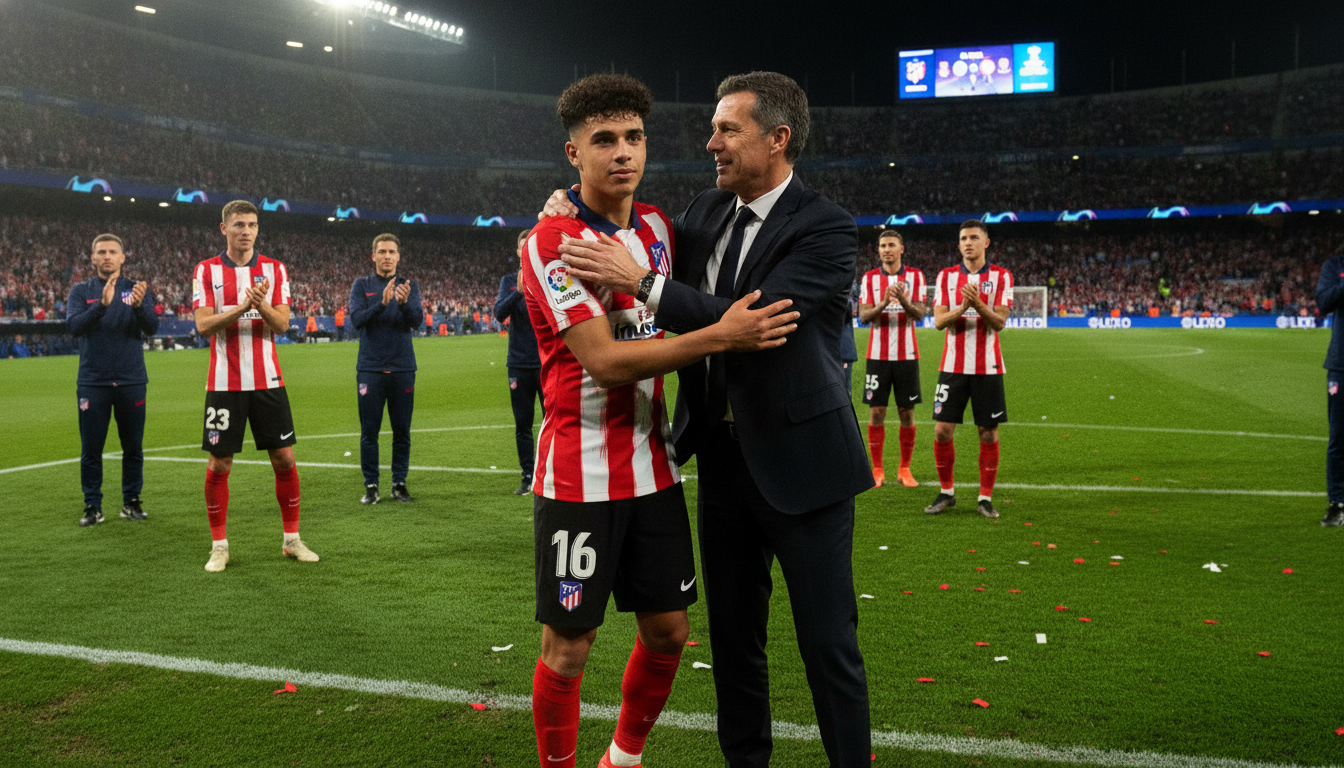
Atletico Madrid Reaffirm Faith in Obed Vargas After Mexico World Cup Debut
Atletico Madrid reaffirm faith in Obed Vargas after his Mexico World Cup cameo; Spanish passport cleared and contract to 2030 shape the club’s summer plans.


Obed Vargas’s 20-minute appearance for Mexico at the 2026 World Cup has prompted Atletico Madrid to restate their confidence in the young midfielder and the club’s January decision to sign him. The Seattle academy graduate entered a game that was swinging in South Korea’s favour, produced a near-goal and injected tempo at a pivotal moment. Club sources view the cameo as confirmation that Vargas possesses the profile they targeted rather than a performance that forces an immediate change of plan.
Atletico’s internal read on Vargas’s cameo
People close to Atletico describe the reaction to Vargas’s debut as quietly affirmative rather than euphoric, with staff pleased that a short substitute appearance validated scouting assessments. The 20-minute cameo — which included a volley that nearly beat the goalkeeper — underlined attributes Atletico identified when they brought him to the Metropolitano in January. Those within the club emphasise that the performance reinforced an existing conviction about his current utility and future upside.
Atletico’s directors also noted that Vargas’s display did not create an urgent transfer dilemma; instead it highlighted the value of an asset they already control. With his contract running to 2030, the club can afford measured decisions about his integration. The Spanish coaching staff now have clearer evidence to weigh when crafting their squad for the 2026–27 season.
Vargas’s World Cup minutes and what they showed
On his Mexico debut at the tournament, Vargas came off the bench and immediately influenced tempo and physicality, traits that had been consistent in his MLS years. He pressed with aggression, sought forward passing lanes, and produced a technically sharp effort that tested the opposition keeper. Those actions suggested he can change a game in short bursts, an attribute managers prize in tournament settings where fine margins often decide matches.
The cameo also offered a glimpse of his tactical flexibility, as he combined defensive aggression with a willingness to carry the ball through midfield. For a 20-year-old making his World Cup bow, the ability to impose himself in a high-pressure environment is a notable indicator of temperament. Mexico’s progress out of the group stage means Vargas may be handed further opportunities to demonstrate whether those traits scale over longer appearances.
Coaches and analysts watching the match highlighted Vargas’s timing and spatial awareness when stepping into challenges, qualities that Atletico value in central midfielders. He did not need extensive time to make his presence felt, which speaks to his readiness to perform in competitive minutes. That immediate impact is a clear reason the club regard the cameo as useful confirmation rather than surprising revelation.
Transfer background: Seattle Sounders to Atletico Madrid
Vargas moved to Atletico Madrid after progressing through the Seattle Sounders academy and establishing himself in MLS with more than 90 first-team appearances. The transfer, concluded at the end of the January window, represented a significant move for the young midfielder and for the Sounders, who retained a 25 percent sell-on clause. Financial details reported around the time of the deal suggested an initial outlay in the region of $3–3.5 million, with performance-related incentives that could push the total higher.
That structure reflects both Atletico’s belief in Vargas’s long-term potential and Seattle’s intent to benefit from his future development. The fee structure and sell-on clause make clear that both clubs expect his value to rise, particularly if he converts international opportunities into sustained form. For Atletico, securing a promising midfielder on a long-term contract fits a strategy of investing in youth while managing financial exposure.
Vargas’s trajectory from MLS to a leading LaLiga club also highlights a growing pathway for North American talent entering top European leagues. Atletico moved decisively to acquire him before other suitors could escalate interest, a timing that now looks prescient given the exposure the World Cup provides. The club’s recruitment team view his integration as part of a broader pattern of blending experienced senior players with younger, high-ceiling signings.
Spanish passport clears registration and tactical options
A key administrative development ahead of the 2026–27 season is Vargas’s acquisition of a Spanish passport, which removes non-EU registration constraints that can complicate squad planning. With that paperwork resolved, Atletico no longer face roster barriers when selecting or rotating him in the first team. The passport gives manager Diego Simeone and his staff full flexibility to deploy Vargas without sacrificing a valuable non-EU player slot.
That administrative clarity converts potential friction into a purely footballing decision about minutes and role. Rather than worrying about registration limits, the coaching staff can focus on where Vargas fits tactically alongside established midfielders. It also enhances his marketability should Atletico decide to use him as an in-house asset rather than move him on in the immediate summer window.
Summer planning and Vargas’s place in Atletico’s midfield picture
Atletico approach the summer with notable squad movement already under discussion, including reported exits and targeted reinforcements across the spine of the team. In that context Vargas’s emergence on the international stage strengthens the club’s internal options and reduces pressure to source a like-for-like midfield signing solely to add squad depth. He is now regarded less as a future prospect to be loaned out and more as an asset whose value the club can utilise directly.
Despite that, the concrete question for the coming season is whether Vargas will play consistently under Simeone or function primarily as rotation cover in cup competitions and against heavy fixture schedules. Athletic directors and the coaching staff have to reconcile immediate competitive ambitions with player development pathways, balancing the need for results with Vargas’s long-term progression. The passport and the long-term contract give Atletico the luxury of making that choice on footballing grounds rather than administrative necessity.
Additionally, reported negotiations around other players and positions will shape Vargas’s opportunities; departures in attack or defence can change how many minutes midfielders receive. Atletico’s transfer window will therefore have a direct bearing on the rhythm of Vargas’s integration and whether the club prioritises internal growth or external recruitment. For now the internal assessment is conservative: they are encouraged, but not compelled to alter pre-existing plans.
What Vargas must demonstrate to become a starter
To transition from a promising substitute to a regular starter at Atletico, Vargas will need sustained physical performance, tactical discipline and consistency across a run of matches. Short, impactful contributions in tournaments are valuable signals, but LaLiga and European competition demand week-in, week-out reliability against varied tactical systems. Showing that he can manage those demands in training, pre-season and early competitive fixtures will be crucial.
Technical development remains equally important; decision-making in tight spaces, passing range under pressure and defensive positioning will determine how Simeone perceives his suitability for a starting role. Atletico’s midfield is built on intensity and cohesion, and Vargas must demonstrate that he can sustain the team’s required tempo for 90 minutes. If he can do that while continuing to offer moments of forward thrust and aerial or long-range threat, his path to regular minutes will be clearer.
Mexico’s potential deep run in the World Cup provides a live, high-stakes laboratory for Vargas to sharpen those attributes and arrive at the Metropolitano with both confidence and form. Conversely, prolonged tournament minutes could accelerate his readiness while also limiting his immediate availability for pre-season work, a trade-off the club will have to manage carefully. Atletico’s coaching staff will watch his minutes and recovery closely to determine how best to integrate him.
Looking ahead, Obed Vargas’s short but significant World Cup outing has crystallised Atletico Madrid’s assessment of him as a present contributor and a future asset, with administrative hurdles removed and contractual stability secured. The club’s measured response reflects a broader strategy of blending immediate competitiveness with patient development, leaving the next steps to be determined by Vargas’s performance in international minutes and the squad moves Atletico elects to make this summer.