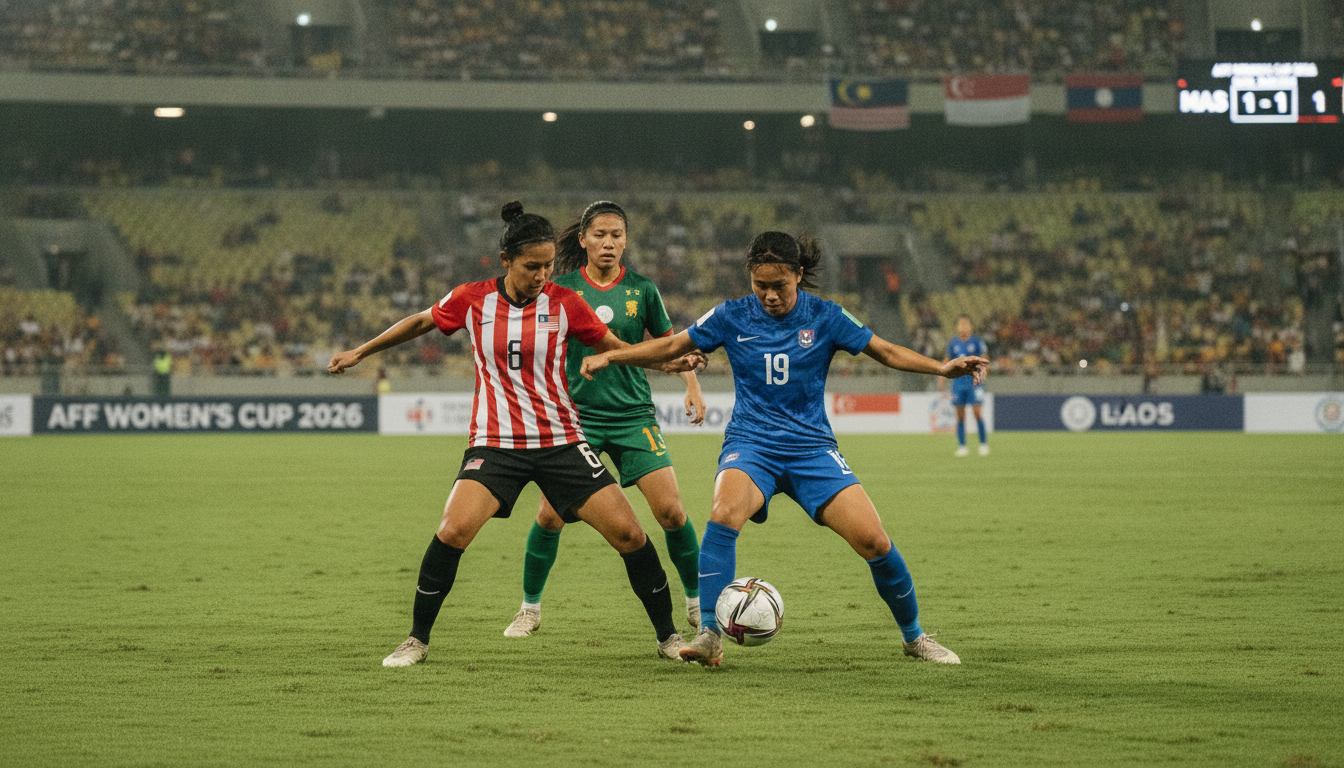
Malaysia drawn with Singapore and Laos as Indonesia placed in Group B for AFF Women’s Cup 2026
Malaysia drawn with Singapore and Laos in Group A as Indonesia defends in Group B at AFF Women’s Cup 2026, July 10–22 at Kuala Lumpur Football Stadium.


Hosts Malaysia paired with Singapore and Laos in Group A
The official draw for the AFF Women’s Cup 2026, held at Wisma FAM in Petaling Jaya on June 22, 2026, placed host nation Malaysia into Group A alongside Singapore and Laos. The result sets up a compact group that guarantees a series of regional encounters before the tournament moves into its latter stages.
For Malaysia the draw delivers both opportunity and pressure as the home side prepares to use venue familiarity and local support to its advantage. Malaysia will aim to capitalise on the short travel demands and familiar conditions while facing neighbours who have shown varying degrees of progress in recent regional competitions.
Defending champions Indonesia to face Cambodia and Timor-Leste in Group B
Defending champions Indonesia were drawn into Group B with Cambodia and Timor-Leste, ensuring the title holders avoid an immediate clash with the hosts in the initial phase. Indonesia enter the tournament as favourites on paper, carrying the expectation of progressing deep into the competition and defending their crown.
Cambodia and Timor-Leste will view the group as an important measuring stick for their programmes, with both sides looking to challenge the incumbent champions and claim a surprise result. The group composition highlights the competitive diversity in Southeast Asian women’s football and sets the stage for potentially tight matches.
Wisma FAM draw highlights regional focus and organisation
The draw ceremony at Wisma FAM was conducted under the auspices of the Football Association of Malaysia and marked an organisational milestone ahead of the competition. Officials emphasised logistical planning and coordination with participating associations as preparatory work continues in the run-up to the July fixtures.
Delegates from the participating nations attended the event, which confirmed the tournament’s compact structure and the commitment of regional stakeholders to raise the profile of the women’s game. The draw also provided an early platform for teams to begin tactical planning and travel arrangements ahead of the tournament window.
Kuala Lumpur Football Stadium confirmed as sole venue for July 10–22 dates
Organisers have scheduled the second edition of the AFF Women’s Cup to take place from July 10 to July 22, 2026, with all matches slated for the Kuala Lumpur Football Stadium. The single-venue approach simplifies logistics for teams and officials while concentrating fan interest in the Malaysian capital during the 13-day competition window.
Using one venue creates opportunities for consistent pitch conditions and a centralised match-day environment that benefits broadcasters, supporters and tournament staff. Final match schedules, kickoff times and any potential rest-day allocations will be released by the organisers in the coming weeks as match operations and ticketing plans are finalised.
Tournament format and competitive implications for the region
The AFF Women’s Cup 2026 returns as a six-team regional competition featuring two groups of three teams each, a structure that emphasises short, high-stakes group-stage encounters. With fewer teams and a compressed schedule, every group match will carry considerable importance for progression and final seeding.
For national programmes, the tournament represents a key competitive window ahead of other regional and continental commitments this calendar year. Federations are likely to treat the Cup as both a performance objective and an opportunity to test emerging players in a tournament setting against familiar regional opposition.
Team preparations and strategic priorities ahead of the Cup
National teams will now shift into a final preparation phase, balancing training camps, conditioning and tactical drills tailored to the opponents revealed by the draw. Hosts Malaysia are expected to focus on harnessing home support and sharpening set-piece and transition play that can be decisive in short group formats.
Indonesia, as defending champions, will concentrate on maintaining the structure and cohesion that delivered them the title, while Cambodia and Timor-Leste will aim to disrupt expectations with disciplined defensive schemes and counterattacking opportunities. Singapore and Laos, facing the host and each other in Group A, will work to exploit marginal advantages and match-day management to secure points.
Regional development and the wider significance of the AFF Women’s Cup
Beyond immediate results, the AFF Women’s Cup serves as a barometer for the growth of women’s football across Southeast Asia. Participation gives smaller programmes structured competition against higher-ranked neighbours and offers players meaningful exposure to tournament pressures and media coverage.
Stakeholders view the tournament as part of a broader push to strengthen talent pathways, coaching education and domestic league structures throughout the region. Performance at the Cup often informs federation planning and investment, and strong showings can accelerate momentum for long-term development initiatives.
Logistics, ticketing and broadcasting to be confirmed by organisers
Organisers and the Football Association of Malaysia have indicated that further operational details, including ticketing arrangements and broadcast partnerships, will be announced in the weeks ahead. Centralising the Cup in Kuala Lumpur is designed to make the fan experience accessible and to streamline broadcast production for regional audiences.
Supporters seeking to attend matches should monitor official federation channels for public announcements and ticket release dates as the tournament approaches. Media outlets and national federations are expected to provide team-specific coverage and programming that reflects local interest in the competition.
The draw in Petaling Jaya sets the stage for a compact, competitive AFF Women’s Cup 2026 that will test teams across two intense weeks of group-stage matches and decisive fixtures at Kuala Lumpur Football Stadium. Fans and federations alike will now turn to preparation and planning as July 10 approaches, with expectations high for competitive matches and moments that could influence the future trajectory of women’s football in the region.