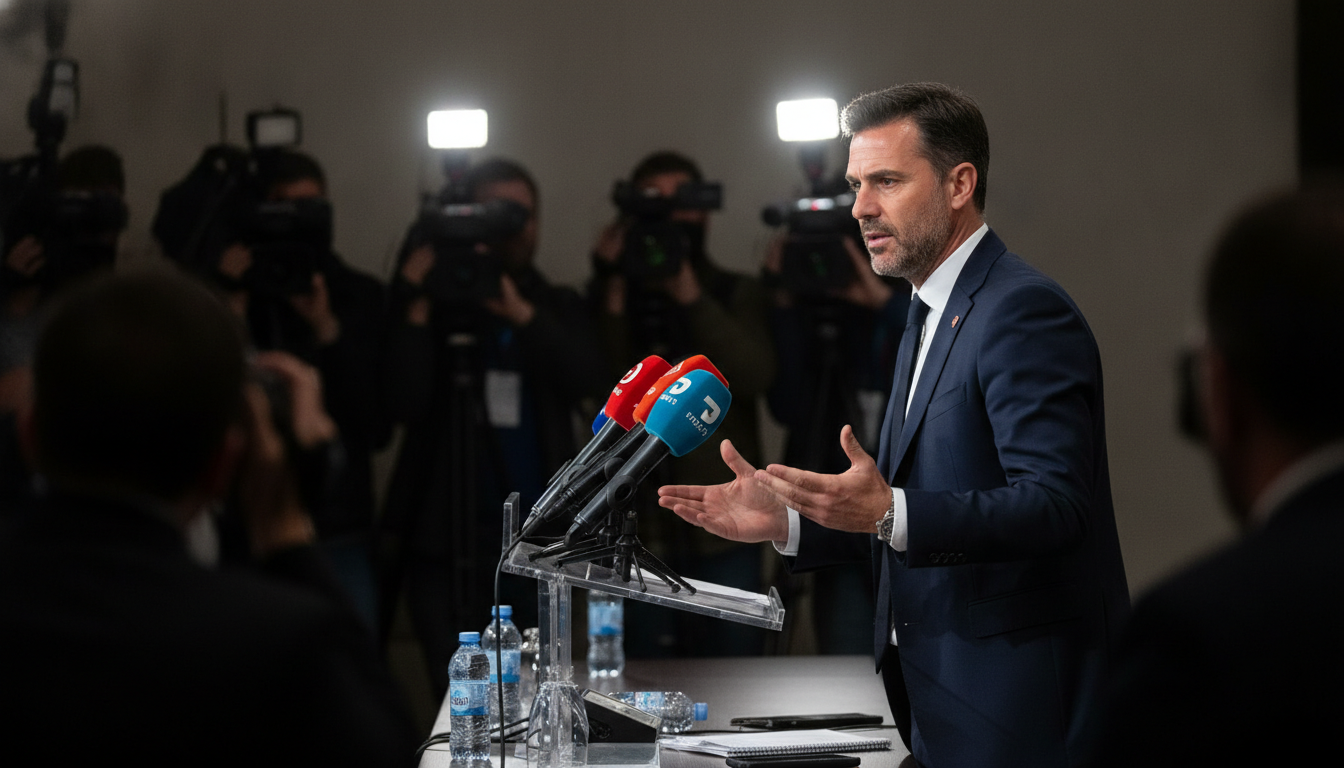
Albert Riera Slams Bundesliga Quality After Brief Eintracht Frankfurt Spell
Albert Riera criticises Bundesliga after a 14-game Eintracht Frankfurt spell, saying lower-table sides use identical tactics and the league disappointed.


Albert Riera has publicly questioned the overall standard of the Bundesliga after a short and turbulent spell as Eintracht Frankfurt head coach. Riera, who took charge in February and lasted 14 matches, said the repetitive tactical approach of many lower-table teams made preparing for fixtures feel like "playing the same opponent every week." His comments come after Frankfurt finished eighth and missed out on European competition, and they have reopened debate over tactical variety and competitiveness in Germany’s top flight.
Riera’s short tenure and results
Riera was appointed Eintracht Frankfurt’s head coach in February amid concerns the club could miss out on European qualification. He managed 14 Bundesliga matches, recording four wins, five draws and five defeats before his departure in May.
Nine of those 14 fixtures came against teams positioned in the bottom half of the table, from which Frankfurt secured just three victories. The underwhelming return against lower-ranked opposition was a key factor in the club’s decision-making and now underpins Riera’s public critique of the league.
Coach’s assessment of the Bundesliga’s level
Riera stated that "the level was disappointing" and complained that teams from the lower part of the table employ very similar setups. He described the analytical process as monotonous, saying match preparation felt repetitive because opponents used nearly identical defensive patterns.
Those comments reflect a coach frustrated by results and patterns he believes limited competitive variety. Whether that frustration stems primarily from tactical fatigue or from Riera’s difficulty in adapting remains a central question among observers.
Patterns among lower-table teams
Many struggling clubs in top leagues resort to pragmatic defensive methods to secure points, and the Bundesliga is no exception. Low blocks, compact midfield shapes and quick transitions on the counter are common tools for teams seeking to blunt more attack-minded opponents.
The predictability of these approaches can make it harder for managers to find tactical innovations that yield consistent wins. For teams chasing stability, copying pragmatic templates can appear to safeguard results but also risks creating a league where styles converge and contests become formulaic.
Frankfurt’s season context and consequences
Eintracht Frankfurt ended the season in eighth place, outside the places that guarantee European qualification. That finish prompted internal reflection over recruitment, coaching appointments and tactical identity ahead of the next campaign.
Missing out on continental competition carries both competitive and financial implications for clubs of Frankfurt’s standing. The board faces decisions about personnel and strategy that will shape the club’s ability to reassert itself domestically and on the European stage.
Assessment of Riera’s tactical record
While Riera argues the tactical homogeneity of opponents constrained his work, his own record against lower-table sides raises questions about adjustment and in-game management. Winning only three of nine matches against teams beneath Frankfurt in the table suggests difficulties breaking down deep defenses or securing narrow results.
Analysts point out that coaching success often hinges on adapting to opponents’ tendencies and finding marginal gains in preparation. Critics of Riera’s spell say that not countering low-block tactics effectively is ultimately a failure of coaching execution as much as of the opposition’s style.
Reactions and wider debate among pundits
Riera’s remarks have prompted discussion among pundits and supporters about whether the Bundesliga suffers from a lack of stylistic diversity at the lower end of the table. Some commentators agree that a prevalence of similar defensive strategies reduces entertainment and competitive unpredictability.
Others warn against blaming wider league structure for the outcomes of a single managerial tenure. They argue that club finances, squad depth and individual tactical choices are equally relevant and that painting the Bundesliga as homogenous overlooks the variety displayed by many teams.
Implications for coaching and recruitment
For Eintracht Frankfurt, the season’s outcome and Riera’s critique will feed into planning for the summer transfer window and managerial recruitment. Clubs aiming to compete at the upper end are likely to prioritize players and coaches who can create and exploit tactical differences.
Managers in the Bundesliga will also face pressure to demonstrate versatility when preparing for teams that adopt defensive frameworks. The ability to unlock compact units and secure away points against pragmatic opponents is increasingly viewed as a vital competency.
What Riera’s future could look like
Riera’s public comments may influence how potential employers view him, framing him either as a candid critic of the league or as a coach who struggled to adapt. Some clubs might value his willingness to speak frankly, while others will focus on the practical results from his short tenure.
For Riera to re-establish his reputation, he will likely need to show tactical flexibility and an ability to produce consistent results, particularly in matches against teams that emphasize defensive solidity. Future appointments will hinge on demonstrable adjustments and measurable outcomes.
Eintracht Frankfurt now face a summer of decisions aimed at addressing the tactical and personnel shortcomings exposed during the campaign. The club’s leadership will weigh the economics of recruitment, the profile of the next head coach and the expectations of supporters as they plan to return to European contention.
Time and results will determine whether Riera’s critique prompts a broader reassessment of tactical trends in the Bundesliga or remains a footnote tied to a difficult spell at one club.