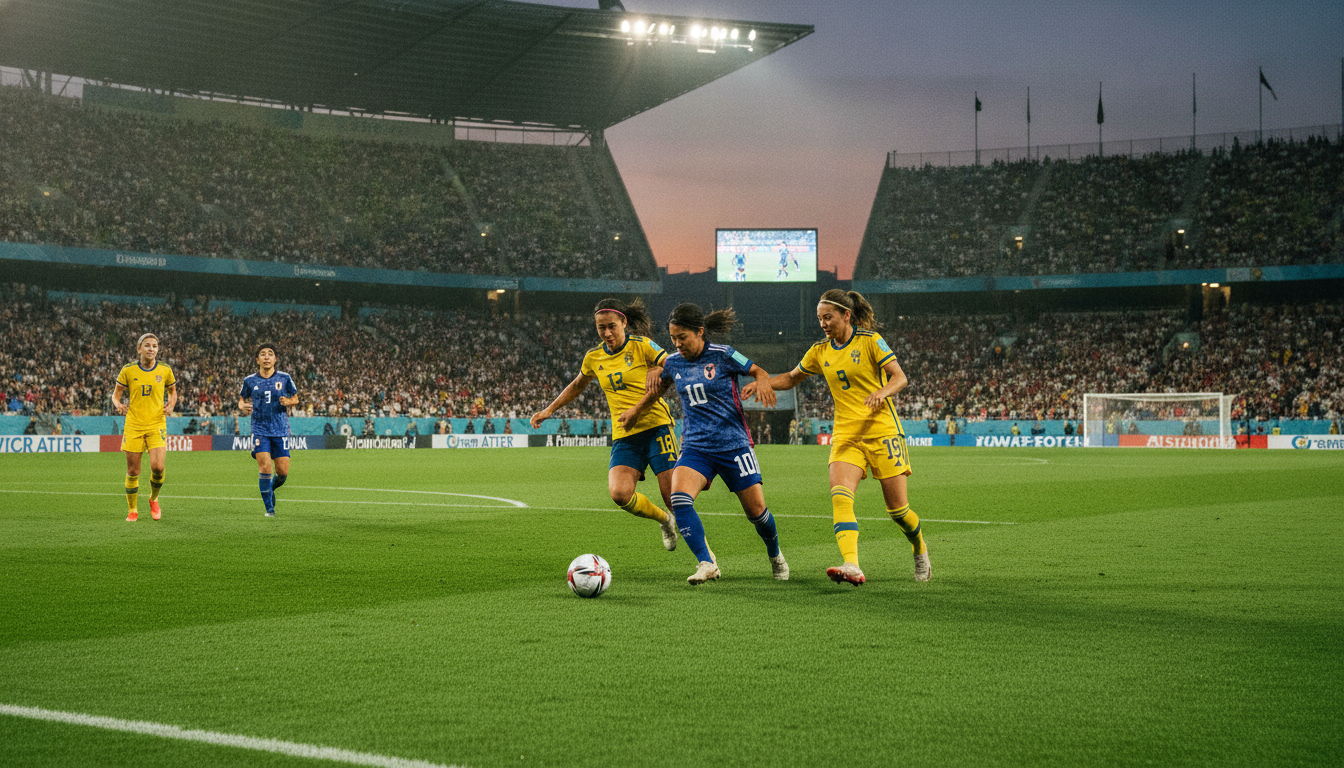
Japan vs Sweden: Moriyasu demands victory as Japan chases top spot in Group F
Japan must beat Sweden in Dallas to top Group F — Moriyasu insists on victory as Japan targets first place to avoid Brazil and face Morocco in the last 32.

Japan manager Hajime Moriyasu told reporters on Wednesday that his team is focused solely on winning the Japan vs Sweden match in Dallas and securing top spot in Group F. A draw would be sufficient to qualify, but Moriyasu made clear his side are preparing with victory as the only objective. The result will determine whether Japan faces Morocco in Monterrey or Brazil in Houston in the round of 32.
Moriyasu sets clear objective for Japan vs Sweden
Moriyasu said qualification in first place is the team’s priority and that he believes Monterrey would be the preferable destination for the last-32 fixture. He emphasized that the squad’s immediate aim is to beat a “very strong” Sweden side and leave permutations to other results. The manager’s message was concise: prepare to win, control the match, and aim to dictate the group outcome.
The coach repeated that only a win is on his mind despite mathematical scenarios that could allow Japan to finish top with different outcomes elsewhere. He declined to treat the match as anything but a direct contest against Sweden and said tactical preparations have centered on neutralizing Swedish strengths. Japan’s focus in training has been on rhythm, pressing, and transitions ahead of Thursday’s kickoff in Dallas.
Group F permutations and what a top finish means
If Japan achieve a better result against Sweden than the Netherlands record against Tunisia, they will finish first in Group F and avoid Brazil in the last 32. The group winners will travel to Monterrey to face Morocco, while the runners-up will be paired with Brazil in Houston on the same day. That arithmetic has heightened the significance of the Japan vs Sweden fixture beyond mere progression to the knockout stage.
A draw would grant Japan passage to the last 32, but it would not guarantee the preferable draw line avoiding Brazil. For Japan, finishing top offers a clearer pathway and fewer potential clashes with South American heavyweights early in the knockout phase. The coaching staff have therefore framed Thursday’s match as a decisive opportunity to shape the tournament bracket.
Tactical outlook: how Japan might approach Sweden
Japan are likely to prioritize controlled possession and quick transitions to exploit space behind Sweden’s defensive lines while maintaining compactness without the ball. Moriyasu has historically favored flexible shape and rotation across flanks to unsettle more physically imposing opponents. Against Sweden, that approach would aim to combine technical cohesion with disciplined pressing in key pockets of the pitch.
Sweden’s strengths typically include aerial presence, set-piece organization, and a direct approach on transitions; Japan must be alert to those threats while creating overloads in wide and central areas. Set-piece defending and concentration in the closing phases will be critical, given knockout-stage implications and the fine margins that often separate first and second place. Tactical balance — attacking intent without losing defensive structure — will be the central coaching challenge.
Squad management and selection considerations
Moriyasu’s selection decisions will hinge on fitness, form and the need to strike the right balance between aggression and caution. Rotation can be tempting late in group play, but the manager’s insistence on winning suggests he may field his strongest available XI. Decisions over midfield compactness, wingbacks versus traditional full-backs, and who takes set pieces will be scrutinized by analysts and supporters alike.
Bench options will also matter, with the potential for substitutes to change the game if Japan need a late winner or to close out a positive result. Moriyasu will have to weigh the merits of an early attacking posture against the benefits of conserving legs for a likely knockout fixture. The coaching staff’s medical and performance updates ahead of kickoff will shape the final choices.
Sweden’s challenge and key threats
Sweden arrive in Dallas with a reputation for organization and resilience, traits that complicate breaking them down over 90 minutes. Their direct play on transition, coupled with set-piece potency, presents a distinct tactical puzzle for Japan’s ball-playing approach. Sweden’s ability to capitalize on physical contests and second balls means Japan must maintain discipline and avoid conceding dangerous free-kicks or corners.
Individual duels, particularly aerial battles and midfield screens, will be pivotal in determining control of the game’s tempo. Japan will need sharp movement off the ball and clinical finishing to convert opportunities when they arise. Defensive screens and quick coverage on counters will also be essential to blunt Sweden’s most dangerous moments.
Venue, conditions and match-day context in Dallas
The match in Dallas adds environmental and logistical variables that could influence the tactical flow and stamina of both teams. Travel schedules, recovery windows and the artificial rhythm of tournament football all feed into match preparation. Teams that manage these peripheral factors efficiently often gain a subtle advantage on the field.
Crowd composition and atmosphere can also sway momentum, and both Japan and Sweden will seek to impose psychological control early in the game. Moriyasu’s public emphasis on winning is designed to focus players on execution rather than external pressures. How the teams respond at kickoff will set the tone for the crucial 90 minutes.
Japan enter Thursday’s match with the explicit aim of topping Group F, and Moriyasu’s public comments underline that only victory satisfies the team’s ambitions. The permutation with the Netherlands and Tunisia magnifies the stakes, but Japan’s preparation is being conducted with directness and clarity. Whichever team prevails in Dallas will not only claim three points; it will also shape its path through the knockout stages as the tournament advances.