France vs Sweden: France unleash lethal attacking trio in World Cup last-32 showdown
France vs Sweden: France’s feared front three face Sweden in a World Cup last-32 clash, while Haaland’s Norway and host Mexico also press for knockout progress.


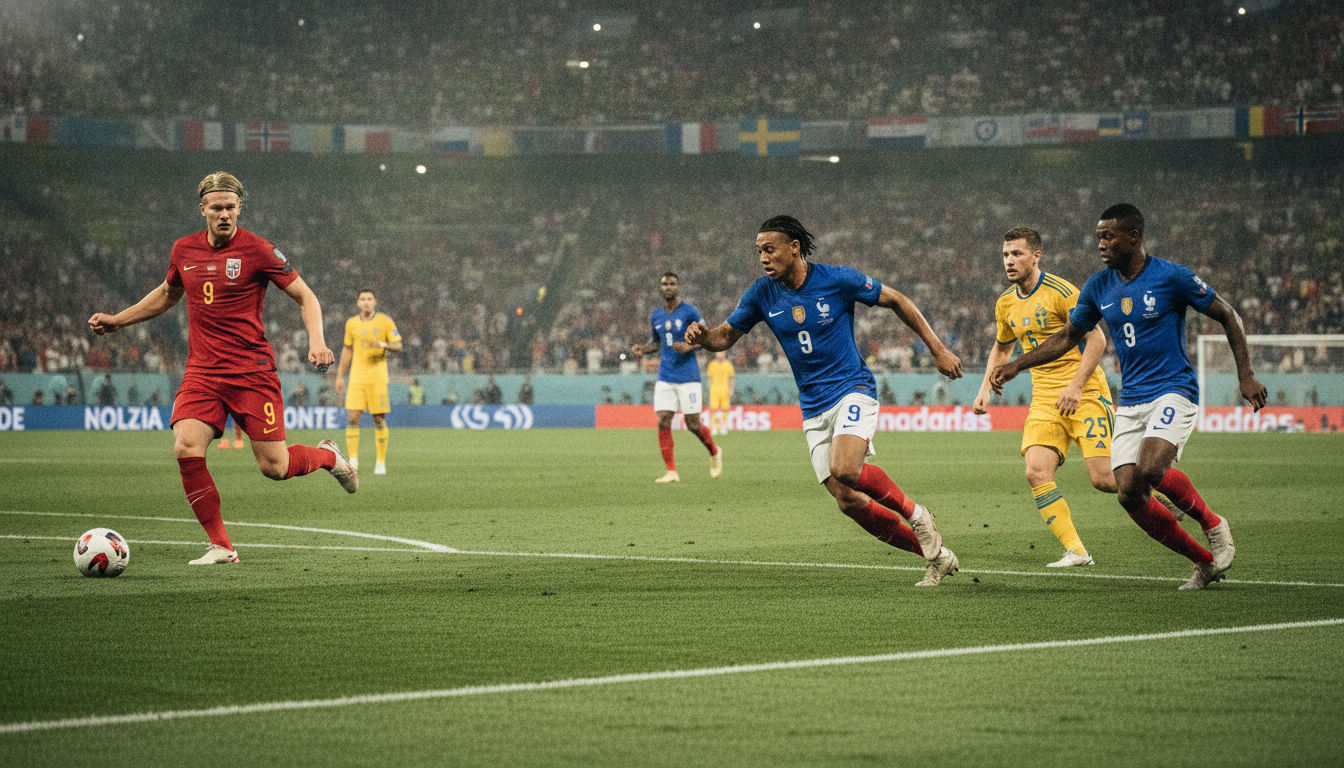
France vs Sweden shapes as a high-stakes last-32 encounter, with France’s prolific front line set to test a Swedish backline that has shown vulnerabilities. The match will pit Kylian Mbappé, Ousmane Dembélé and Michael Olise against Sweden’s defence, while Norway’s Erling Haaland and host Mexico’s campaign also command attention elsewhere on the knockout schedule. Expectations are high for an open, attack-oriented fixture, with France seeking to convert attacking momentum into a deep tournament run. Sweden will hope to blunt France’s speed and creativity and rely on clinical finishing from Alexander Isak and Viktor Gyökeres to turn the tie.
France’s front three pose major test for Sweden
France arrive with significant firepower after a group phase that highlighted their attacking depth and fluidity.
Kylian Mbappé remains the focal point, having already found the net multiple times in the tournament, and Ousmane Dembélé arrives off the back of a memorable hat-trick in the group phase. Michael Olise’s direct runs add a different dimension, creating overloads and threatening space behind defenders. Together the trio gives France varied avenues to goal and forces opponents to make difficult choices about who to mark and when to commit men forward.
Swedish forwards must find form to threaten France
Sweden’s offensive duo of Alexander Isak and Viktor Gyökeres have not yet delivered the decisive performances their reputation suggests.
Both attackers have shown glimpses of the individual quality that carried them to elite European clubs, but cohesion and finishing at this tournament have been intermittent. Sweden’s options will depend on more intelligent link-up play and quicker transitions from midfield to give their forwards better service. If Isak and Gyökeres recapture form, Sweden could exploit moments when France overcommit in search of goals.
Defensive questions shape pre-game tactical debates
The primary concern for Sweden is defensive resilience against a side that can strike at pace and with intricate movement.
France’s full-backs and wingers routinely overload flanks, while midfielders probe for line-breaking passes that can split a back four. Sweden must decide whether to adopt a compact, risk-averse block or press higher to disrupt France’s rhythm, each approach carrying potential consequences. Set pieces and transitional moments could prove decisive if the match remains tight, placing added emphasis on concentration and clearances.
Haaland to lead Norway’s bid against Ivory Coast
Elsewhere on the last-32 slate, Erling Haaland shoulders Norway’s hopes as they confront the Ivory Coast in a fixture that promises intensity and attacking ambition.
Haaland’s physical presence and finishing proficiency give Norway a clear target in the penalty area and a platform for direct attacks. The Ivory Coast are expected to counter with pace on the break and dynamic wing play that can test Norway’s full-backs in recovery scenarios. The tie’s outcome may hinge on which side better manages set-piece situations and limits careless turnovers in dangerous areas.
Mexico look to Azteca advantage in Ecuador tie
Hosts Mexico will attempt to harness the Estadio Azteca’s atmosphere as they aim to progress against Ecuador before partisan supporters.
Playing at home brings both expectation and pressure, and Mexico’s approach will likely combine energetic pressing with quick combinations in tight spaces. Ecuador can threaten through organized counterattacks and set-piece routines, so Mexico must maintain discipline and composure while pursuing an early foothold. The crowd’s fervor could lift the hosts at key moments, particularly late in the match if the tie remains finely poised.
Tactical matchups and likely line-ups to influence the ties
Coaches on both sides must balance attack and defence with substitutions and tactical tweaks that could swing momentum in short knockout matches.
France can rotate without losing potency, blending elite individual talent with structured midfield support to control pace and space. Sweden’s manager faces selection dilemmas around how aggressively to press and whether to field a compact midfield three or risk exposing lanes to Mbappé and company. In Norway and Mexico’s games, managers will weigh the value of guarding against quick counters versus committing bodies forward to seek decisive goals.
France’s ability to vary attacking patterns compels opponents to prepare contingency plans, while Sweden’s hope for success rests on limiting turnovers and converting limited chances. Norway will look to Haaland as both a scorer and a decoy to create space for runners, and Mexico will aim to exploit home familiarity and crowd momentum. Coaches’ halftime adjustments and bench impact could be decisive in matches where margins are small.
Tournament implications and next-round outlook
The results of these last-32 fixtures will reshape the knockout landscape and alter projected paths toward the later stages.
A France victory would reinforce their status as favourites and set up a potentially challenging route for other top seeds, while a Swedish upset would substantially open this half of the draw. Norway’s progression, powered by Haaland, would raise questions about balance across the bracket and introduce a potent attacking threat into the last-16 mix. Mexico’s advancement as a host would sustain home interest and shift the dynamics for teams scheduled to face them later in the tournament.
Knockout football leaves little room for error, elevating the importance of frontline finishing, defensive steadiness and managerial acuity. Teams that marry tactical discipline with clinical moments in the final third are most likely to survive and advance, but the unpredictable nature of single-elimination matches keeps possibilities wide open.
France vs Sweden will be watched for how elite attacking talent breaks down collective defensive structure, and the other knockout ties on the same day will test the balance between star individual performance and cohesive team play. The outcomes will clarify which contenders can blend resilience with the attacking verve necessary for a deep World Cup run.
These matches offer contrasting narratives: France aiming to validate pre-tournament expectations, Sweden seeking an upset through disciplined execution, Haaland looking to drive Norway forward, and Mexico leaning on home support to extend their campaign. Each tie presents its own tactical chess match, and the managers who best read in-game moments and deploy effective substitutions are likeliest to emerge into the last 16.