Nine African teams progress to the 2026 World Cup Round of 32
Nine African teams have advanced to the 2026 FIFA World Cup Round of 32, with South Africa, Morocco, Côte d’Ivoire, Cape Verde and others set for high-profile knockout ties.

Africa secures a strong presence in the Round of 32
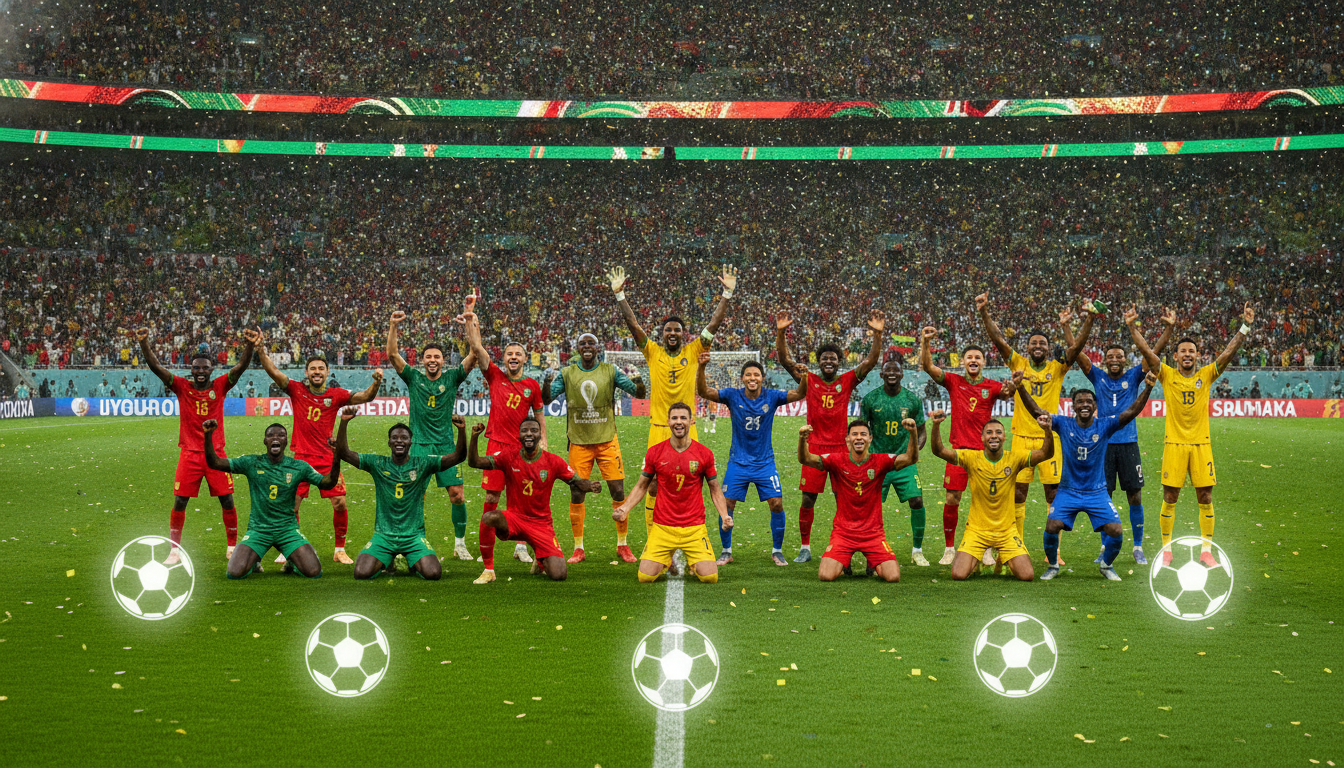
Africa will be represented by nine nations in the Round of 32 at the 2026 FIFA World Cup, a notable showing under the tournament’s expanded 48-team format. South Africa, Morocco, Côte d’Ivoire, Cape Verde, Egypt, Senegal, Ghana, Congo DR and Algeria all progressed from the group stage and will contest knockout ties between June 28 and July 3, 2026.
This level of representation reflects both the wider access created by the tournament expansion and the quality of several African sides who combined tactical discipline with decisive results. Several teams advanced through first-time milestones and late-day drama, underscoring the continent’s growing depth on the global stage.
Nine African teams and their routes to the knockout stage
The nine African qualifiers reached the Round of 32 via a mix of group finishes, third-place advancement and one debutant’s unbeaten run. Morocco and South Africa secured places as runners-up in their groups, while several others navigated tough groups or secured positions as one of the best third-placed teams.
Cape Verde’s progression as tournament debutants was particularly notable; they finished second in Group H after three draws and went unbeaten. Côte d’Ivoire and South Africa also marked significant firsts by reaching a World Cup knockout round for the first time in their histories.
South Africa to open Africa’s knockout campaign against Canada
South Africa will be the first African nation to play in the knockout phase when they take on co-host Canada in Los Angeles on June 28, 2026. Bafana Bafana advanced from Group A as runners-up after recovering from an opening defeat to Mexico, drawing with Czechia and beating Korea Republic on the final matchday.
The tie in Los Angeles represents a historic moment for South African football and a stern test against a Canada side buoyed by home support. South Africa’s ability to replicate the recovery they showed in the group stage will be crucial if they are to convert representation into a deeper run.
Morocco draw Netherlands in a heavyweight encounter
Morocco will meet the Netherlands at Monterrey Stadium on June 29, 2026, in one of the most anticipated Round of 32 fixtures involving an African team. The Atlas Lions finished second in Group C behind Brazil after collecting seven points, including a 4-2 victory over Haiti in their final group match that demonstrated attacking potency.
Having reached the semi-finals in 2022, Morocco arrives with recent tournament pedigree and continental expectations. Their clash with the Dutch is widely regarded as a heavyweight tie that will test Morocco’s defensive organization and transition play against a Netherlands side known for fluid attacking patterns.
Côte d’Ivoire and Cape Verde create historic moments
Côte d’Ivoire’s qualification for the knockout stage on June 30, 2026, marked the first time the Elephants have advanced beyond the group phase in a World Cup. They will face Norway in Dallas after wins over Ecuador and Curaçao carried them into the Round of 32 and broke a long-standing barrier in Ivorian football.
Cape Verde, meanwhile, will face defending champions Argentina in Miami on July 3, 2026, a glamorous reward for a debut World Cup campaign that saw the Blue Sharks go unbeaten in Group H. Their draws with Spain, Uruguay and Saudi Arabia and their second-place finish produced one of the tournament’s most captivating storylines and a genuine chance to capture global attention.
Senegal, Ghana and Congo DR among teams facing top opposition
Senegal progressed as one of the best third-placed teams after a late 5-0 victory over Iraq and will face Belgium in Seattle on July 1, 2026, in a tie that requires another revival. That result re-energized Senegal’s campaign following earlier defeats to France and Norway and highlighted their capacity for swift offensive output.
Congo DR also advanced as a third-placed side and will meet England in Atlanta on July 1, 2026, a stern assignment that offers a platform for the Leopards to make a major continental statement. Ghana, having qualified as another of the best third-placed teams, will face Colombia in Kansas City on July 3, 2026, after a Group L campaign that mixed a clean sheet against England with a narrow loss to Croatia.
Algeria and Egypt secure knockout ties after dramatic finales
Algeria reached the Round of 32 as the last of the eight best third-placed teams following a dramatic 3-3 draw with Austria that preserved their tournament hopes on June 27, 2026. The Desert Foxes will meet Switzerland in Vancouver on July 2, 2026, where they will face a Swiss side that topped Group B with seven points.
Egypt confirmed progression as runners-up in Group G and will take on Australia in Dallas on July 3, 2026, a match that pits Egypt’s veteran-led approach and tactical experience against a physically robust Socceroos side. Both matches promise to be tight tactical contests where momentary lapses could determine who advances.
Third-place qualifiers and late drama shaped Africa’s representation
The expanded format rewarded teams that could grind results and seize crucial moments, and several African sides benefited from that system. Three third-placed qualifiers—Senegal, Congo DR and Ghana—earned their places by finishing among the best third-placed teams across the groups, often through late goals or decisive final-day performances.
That context made the group stage inherently unpredictable, amplifying the value of discipline, match management and effective substitutions. Many African teams combined defensive solidity with opportunistic attacking to secure the narrow margins that separated progression from elimination.
Fixtures, dates and venues for Africa’s Round of 32 ties
Africa’s Round of 32 schedule runs from June 28 to July 3, 2026, with matches staged across the United States and Mexico. South Africa meet Canada in Los Angeles on June 28, 2026, while Morocco face the Netherlands in Monterrey on June 29, 2026, and Côte d’Ivoire play Norway in Dallas on June 30, 2026.
Senegal and Congo DR both have fixtures on July 1, 2026, in Seattle and Atlanta respectively, while Algeria travel to Vancouver to face Switzerland on July 2, 2026. Egypt, Cape Verde and Ghana will play on July 3, 2026, against Australia, Argentina and Colombia in Dallas, Miami and Kansas City respectively.
What successful knockout performances could mean for African football
A strong showing by any combination of these nine teams would reinforce arguments that African national teams are closing the gap with traditional powerhouses. Progress into the later knockout rounds would provide evidence of successful player development pathways, tactical evolution, and the competitive benefits of increased exposure at major tournaments.
Beyond on-field results, performances in the Round of 32 can have lasting impacts on coaching appointments, domestic league investment and the market value of players. For nations making historic advances, such as Cape Verde, success would also boost national pride and international recognition for their football programs.
Next steps and key matchups to watch
Attention will quickly shift to tactical matchups, squad rotation decisions and how managers respond to pressure in single-elimination soccer. Matches such as Morocco versus the Netherlands and Cape Verde versus Argentina present contrasting challenges: one tests continental pedigree against elite European opposition, the other is a David-versus-Goliath scenario on a global stage.
Coaches will be judged on their ability to blend experience and youth, manage injuries and execute game plans under intense scrutiny. For African teams, converting representation into progression will require both technical quality and mental resilience across 90 minutes and beyond.
Africa’s nine representatives arrive in the Round of 32 carrying a mix of history, hope and expectation; how they perform over the coming days will shape perceptions of the continent’s progress at the expanded 2026 FIFA World Cup.