Algeria parliamentary elections face turnout test as World Cup diverts public attention
Algeria parliamentary elections face turnout test as cost-of-living concerns, candidate exclusions and a World Cup knockout match vie for voters’ attention.

Algeria parliamentary elections opened amid competing national concerns, with nearly 25 million registered voters called to choose 407 lower house deputies from a field of 1,235 candidates. The vote — for five-year terms in the National People’s Assembly — unfolded against rising public frustration over purchasing power, shrinking public services and a political climate critics describe as increasingly constrained. Officials sought to boost participation by declaring a paid national holiday, but many candidates reported sparse crowds at campaign events and struggled to mobilize skeptical voters.
Voting opens as Algeria balances elections and World Cup fever
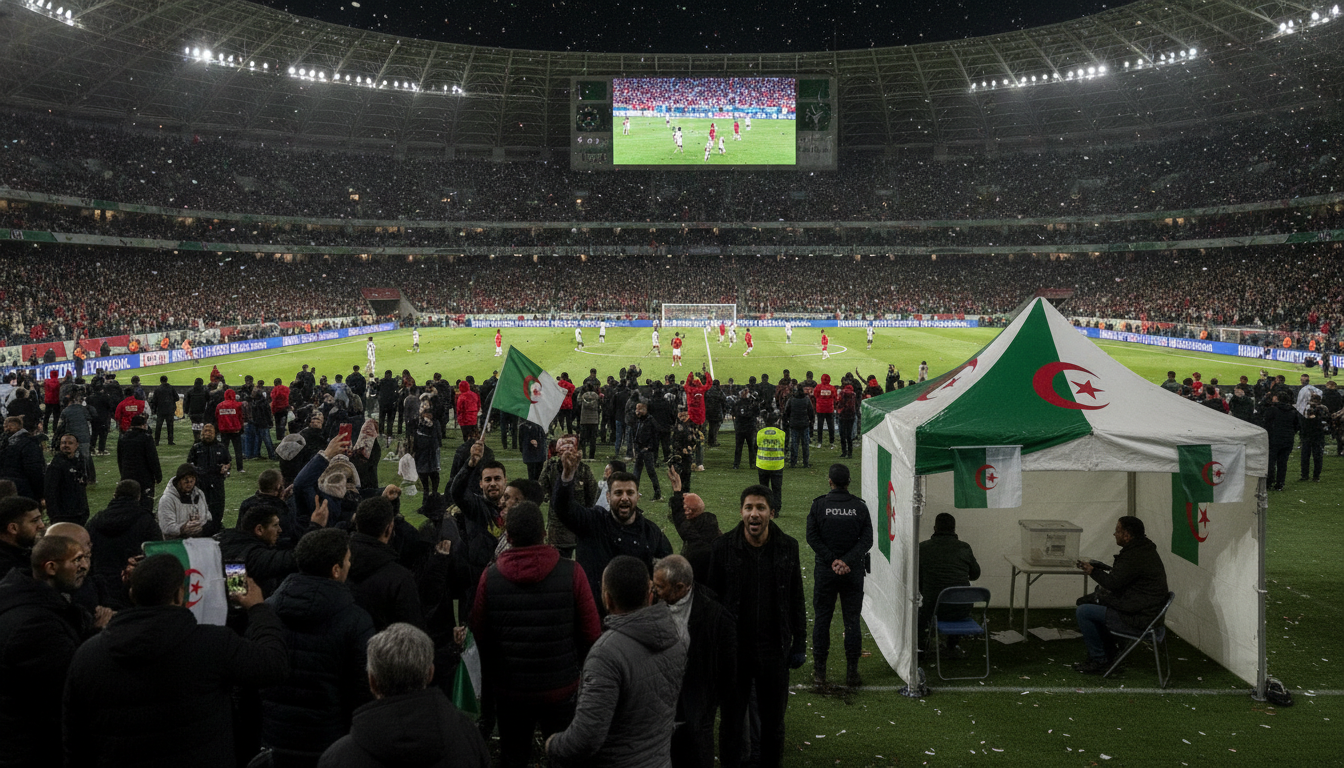
Polling stations across the country received voters on a Thursday that many described as marked by mixed emotions and divided attention. Alongside the ballot, Algeria’s national football team was preparing for a World Cup knockout fixture that drew widespread public focus and media coverage. Officials acknowledged the dual pressures on the electorate, noting that the tournament had become a major distraction in a nation where football passion is pervasive.
Authorities implemented visible security measures in urban centres and logistical adaptations in remote regions to ensure voting could proceed on schedule. The government also adjusted the school calendar and moved end-of-year exams to make classrooms available as polling sites, a practical but telling sign of the state’s efforts to accommodate the exercise of suffrage.
Low engagement and the turnout test
Turnout was framed as the defining indicator of the poll’s legitimacy, with campaigners and analysts alike watching for signs that citizens would take part in significant numbers. Many observers noted that campaign rallies had failed to attract large crowds, and state efforts — including a paid holiday — signalled official concern about voter apathy. The result would be judged not only by seat distributions but by the share of the electorate that chose to cast ballots.
For incumbents, turnout numbers mattered politically; the presidential majority argued that broad participation would strengthen Algeria’s hand domestically and regionally. Opposition parties countered that low engagement reflected disillusionment with constrained political freedoms and economic hardship, making turnout both a practical and symbolic test of public faith in the system.
Candidate exclusions and shrinking political space
The run-up to the elections was marked by controversy over the disqualification of significant numbers of aspirants, with authorities rejecting roughly 269 candidacies on grounds described as links to illicit finance or suspicious political activity. Among those barred were figures associated with the Hirak protest movement and some members of established opposition forces, fueling accusations from rights groups that the political space had narrowed since the 2019 protest wave. The Hirak movement — which helped trigger the resignation of long-serving president Abdelaziz Bouteflika — remains a focal point for debates about civil liberties and political rehabilitation.
Rights groups and opposition leaders say the pattern of exclusions, arrests and restrictions on independent media and trade unions points to an environment in which dissent is increasingly constrained. Officials defended the vetting process as a necessary measure to protect the integrity of the vote, while critics warned that barring prominent candidates could reduce meaningful choice and further dampen turnout.
Regional, diaspora and logistical arrangements
Voting arrangements varied across Algeria’s vast territory, with special provisions made for nomadic populations in the southern and Sahara regions where polling was brought forward to accommodate travel patterns. Ballot boxes for remote areas were transported in off-road vehicles and escorted by security forces to ensure delivery, reflecting the state’s logistical challenges in reaching dispersed communities. These accommodations aimed to broaden participation among citizens who might otherwise be left out by distance and harsh terrain.
Algeria’s large diaspora also voted earlier in the week at consular offices, where more than 850,000 registered expatriates were eligible to participate. State outlets reported lively turnout at stations abroad, particularly in countries hosting large Algerian communities, underscoring the continuing political engagement of citizens beyond the country’s borders and the importance of overseas ballots in a closely watched electoral contest.
Campaign themes: economy, public services and social demands
Economic concerns dominated campaigning, with cost of living, inflation and the perceived decline in public services repeatedly cited by candidates and voters alike. The opposition Workers’ Party foregrounded calls for higher wages and improved pensions, while other parties, including longstanding ruling formations, emphasised stability and national unity in the face of regional challenges. Debates over mining reforms and foreign investment also surfaced, reflecting tensions between economic development goals and social protections.
The Socialist Forces Front and other democratic opposition groups used the campaign to press for the release of political prisoners and for expanded media freedoms, arguing that political liberalisation is integral to any substantive social or economic reform. Ruling parties countered that stability and continuity were prerequisites for securing investment and managing Algeria’s strategic interests in a complex regional environment.
What the results could mean for Algeria’s political landscape
The outgoing pro-government coalition entered the vote holding roughly 300 of the lower house’s 407 seats, a dominant position that shaped expectations about the distribution of power after the ballots were counted. The Islamist Movement of Society for Peace stood as the second-largest force in the previous legislature, but exclusions and legal challenges introduced uncertainty about how parties would fare in the new assembly. Analysts suggested that even small shifts in party strength could affect the parliamentary balance and the government’s legislative agenda.
Beyond arithmetic, the composition of the new parliament will be assessed for its representativeness and its responsiveness to demands for economic relief and expanded political freedoms. International observers and domestic watchdogs indicated they would scrutinize both the procedural conduct of the vote and whether the outcome reflected a genuine contest of ideas or a continuation of managed political arrangements.
Election-day scenes ranged from quiet polling venues in city centres to animated queues at consulates abroad, reflecting a nation negotiating priorities at home and passions abroad. The interplay between everyday economic anxieties and the distraction of international football underlined the complex civic landscape facing Algerian voters.
The election results will be closely watched for their impact on Algeria’s domestic policy trajectory, the balance of power among established parties, and the broader questions about political openness that animated the Hirak protests.