Senegal vs Belgium: Tielemans penalty completes dramatic 3-2 extra-time comeback in Seattle
Senegal vs Belgium — Tielemans’ VAR penalty hands Belgium a 3-2 extra-time win in Seattle, ending Senegal’s World Cup run and setting up a last-16 clash.

Senegal versus Belgium produced one of the most dramatic knock-out chapters of the 2026 FIFA World Cup after Belgium recovered from 2-0 down to win 3-2 after extra time in Seattle. The match saw Habib Diarra and Ismaïla Sarr put Senegal on course for victory before Romelu Lukaku and Youri Tielemans forced extra time. A late VAR-reviewed penalty converted by Tielemans completed a remarkable Belgian turnaround and sent the Red Devils into the last 16.
Late Belgian comeback denies Senegal
Belgium looked defeated for long stretches of normal time but mounted a furious late rally to level the score and take the tie into extra time. Romelu Lukaku pulled one back in the 86th minute before Youri Tielemans headed home three minutes later to make it 2-2. The comeback left Senegal stunned and shifted momentum sharply in favor of the European side.
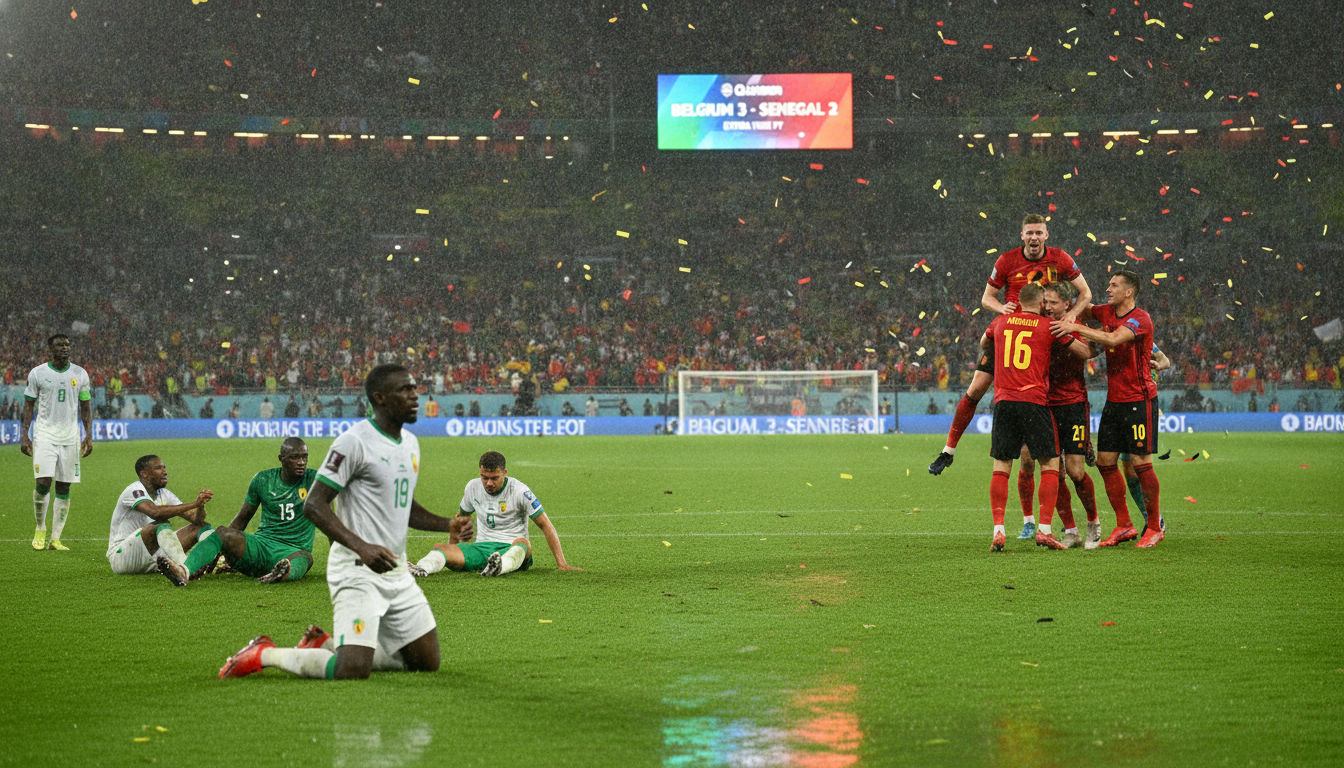
As the match moved into extra time, both teams probed for a decisive blow but opportunities were sparse for large periods. In stoppage of the second period of extra time, a VAR review awarded Belgium a penalty after Tielemans went down in the box. Tielemans stepped up and converted, sealing a 3-2 victory that erased Senegal’s two-goal advantage.
For Senegal the result was devastating given how close they had come to reaching the World Cup last 16. For Belgium, the win was a demonstration of resilience and clinical finishing under pressure, and it secured their place in the next round in front of a large crowd in Seattle.
Senegal’s commanding start
Senegal began the game with clear intent, pressing Belgium high and creating early openings down both flanks. The Lions of Teranga used the width effectively, with Sadio Mané and Iliman Ndiaye stretching the Belgian backline and winning territory in dangerous areas. Their early rhythm unsettled Belgium and set the tone for an intense opening half.
The breakthrough came after Senegal sustained pressure on the Belgian goal; a precise inswinging cross from Mané saw Ismaïla Sarr get a touch that hit the post and presented a rebound opportunity. Habib Diarra was the quickest to react and turned the ball into the net, giving Senegal a deserved lead and lifting belief across the team and stands.
Senegal controlled large spells following the opener and defended with discipline to protect their advantage. Their midfield work and quick transitions continued to create the better openings as Belgium struggled to find cohesion in build-up play for long periods.
Sarr doubles the lead and Senegal look in control
Early in the second half Senegal extended their advantage when Moussa Niakhaté produced a precise long pass that released Sarr behind the Belgian defence. Sarr controlled the ball with authority and finished past Thibaut Courtois to make it 2-0 in the 51st minute. The goal underlined Senegal’s threat in transition and their ability to punish defensive lapses.
At that point the Lions of Teranga appeared to be in full control of the tie, playing with confidence and purpose while staying organised at the back. Their ball circulation and movement off the ball continued to create anxiety among the Belgian defenders. Many observers believed Senegal’s two-goal cushion would be sufficient to see them into the last 16.
The team’s path to the knockout match had been hard-earned after a testing group stage, and their performance in Seattle suggested they were peaking at the right moment. That context made the late twist all the more painful for Senegal’s players and supporters.
Belgium’s tactical changes ignite the fightback
As the clock ran toward the final minutes, Belgium reacted by introducing fresh attacking options and shifting their approach to more direct, forward-focused play. The changes injected energy into the Red Devils and produced immediate impact in the final phase of regular time. Substitutes combined to disturb Senegal’s defensive shape and to create the spaces Belgium needed to pull a goal back.
Thomas Meunier played a pivotal role in the opening of Belgium’s revival, combining with Romelu Lukaku to reduce the deficit in the 86th minute. That strike gave Belgium belief and forced Senegal into a more cautious posture as they sought to protect their lead. The momentum swung decisively in Belgium’s favor when Leandro Trossard delivered a dangerous cross that allowed Tielemans to head home three minutes later.
The quick succession of goals transformed the match atmosphere and put Senegal under fresh pressure, undoing the control they had established for much of the contest. Belgium’s willingness to commit bodies forward and play with urgency altered the dynamic in a way that ultimately determined the outcome.
VAR decision and penalty controversy in extra time
Extra time was tense and tightly contested, with both sides aware that a single incident could decide the tie. The decisive moment arrived deep into added time when Tielemans fell in the box following a physical challenge, prompting a VAR check for a potential penalty. After a careful review, the on-field decision was overturned and the spot-kick awarded.
Tielemans took responsibility and converted from the spot to complete an extraordinary comeback, a finish that ended Senegal’s run in the tournament. The penalty decision and its timing ensured the match would be remembered for its dramatic conclusion and for the role that VAR played in shaping the final outcome.
The ruling will be dissected in analysis rooms and among supporters in the days to come, with focus on the interpretation of contact and whether the call reflected consistency with similar incidents in the tournament. Whatever the debate, the match was decided on that intervention and the calmness of the penalty taker.
Reactions and immediate fallout
Senegal coach Pape Thiaw acknowledged the pain of the defeat while praising his players’ effort and resilience. He described the loss as heartbreaking and said the team had given everything, but were ultimately unable to hold on to their two-goal lead. Those comments reflected a mixture of pride in his squad’s performance and recognition of the cruel margins that govern knockout football.
Belgium’s players celebrated a comeback that will be cited as a hallmark of determination, and the result renewed questions about momentum and belief in tournament football. For African audiences and for Senegal supporters in particular, the exit will be a bitter pill given how close the team came to securing a marquee knockout victory.
Beyond the immediate emotions, Senegal will return home with positives to build on, including a resurgence after a difficult group stage and an emphatic win in their final group match to reach the knockout rounds. Belgium advance with belief and will prepare for a round-of-16 clash in Seattle, where they will face either the host nation or Bosnia and Herzegovina, depending on the outcome of the other tie.
Senegal’s players and coaching staff will now reflect on what went wrong in the closing stages and how to turn the experience into lessons for future major tournaments. The squad’s quality and moments of excellence in this match will be central to rebuilding momentum ahead of upcoming international fixtures.
In the immediate aftermath, both teams offered contrasting narratives: one of collapse from a promising position and another of perseverance under pressure. The match will live long in the memory for its intensity, its swings of momentum, and the dramatic final act that separated the winners from the vanquished.
Senegal will leave the 2026 World Cup with pride in the competitive standard they displayed but also with the sting of a narrow knockout exit that might have gone the other way with a single different decision or clearer defensive moment.