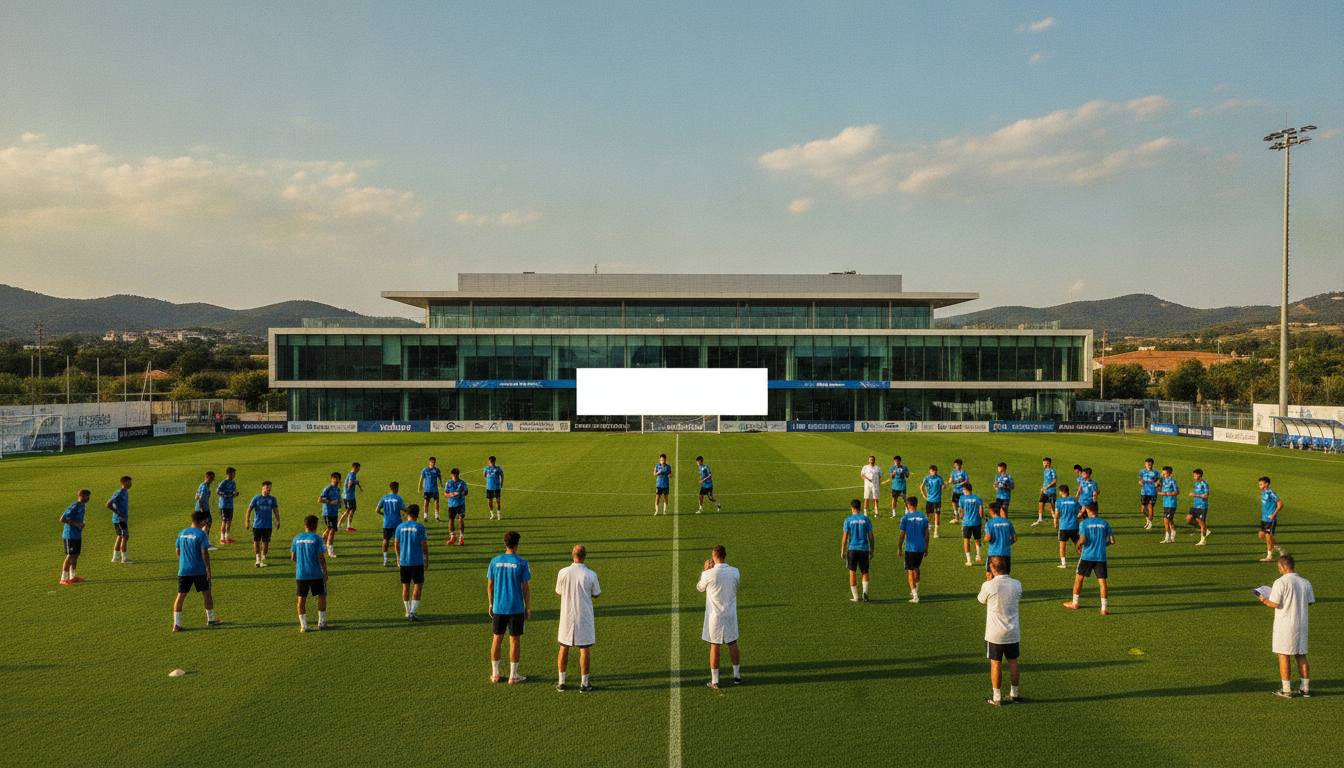
Real Sociedad preseason begins with medicals as 28 players report for 2026–27 campaign
Real Sociedad preseason medicals began on July 4, 2026, as the club conducted mandatory health and fitness checks for players called to open preparations for the 2026–27 season. The first-day testing involved 16 senior squad members and a dozen Sanse prospects, with images released of Pablo Marín and Jon Karrikaburu. The early arrival of a broad group underlines head coach Matarazzo’s intent to integrate youth and senior figures ahead of training and friendlies.

Medicals mark the official start of club work
Real Sociedad opened the 2026–27 campaign with a full slate of medical examinations on July 4, 2026, as players returned from their off-season breaks. The club’s medical staff ran cardiovascular, musculoskeletal and baseline fitness protocols to establish health markers before on-pitch work begins. Images shared by the club showed Pablo Marín and Jon Karrikaburu undergoing parts of the evaluation, a routine step that also allows coaches to assess recovery and conditioning needs.
These checks are standard practice across elite clubs and serve to reduce early-season injuries and tailor individual training loads. For Real Sociedad, the early data will inform the technical staff’s approach to load management in the opening weeks of preparation. The medical phase also gives the club a chance to reassess long-term rehabilitation plans for any players returning from previous injuries.
16 first-team players complete the opening tests
Sixteen members of the first team reported for Saturday’s medicals and initial testing, a group that sets the tone for the wider preseason squad. The players called in for July 4 included Remiro, Marrero, Aihen, Gorrotxategi, Zubeldia, Barrenetxea, Pablo Marín, Carlos Soler, Jon Karrikaburu, Odriozola, Zakharyan, Rupérez, Javi López, Pacheco, Goti and Carlos Fernández. Their presence provides the coaching staff with a core nucleus around which the first training blocks and tactical work will be arranged.
Having such a large contingent available at the outset helps Matarazzo and his backroom team begin implementing fitness benchmarks and team shape without prolonged interruptions. The group combines experienced campaigners with younger figures, offering a balance of leadership and energy as the club moves through conditioning phases and tactical drills. Coaches will use early microcycles to evaluate players’ responsiveness to training and to start building the match-ready rhythm required for competitive fixtures.
Sanse prospects integrated into preseason routine
Real Sociedad also called up a sizeable contingent from Sanse, the club’s reserve side, to join the medicals and initial sessions on July 4. Twelve players from Sanse were named: Fraga, Kita, Beitia, Balda, Lebarbier, Aguirre, Mikel Rodríguez, Carbonell, Dani Díaz, Ochieng, Marchal and Carrera. Their inclusion reflects the club’s long-standing pathway approach, which regularly promotes promising talents into first-team environments during preseason.
Integrating academy and reserve players into early training provides practical exposure to senior-level intensity and tactical expectations. These opportunities enable coaching staff to assess which prospects are ready to take a step up, and they also ensure squad depth for early friendlies and any pre-season tournaments. For the players themselves, the chance to train alongside established internationals aids development and can accelerate their transition to consistent first-team action.
Spain camp returnees scheduled to join on July 6
Three players who trained with Spain ahead of the World Cup are due to rejoin club preparations on Monday, July 6, 2026, as part of the staggered arrival plan. Jon Martín, Sergio Gómez and Beñat Turrientes will report to the club following their national-team commitments and will link up with the rest of the squad for the next training cycle. Their delayed arrival is part of a careful sequencing that accommodates international duty and recovery needs.
Accommodating different return dates helps manage workload and reduce injury risk for players coming off intense international schedules. The club’s medical and performance staff will likely run individualized sessions to address any accumulated fatigue before integrating those players into full-contact training. The arrival of these midfield and attacking options will broaden tactical possibilities as Matarazzo begins to fine-tune formations and rotations.
Players who featured in preparatory friendlies to arrive July 9
A second group of players who participated in pre-tournament friendlies for their national sides are set to join the squad on Thursday, July 9, 2026. Jon Mikel Aramburu, Yangel Herrera and Orri Oskarsson are scheduled to re-enter club training on that date and will undergo the same screening and phased workload as other internationals. Their return timing allows the coaching staff to stagger reintegration and maintain the momentum of early training blocks.
By spacing arrivals across the first two weeks of July, Real Sociedad aims to maintain continuity in on-field work while allowing sufficient recovery for those who logged minutes in international fixtures. The staggered plan also gives the coaching team a rolling set of data points to adjust conditioning, tactical drills and squad rotations. This methodical approach is common among teams with multiple international players and is intended to preserve freshness for preseason friendlies.
Return dates for World Cup participants remain unconfirmed
The club has not yet announced specific return dates for the four players who were involved at the World Cup: Mikel Oyarzabal, Gonçalo Guedes, Takefusa Kubo and Lovro Sucic. Their resumption of club duties will depend on post-tournament recovery plans, any additional national-team obligations and conversations between the players, medical staff and coaching team. Real Sociedad has indicated only that arrangements for those quartet will be communicated when confirmed.
Uncertainty over those return dates is not unusual given the physical and psychological demands of major tournaments. Clubs typically coordinate closely with players and their national federations to determine appropriate rest periods and reintegration timetables. For a team preparing to start domestic and European preparations, aligning those timelines is an important logistical and performance consideration.
Coaching objectives and the short-term preseason calendar
Matarazzo’s immediate priorities will center on establishing fitness baselines, embedding tactical principles and evaluating squad depth ahead of scheduled friendlies. Early weeks of preseason traditionally feature a mix of conditioning, small-sided work and evolving tactical phases designed to sharpen pressing patterns and ball circulation. The coach will also monitor which Sanse call-ups can compete for minutes and how returning internationals respond to a managed workload.
Beyond physical conditioning, the staff will use July to develop set-piece routines and defensive cohesion, areas that often shape early-season results. The medical and performance teams will work in parallel to minimize injury risk and to individualize recovery plans for those arriving from international duty. The club’s calendar for friendlies and training camps will further dictate how rapidly the squad moves from preparation to match rhythm.
Real Sociedad’s opening medical day on July 4 set a clear timeline for the club’s preseason, blending established first-team members with emerging talent from Sanse. The staggered returns of international players through July 6 and July 9 reflect a cautious approach to workload management and recovery following national-team activity. The club will provide further details on the arrival of World Cup participants when plans are finalized, while coaches and staff continue to shape the squad ahead of the 2026–27 season.