Timor-Leste women’s national team name 45-player training squad ahead of AFF Women’s Cup 2026
Timor-Leste women’s national team call up 45 players for centralised preparation ahead of the AFF Women’s Cup in Malaysia, with a final 23-player squad to be confirmed before departure for the July 10–22 tournament.


The Timor-Leste women’s national team has entered its final preparatory phase ahead of the AFF Women’s Cup 2026 in Malaysia, naming a 45-player centralised training squad drawn from the domestic First Division. The provisional roster was assembled by a panel of coaches following evaluations across 10 clubs in the Timor-Leste Women’s League. The wider group will be reduced to a 23-player delegation in the coming days before the team’s scheduled departure for the tournament.
Selection reflects domestic strength and club representation
A panel of national coaches selected the training group from 10 top-tier clubs, signalling confidence in the domestic league as the primary talent pipeline. The decision to call up a broad pool aims to give the technical staff flexibility to assess fitness, form, and tactical fit ahead of the final cut. Several players were invited on the back of strong league performances and standout displays in recent domestic fixtures. The selection process underscores a strategic emphasis on rewarding club form and providing developmental opportunities to emerging players.
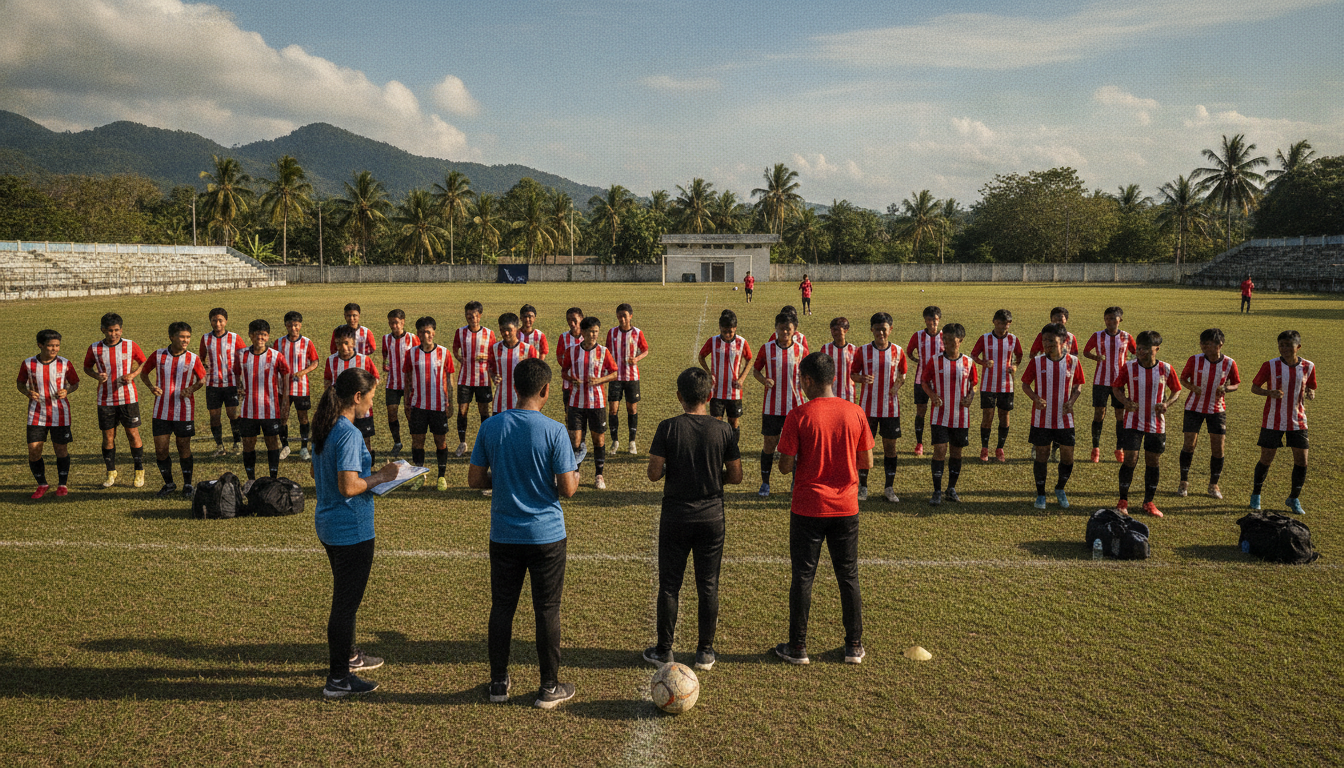
The national coaching staff will use the centralised camp to run fitness tests, tactical sessions, and match simulations that mimic the tempo expected at international level. Coaches have cited the need to evaluate not only technical ability but also adaptability to different positions and game plans. The broad call-up allows fringe players to press their case for inclusion through training ground performances and intra-squad matches. This approach balances short-term competitive needs with longer-term squad building for future regional competitions.
Final squad reduction and travel timeline
The current 45-player squad will be trimmed to a 23-player delegation prior to travel, in line with AFF tournament regulations and logistical constraints. Officials confirmed the final list will be announced after the conclusion of the centralised camp, allowing staff to address any late injuries or changes in player availability. The team is scheduled to depart for Malaysia in the days leading up to the tournament’s opening fixtures, ensuring time for acclimatisation and final preparations. Administrators are coordinating travel, medical clearance, and accreditation to ensure the squad arrives fully cleared and ready to compete.
Timor-Leste must balance competitive ambition with practical considerations such as squad depth, match readiness, and tournament registration deadlines. The coaching team will likely prioritize a core of players who combine international experience with recent form in the domestic league. Backup selections will be determined by versatility and fitness, with particular attention paid to defensive stability and midfield balance. Final roster decisions are expected to reflect both immediate tactical requirements and the federation’s longer-term player development strategy.
Group B opponents and competitive outlook
Timor-Leste has been drawn into Group B alongside Cambodia and Indonesia, setting up a compact and challenging group stage. Both opponents bring different strengths: Indonesia traditionally fields a technically proficient side with considerable attacking intent, while Cambodia has shown recent progress and tactical discipline in regional competition. For Timor-Leste, these matchups present an opportunity to test defensive organisation and transition play against teams with contrasting styles. The coaching staff will prepare tailored plans for each opponent, focusing on neutralising key threats and exploiting transitional moments.
Expectation management within the camp appears measured, with the federation framing the tournament as both a competitive assignment and a developmental milestone. Timor-Leste’s primary objectives include competitive displays, defensive cohesion, and gaining valuable international experience for younger players. The team’s performances in Malaysia will be assessed against these benchmarks rather than solely by result. Positive outcomes would include clean sheets, disciplined team shape, and the emergence of younger players who can stake a claim for continued national team inclusion.
Training camp priorities and tactical preparation
The centralised training camp will concentrate on building match fitness, sharpening set-piece routines, and refining the tactical identity the coaching staff wants to instill. Sessions will likely alternate between high-intensity conditioning, ball work focused on transitions, and scenario-based drills that replicate match situations. Emphasis will be placed on communication, compactness without the ball, and quick, decisive passing in the final third. Goalkeeper training and defensive coordination will receive specific attention given the tactical demands posed by their Group B opponents.
Coaches are expected to trial a range of formations during the camp to determine which structure best balances defensive solidity with attacking impetus. Versatility among midfielders and full-backs will be especially valuable, offering tactical flexibility in-game. Fitness specialists and medical staff are integrating tailored recovery protocols to manage workload across an extended preparation period. This measured approach aims to ensure that the final 23-player squad travels in peak condition and with a clearly defined plan for the tournament.
Long-term implications for Timor-Leste women’s football
Beyond immediate tournament aims, the call-up and centralised programme reflect the federation’s broader commitment to grow women’s football domestically. Bringing together players from across 10 clubs highlights efforts to strengthen scouting, coaching, and competitive pathways within the First Division. The campaign in Malaysia will serve as a barometer for progress, offering young players exposure to higher levels of competition and providing coaches with crucial information for future talent development. Strong organisational follow-through after the AFF Women’s Cup could accelerate improvements in league standards and youth development.
Investment in coaching education, facilities, and regular competitive fixtures is likely to be underscored by the federation regardless of short-term results, with an eye to sustainable growth. Showcasing homegrown talents on a regional stage can help attract sponsorship and community support, which are vital for long-term stability. The experience gained by players selected for the final 23 will feed back into domestic clubs, raising the overall standard of play. Officials have framed the AFF Women’s Cup as both a competitive challenge and a platform to consolidate recent development gains.
The team’s preparations and final squad announcement will be closely followed by supporters and stakeholders as Timor-Leste aims to demonstrate progress on a regional stage.
Timor-Leste will travel to Malaysia for the AFF Women’s Cup with a focused agenda of competitive improvement, player development, and building momentum for the women’s national programme.