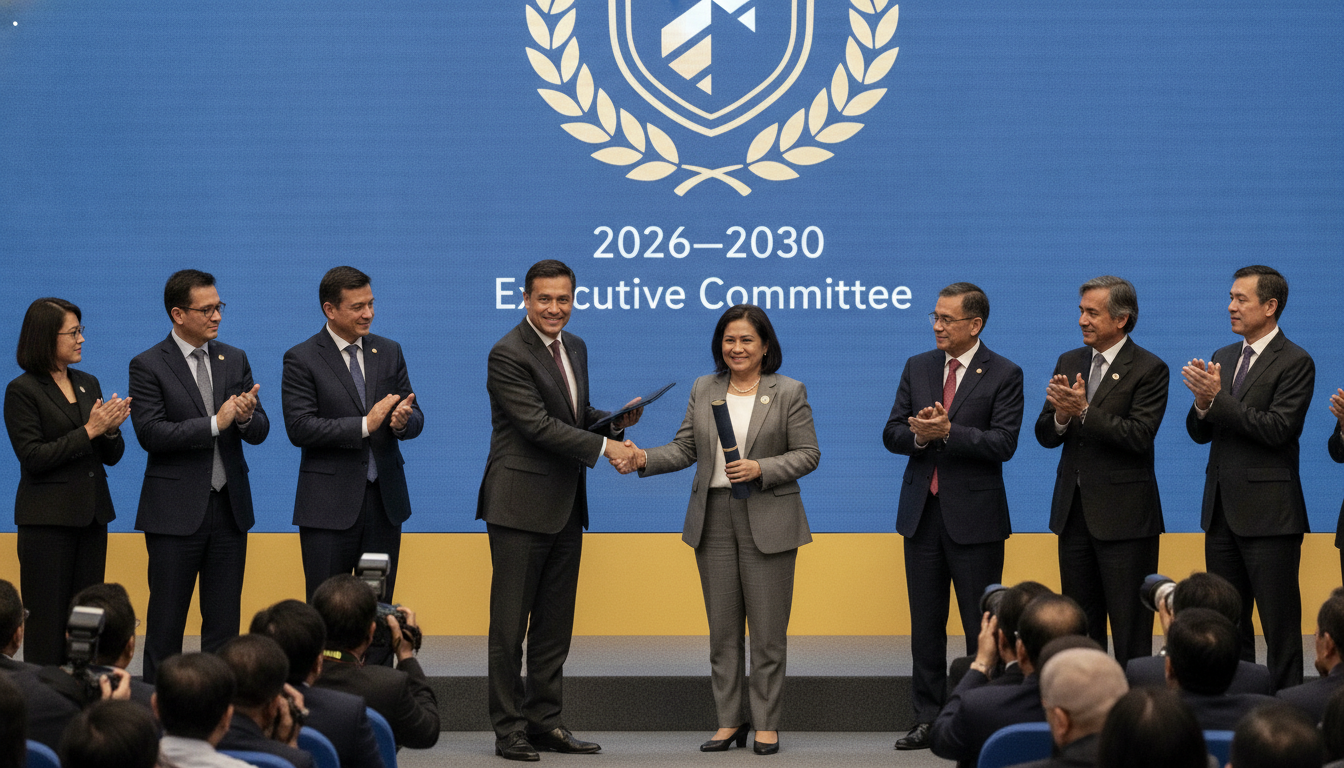
FABD Executive Committee Unveiled: Siti Zuraina Abdullah Leads Brunei Football for 2026–2030
FABD Executive Committee announced at the 15th Congress in Bandar Seri Begawan, with Siti Zuraina Abdullah named president and a clear pledge to modernize Brunei football.


Brunei Darussalam’s Football Association (FABD) announced its new FABD Executive Committee on July 6, 2026, with Siti Zuraina Abdullah elected president for the 2026–2030 session. The announcement at the 15th FABD Congress signalled an institutional reset aimed at strengthening governance, expanding grassroots programmes and aligning domestic administration with international standards. The committee’s launch, conducted under observation from FIFA, the Asian Football Confederation and the ASEAN Football Federation, underlines a priority on transparency and regulatory compliance. Officials described the new term as a strategic opportunity to accelerate development across men’s, women’s and youth football in the sultanate.
Siti Zuraina Abdullah Elected President
Siti Zuraina Abdullah takes office as the new head of the FABD with a mandate to steer the federation through a four-year strategy emphasizing accountability and growth. Her election follows internal balloting at the Congress and comes with commitments to engage clubs, regional associations and state stakeholders more systematically. Sources at the event said the president intends to prioritize institutional reforms that strengthen financial oversight and governance frameworks. The leadership transition will test the federation’s ability to translate administrative pledges into measurable improvements on and off the pitch.
Congress Held Under FIFA, AFC and AFF Observation
The 15th FABD Congress was conducted with observers from FIFA, the Asian Football Confederation and the ASEAN Football Federation in attendance, marking a step toward reinforced compliance with global governance norms. Delegates at the meeting emphasised that international oversight was not merely ceremonial but integral to implementing robust procedures for competitions, eligibility and fair play. Observers offered technical guidance during the sessions and signalled readiness to support capacity-building programmes for administrators and referees. The presence of international officials is expected to smooth access to development grants and technical assistance aligned with the federation’s new strategic objectives.
Executive Committee Appointments for 2026–2030
The newly constituted FABD Executive Committee comprises a full slate of officers and committee members assigned to oversee competitions, development, finance and women’s football for the 2026–2030 term. While the presidency anchors the team, vice-presidential posts and portfolio leads were announced to distribute responsibilities across governance, grassroots development and commercial matters. Committee members committed publicly to regular reporting, stakeholder consultations and adherence to a code of conduct intended to enhance institutional credibility. Photographs released by the association showed the full committee together at the Congress, underscoring a collective pledge to deliver on the federation’s stated targets.
Strategic Priorities: Governance, Development and Transparency
The FABD has identified governance reform as a central pillar of its strategy, with plans to review statutes, improve financial controls and introduce clearer decision-making protocols. Officials said the committee will work to publish annual accounts and performance metrics to foster public confidence and attract sustainable sponsorship. Equally, the federation has highlighted grassroots growth as critical to long-term competitiveness, promising expanded youth leagues, school partnerships and coach education schemes. There is a specific emphasis on women’s football, where the committee intends to increase participation pathways, support domestic competitions and enhance talent identification programmes.
Aligning Domestic Football with International Standards
Aligning Brunei’s domestic structures with FIFA and AFC regulations is a stated priority to ensure eligibility for regional competitions and access to development funding. The FABD plans to review competition calendars, club licensing criteria and refereeing standards to meet confederation benchmarks. Officials noted that improved alignment would help local clubs and national teams prepare more effectively for regional tournaments and offer clearer pathways for player development. The committee also indicated an intention to use international relationships to secure expert coaching and administrative workshops in the coming months.
Implementation Timeline and Upcoming Initiatives
The Executive Committee has set an initial 100-day action plan to establish working committees, publish a governance roadmap and begin stakeholder consultations across the country. Early initiatives include a nationwide audit of facilities, a coaching accreditation push and the relaunch of youth and women’s competitions scheduled for the domestic season. FABD representatives said they will coordinate closely with the Ministry of Culture, Youth and Sports to align sporting infrastructure investments and community outreach programmes. The federation has also committed to releasing a transparent calendar of activities and benchmarks to track progress through 2030.
The FABD Executive Committee’s launch marks a decisive moment for Brunei football, pairing local leadership with international oversight to pursue measurable reforms and development outcomes. Stakeholders within the sport have expressed cautious optimism that the new leadership’s focus on governance and grassroots will create a more resilient ecosystem. As the committee moves from pledges to implementation, the federation’s ability to maintain open communication with clubs, players and supporters will be critical. The coming months will show whether the new administration can convert its stated priorities into sustained growth for football across Brunei Darussalam.