Folarin Balogun cleared to play after FIFA lifts suspension following call from President Trump
FIFA lifted Folarin Balogun’s suspension after a review prompted by a call from President Trump, allowing the US forward to face Belgium; Belgium’s legal challenge was dismissed hours before kick-off in Seattle, fuelling integrity concerns.

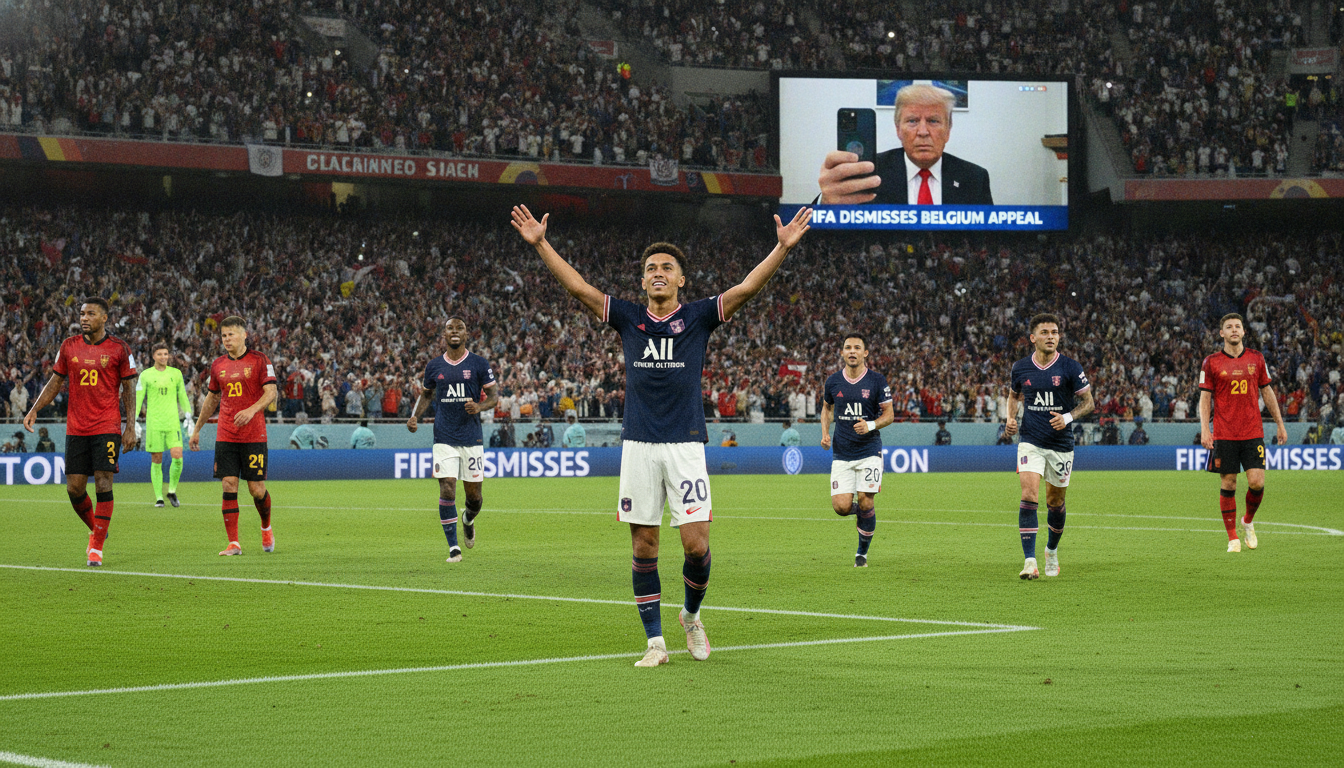
The United States forward Folarin Balogun was cleared to play against Belgium after FIFA reviewed and rescinded a suspension stemming from a red card in the US match with Bosnia-Herzegovina. FIFA President Gianni Infantino confirmed he took a call from President Donald Trump following the Bosnia game, and the governing body removed the ban on Sunday ahead of the crucial match. Belgium launched an immediate legal challenge, but a FIFA appeal judge dismissed the complaint less than eight hours before kick-off, deepening scrutiny of the decision-making process.
Infantino confirms he took a call from President Trump
Gianni Infantino acknowledged speaking with President Donald Trump after the United States’ match with Bosnia-Herzegovina, confirming a phone conversation occurred before FIFA reconsidered the red card. FIFA said the matter was reviewed internally and the suspension was lifted on Sunday. The timing of the call and the subsequent reversal have been highlighted by opponents as central to questions about external influence on disciplinary decisions.
President Trump publicly acknowledged placing the call and said he had pleaded Balogun’s case to FIFA leadership. FIFA has not provided a full transcript of the exchange, limiting public knowledge to official statements confirming contact and the procedural outcome. That lack of detail has compounded concerns among European federations and observers about transparency in the process.
The episode marks an unusual instance of direct intervention by a national leader in an on-field disciplinary decision at a World Cup, and it has prompted debate over how national authorities should interact with sport governing bodies. FIFA said the decision followed an internal review, but opponents cite the presidential contact as a troubling precedent. The conversation has become a focal point for discussions about governance and impartiality at the tournament.
FIFA rescinds Balogun’s red card and lifts suspension
Folarin Balogun had been shown a red card in the United States’ fixture against Bosnia-Herzegovina, triggering an automatic suspension that would have ruled him out of the match against Belgium. FIFA reversed that suspension following its review, clearing Balogun to play in the fixture scheduled in Seattle. The reversal was released in an official FIFA statement, which emphasized the outcome of the internal review process.
The decision to lift the ban arrived on the eve of a high-stakes match with a place in the quarter-finals at stake, altering preparations for both national teams. US team staff and players were able to reintegrate Balogun into match plans once the suspension was formally removed. For Belgium, the sudden change required tactical reassessment and prompted immediate legal and public responses from the Belgian federation.
FIFA maintained that the disciplinary apparatus had carried out the appropriate procedures in reviewing the card, but opponents argue that the speed and context of the reversal were exceptional. The governing body’s handling of the case will likely be scrutinized in the days and weeks after the tournament. Officials and legal advisers are watching to see whether the decision prompts changes to disciplinary protocols at major competitions.
Belgium files emergency challenge and appeal judge dismisses it
The Belgian football federation lodged a challenge to FIFA’s decision, arguing that the suspension should have been enforced and that they had grounds to appeal the reversal. That legal action was heard under emergency procedures as the match approached, with the Belgian body seeking immediate redress. Belgium’s challenge was dismissed by a FIFA appeal judge on the grounds that the federation “is not a party to the proceedings and, as such, has no standing to appeal the decision,” according to FIFA’s published statement.
The dismissal came fewer than eight hours before kick-off in Seattle, leaving little time for further procedural moves before the match. Belgium now faces a narrow window to determine whether it can seek urgent relief from external arbitration, a step that would require rapid filings and a willingness by a neutral tribunal to prioritize the case. The swift judicial turn has intensified the sense of last-minute tumult surrounding the fixture.
Questions remain over whether Belgium can bring the matter before the Court of Arbitration for Sport in Switzerland on an expedited basis. CAS is equipped to handle urgent sports disputes, but the thresholds for emergency intervention are strict. Legal teams from the Belgian federation and other interested parties are reported to be assessing options, though no formal CAS filing has been confirmed publicly at this stage.
UEFA and European officials criticize FIFA’s handling
UEFA described FIFA’s decision not to enforce the suspension as an “incomprehensible” breach of football’s rule of law, framing the reversal as inconsistent with standard disciplinary practice. European football leaders and national associations voiced concern that the process undermined established procedures for handling on-field misconduct. Those criticisms reflect broader tensions between UEFA and FIFA over governance and jurisdictional boundaries in international football.
The public rebuke from UEFA represents a rare and pointed clash between football’s continental confederation and its global governing body at a World Cup. Officials emphasized the importance of consistent application of rules and transparent processes that protect the integrity of competition. The dispute underscores the heightened stakes of disciplinary rulings at major tournaments and the reputational risks for both governing bodies.
European federations are also considering whether to pursue formal complaints or institutional challenges beyond the immediate case, aiming to clarify mechanisms that govern appeals and emergency interventions. The incident has revived long-standing debates about how FIFA interacts with national governments, continental bodies, and clubs when high-profile decisions arise. For many critics, the optics of the situation have become as consequential as the legal outcomes.
Legal options and the role of CAS as the clock ticks
With the FIFA appeal judge’s dismissal, the Belgian federation faces limited avenues for urgent recourse before the match. The Switzerland-based Court of Arbitration for Sport is the next potential forum for appeal, but filing an emergency application requires demonstrating irreparable harm and satisfying strict procedural criteria. CAS panels can act swiftly in exceptional circumstances, but there is no guarantee the court will accept or expedite a hearing in time.
The timing of disciplinary processes at a global event places pressure on all parties to act quickly and with legal precision, a challenge underscored by the compressed schedule of the World Cup. If Belgium pursues CAS intervention, it must prepare technical submissions and secure a hearing on short notice, which can strain legal teams and tribunals alike. Observers note that the outcome at CAS, if sought, could set a precedent for how similar disputes are handled around major tournaments.
Beyond arbitration options, the episode raises questions about possible internal reforms to FIFA’s disciplinary and appeals processes to prevent last-minute disruptions. Any structural changes would require deliberation and agreement among member associations, a process that could take months. For now, the focus remains on immediate competitive implications and whether any further legal action will be lodged before the match concludes.
Implications for governance and future World Cups
The sequence of events has prompted renewed scrutiny of FIFA’s governance and the safeguards that protect disciplinary independence at elite tournaments. Stakeholders inside and outside the sport have highlighted the need for clearer boundaries between political actors and football institutions to preserve confidence in competition outcomes. The controversy is likely to prompt discussion among federations about strengthening transparency and appeal mechanisms.
There is also concern that the incident could embolden direct interventions in future disciplinary matters if similar channels prove effective. Football administrators are now considering how to shore up rules and communication protocols to prevent perceptions of undue influence. The reputational risk extends to the tournament itself, with fans and sponsors watching closely how governing bodies manage disputes under intense global scrutiny.
For the teams and players involved, the immediate practical effect is simple: Balogun is available for selection, and both squads must prepare under extraordinary circumstances. For football’s institutions, the longer-term effect may be a renewed push to codify procedures that manage urgent disciplinary reviews and external contacts with greater clarity. How FIFA and its stakeholders respond in the coming days will shape debates on governance and fairness in the sport.
The controversy over Folarin Balogun’s eligibility culminated in a last-minute FIFA decision that allowed him to play, a rejected legal challenge from Belgium, and sharply critical reactions from European football authorities; whether further appeals will be mounted remains uncertain as the tournament moves forward.