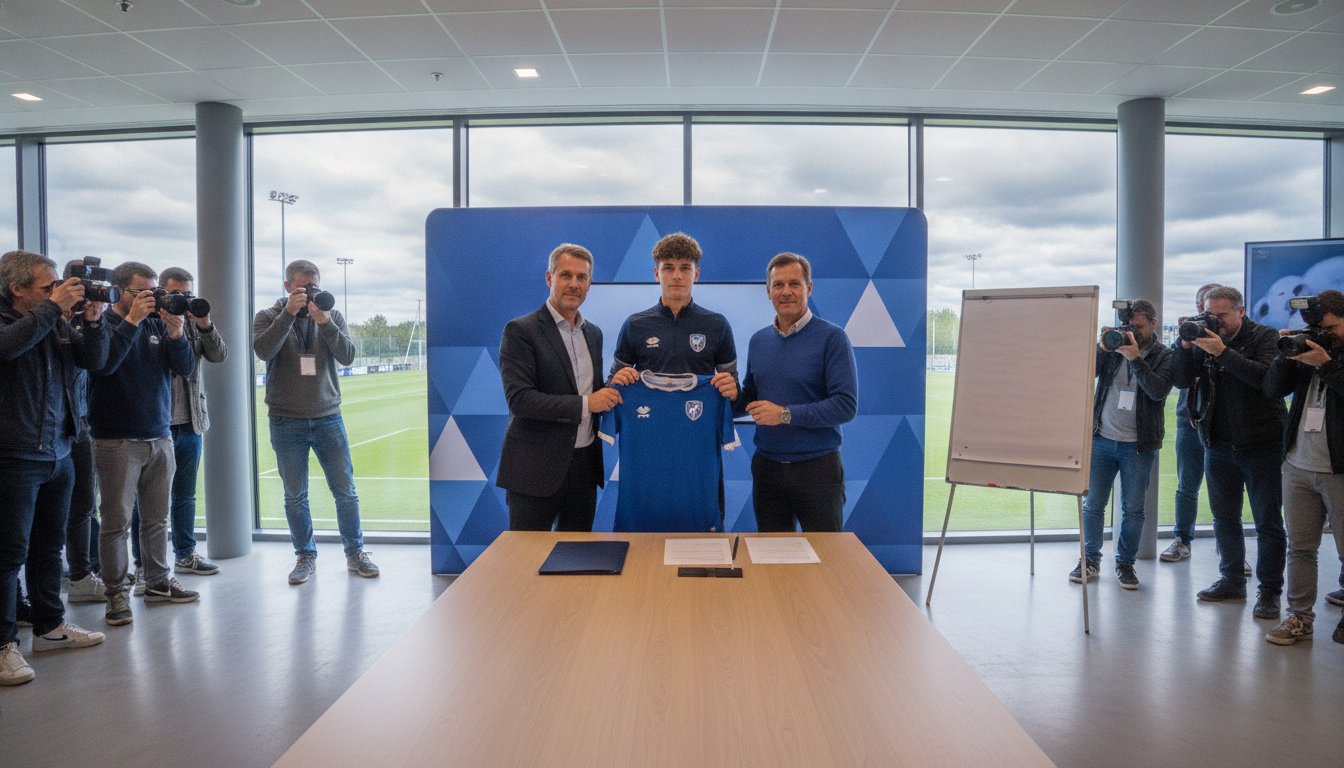
Nathan De Cat transfer — Hoffenheim sign 17-year-old from Anderlecht for €17m
Hoffenheim sign Nathan De Cat from Anderlecht for €17m. The 17-year-old defensive midfielder joins until 2031 on a deal and could feature in Europa League.


Hoffenheim finalise €17m deal for Nathan De Cat
TSG Hoffenheim have reached agreement to sign Nathan De Cat from RSC Anderlecht for a reported fee of €17 million, a significant investment for a player still aged 17. The deal makes the teenager one of the most expensive Belgian exits to a mid-tier Bundesliga club in recent windows. Hoffenheim plan to complete a medical and then register De Cat on a long-term contract that runs to 2031.
The club’s announcement framed the transfer as part of a targeted recruitment drive focused on high-ceiling young talent. Hoffenheim’s sporting directors have consistently sought prospects who can be integrated into the first team and sharpened for continental competition. That model appears to have persuaded both player and selling club to sanction the move at a premium fee.
Development at Anderlecht and senior club exposure
De Cat joined Anderlecht’s academy pathway and rose through their youth ranks before breaking into the first team, where he registered 29 league appearances in the Jupiler Pro League last season. Those minutes at senior level included involvement in European competition, with one Europa League appearance and four Conference League qualifying matches, giving him exposure beyond domestic youth fixtures. Anderlecht’s faith in giving him regular top-flight playing time at such a young age has been a key factor in his rapid valuation.
Observers note that Anderlecht has a strong track record of producing midfielders with tactical discipline and technical comfort on the ball, traits that De Cat displayed during his league outings. He combined regular starting appearances with rotational duties, allowing him to develop consistency while still adjusting to the physical demands of senior football. Hoffenheim’s recruitment team highlighted these competitive minutes as evidence that he could adapt more quickly than a player arriving directly from youth football.
Playing profile and attributes
De Cat is primarily deployed as a defensive midfielder, a role in which he has been praised for positional awareness and calm distribution under pressure. Scouts have flagged his ability to read transitional phases and shield the backline while offering tidy progression passing, traits that fit Hoffenheim’s possession-oriented approach. His physical profile at 17 is still developing, but coaching staff are optimistic about his capacity to add strength without sacrificing mobility or technique.
Technical reviewers also point to his tackling timing and interception numbers as promising indicators for a young holding midfielder, as well as his comfort with short and medium-range passing to initiate build-up. Set-piece involvement has been limited but coached for improvement, with trainers emphasizing decision-making in high-intensity scenarios. Hoffenheim will likely pair him with experienced midfield partners initially to accelerate his learning curve in live Bundesliga and Europa League contexts.
International breakthrough and senior recognition
Nathan De Cat earned his first senior cap for Belgium in March when he featured in a 5-2 friendly victory over the United States, signalling national-team acknowledgement at an unusually young age. That appearance has been cited by clubs across Europe as confirmation of his readiness to perform on larger stages, and it undoubtedly heightened transfer interest during the window. Belgium’s coaching staff have described the call-up as a developmental step, intended to give the teenager exposure rather than immediate competition for established starters.
The senior cap complements his club minutes and demonstrates a trajectory that national federations often encourage for emerging talent. For Hoffenheim, having an internationally capped player at 17 adds instant credibility and marketing appeal, while also placing a responsibility on the club to manage his workload and progression carefully. Continued involvement with national youth and senior squads will be balanced with club commitments to safeguard long-term growth.
Market interest and Hoffenheim’s recruitment edge
Several leading European clubs had been linked with De Cat during the scouting phase, including Manchester City, Chelsea, Bayern Munich, Borussia Dortmund and RB Leipzig, reflecting widespread recognition of his potential. Despite attention from those heavyweight suitors, Hoffenheim secured the transfer by offering a clear pathway to first-team football and a development plan tailored to his position. The club’s reputation for enabling young players to flourish in the Bundesliga and then achieve profitable sales has long been a competitive advantage in the market.
Financially, the fee represents a calculated gamble: substantial for a teenager, but consistent with contemporary valuations for midfielders who combine senior appearances with international recognition. Hoffenheim’s sporting department has signalled that the investment is justified by De Cat’s immediate usability and long-term resale upside. For Anderlecht, the transfer provides a sizeable injection of funds to be reinvested in academy operations and squad strengthening.
Squad role and Europa League prospects
Hoffenheim’s qualification for the Europa League this season creates an environment in which rotation and strategic minutes can be offered without exposing De Cat to the full week-in, week-out grind of the Bundesliga immediately. Coaches are expected to integrate him gradually, using domestic cup fixtures and selected Europa League group matches to build experience. The club’s technical staff have outlined a phased plan that pairs De Cat with a veteran midfield anchor while increasing his minutes as he adapts to German football’s tempo.
Tactically, Hoffenheim may deploy him in a single pivot in matches where control and rhythm-setting are required, or as part of a double pivot when protection and coverage are priorities. His familiarity with European qualifying encounters should ease the transition into continental competition, where the club hopes his positional discipline will prove valuable. The management team has also stressed the importance of measured exposure to mitigate injury risk and psychological pressure at a pivotal stage of his career.
Long-term projection and development pathway
The contract running to 2031 gives both player and club a stable horizon to plan development, while also providing Hoffenheim with security over a long-term asset. This timeframe aligns with the club’s usual approach of offering multi-year deals to young signings so they can be coached, monitored and, if necessary, sold with maximum market return. Sporting directors have indicated that individual training programs, strength-and-conditioning work, and tailored tactical education will form the core of his first two seasons.
De Cat’s immediate objectives will likely prioritize adaptation and consistency rather than headline-grabbing transfers or starting every match, with the club emphasizing patient growth. If he develops as projected, Hoffenheim could either integrate him as a midfield cornerstone or position him for a high-value sale in subsequent transfer windows. The balance between sporting integration and commercial prudence will guide how his role evolves over the coming seasons.
Hoffenheim’s decision to close this deal underscores the club’s ongoing commitment to identifying and developing young talent capable of competing at domestic and continental levels, and Nathan De Cat’s arrival will be watched closely by supporters and rival clubs alike. The €17m fee and long-term contract reflect both confidence in his ceiling and an intention to provide a structured platform for his progress. As he completes his medical and begins pre-season work with Hoffenheim, expectations will be managed but hopes will be high that he can become a meaningful contributor to the club’s Bundesliga and Europa League campaigns.