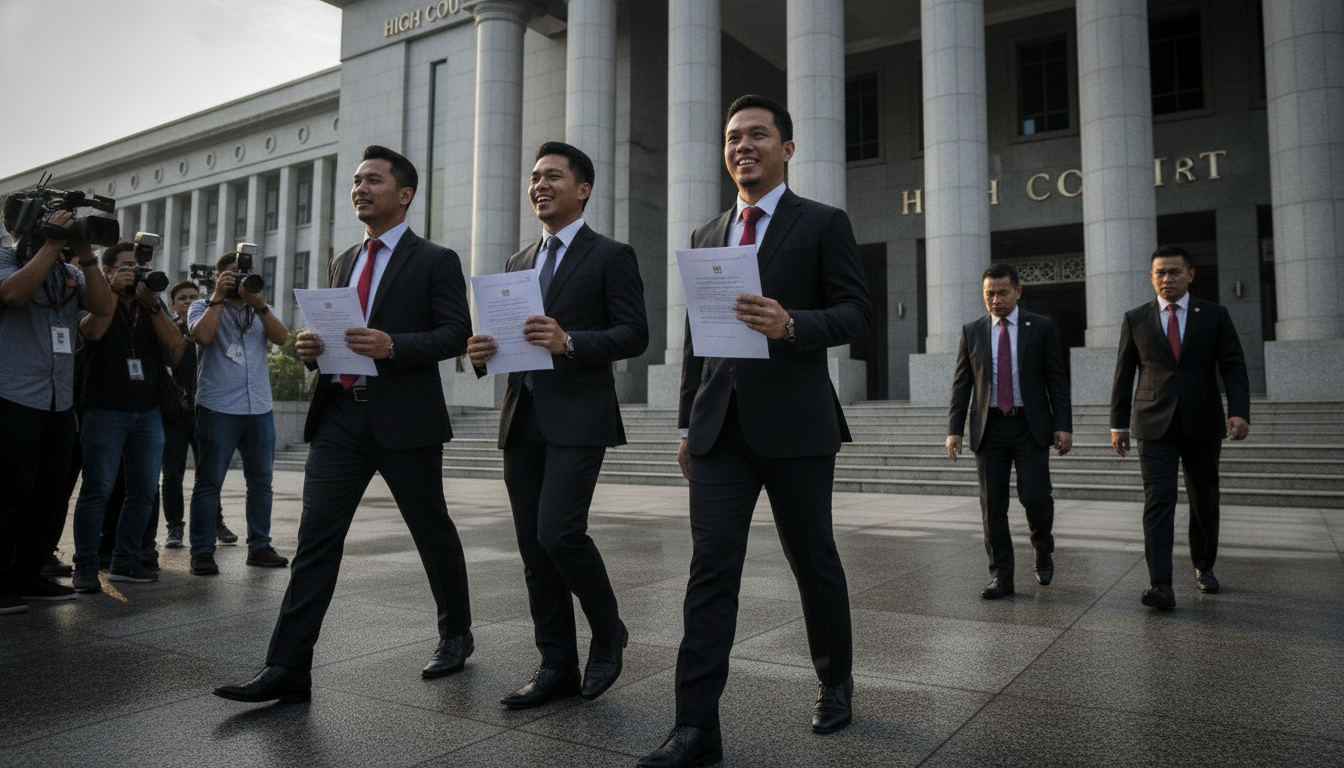
High Court Dismisses FAM Bid, Restores Three Associations Ahead of FAM AGM
High Court in Blantyre dismisses FAM attempt to bar affiliates from the FAM AGM, restoring voting and participation rights for three associations ahead of Saturday’s Salima meeting.


The High Court in Blantyre has dismissed an application by the Football Association of Malawi (FAM) that sought to prevent three affiliated bodies from taking part in this weekend’s FAM AGM, restoring their full membership rights ahead of the meeting. Judge Allan Hans Muhome declined to vary an earlier order, maintaining the scope and form of the original ruling and ensuring the National Football Coaches Association, the National Football Referees Association and the National Youth Football Association may attend and vote. The decision represents a legal setback for FAM leadership as the organization prepares for what is expected to be a consequential governance gathering in Salima.
High Court upholds original order and rejects FAM variation
The court action heard in Blantyre centered on a bid by FAM to alter an order issued on Wednesday, with the association asking the judiciary to exclude three affiliates from Saturday’s AGM. High Court Judge Allan Hans Muhome reviewed the arguments and refused the variation, leaving intact the earlier judicial determination that these bodies retain their affiliate rights. The judgment preserves both the procedural form and substantive effect of the prior order, limiting FAM’s ability to unilaterally adjust membership status in the run-up to the meeting.
By dismissing the application, the court removed any immediate legal barrier that might have prevented delegates from the three associations from participating in the AGM, a decision that takes effect unless a subsequent court order is obtained. The ruling closes the chapter on this specific attempt to restrict attendance but does not forestall further litigation, meaning the legal status of the dispute could evolve if new applications are made. For now, however, the judge’s decision is clear: the affiliates are reinstated to full membership for the purposes of the upcoming assembly.
Three associations restored to full membership with voting rights
The three bodies affected — the National Football Coaches Association, the National Football Referees Association and the National Youth Football Association — have been returned to the roll of full FAM members with the attendant rights to speak, move motions and cast ballots. Restoring these rights has immediate practical implications for quorum calculations, contested votes and any changes to statutes or leadership that may be tabled during the AGM. Their reinstatement also signals that membership disputes will be settled through the courts rather than solely by administrative determinations from FAM management.
Officials from the three associations will be able to present themselves at Saturday’s meeting in Salima as accredited affiliates unless a fresh injunction is issued, which would require further judicial intervention. That legal backup now sits with those groups and their counsel, who sought the court’s relief; it effectively places the judiciary between FAM’s executive and changes to membership lists on the eve of a significant governance event. The restored status is therefore both a procedural victory for the associations and a constraint on FAM’s operational discretion.
Immediate implications for the Saturday AGM in Salima
With membership reinstated, the composition of delegates at the Salima AGM is altered compared with what FAM had sought to impose, meaning vote counts, the balance of influence and the potential for contested motions may shift from earlier expectations. Any items on the agenda that require affiliate approval — including electoral contests, amendments to statutes or the approval of proposals — will proceed with the participation of the three reinstated bodies, potentially changing outcomes. The presence of additional voting delegates can also affect the dynamic in the room, influencing alliances among regional and interest-based affiliates.
The ruling places practical constraints on FAM officers responsible for organizing the meeting, including accreditation, seating, voting procedures and the handling of potential challenges during the AGM itself. Administrative preparations must now account for the attendance and involvement of the coaches, referees and youth associations, requiring clear instructions to scrutineers and meeting stewards. Observers and stakeholders will be watching whether FAM complies with the court’s order in letter and spirit, and how any disputes that arise on the floor are managed within the framework of both the association’s statutes and the judiciary’s decision.
The timing of the judgment, issued just days before the assembly, raises questions about how smoothly the meeting will proceed and whether tensions over membership will spill into debates over governance, leadership or policy. Any disruptions, procedural appeals or walkouts during the AGM would have reputational consequences for Malawian football administrators and could draw scrutiny from regional or international bodies with an interest in governance standards. For now, the restored delegates are expected to take their places and participate under the protections of the judge’s ruling.
FAM’s legal options and likely next steps
FAM has not publicly indicated whether it will pursue further legal challenges following the dismissal of its application, leaving open the possibility of a fresh motion or an appeal to a higher bench. Any additional legal action would need to be filed quickly and would have to persuade a court that the earlier order should be varied or set aside on substantive or procedural grounds. The practical effect of seeking further relief close to the meeting is uncertain, as courts generally consider the public interest and the need for finality in governance matters when deciding emergency applications.
If FAM opts to appeal, the association will face a compressed timetable and the need to demonstrate harm or irreparable injury from the participation of the reinstated affiliates, a threshold judges treat with caution. Conversely, choosing not to litigate further would require FAM to accept the current judicial constraint and to work within the restored membership framework at the AGM. Both paths carry risks: renewed litigation could prolong uncertainty and distract administrators, while compliance without challenge could be viewed internally as an erosion of executive control over membership matters.
Broader governance questions for Malawian football administration
The dispute and the court’s intervention underscore deeper governance questions within Malawi’s football structures, including the mechanisms for membership review, disciplinary processes and the balance between executive discretion and member rights. Courts stepping into association affairs can be a symptom of inadequate internal dispute-resolution mechanisms or of a failure to implement procedures that are perceived as fair and transparent by affiliates. The episode may prompt calls for clearer, consistently applied membership rules and for internal avenues that reduce the need for judicial recourse.
Beyond the immediate legal contest, the situation highlights the importance of strong institutional safeguards to ensure that decisions about who may participate in governance gatherings are made through predictable, lawful processes. Stakeholders from clubs, regional associations and interest groups are likely to press for reforms that minimize ambiguity and guard against last-minute exclusions that reshape decision-making. International best practice often emphasizes internal arbitration and independent disciplinary panels; whether FAM will move toward such reforms in response to this case remains to be seen.
Reactions among stakeholders and preparations for the meeting
Reactions to the ruling have been measured publicly, with affected associations indicating their intention to attend the AGM and to exercise their rights as affiliates, while FAM’s leadership has so far not committed to a clear response about further legal steps. Members and observers are preparing for a meeting that may be more contested and politically charged than originally expected, with heightened attention on procedural fairness and the conduct of voting. Local media, club officials and football stakeholders will be closely monitoring opening formalities, accreditation checks and any points of order that could arise early in the session.
Organizers at the Salima venue face the practical task of ensuring that the meeting runs smoothly under the constraints imposed by the court decision, including confirming delegate lists and instructing election officials on the validated membership roll. Neutral administrators and meeting marshals will play a key role in preventing procedural disputes from escalating into physical or reputational incidents. The associations now reinstated will likely mobilize their delegates to secure representation on committees and to influence the AGM agenda within the rules that govern FAM assemblies.
The coming days will test whether Malawian football’s governance structures can accommodate a contested environment while preserving the integrity of the decision-making process. How FAM manages accreditation, voting and any challenges from the floor will be scrutinized by members, the media and possibly regional observers concerned with governance standards. The association’s choices will have implications not only for the immediate outcomes in Salima but also for confidence in the organization’s ability to handle internal disputes without prolonged judicial intervention.
As the AGM approaches, attention will remain on whether additional legal steps are taken and on how delegates conduct themselves inside the meeting space, where clear rules and impartial enforcement will be essential to a credible outcome. The court’s dismissal of FAM’s application has altered the immediate landscape, but it has not resolved the underlying governance tensions that brought the dispute into the courthouse. Observers will watch both the legal docket and the Salima meeting itself for signs of a durable resolution to the membership question.