Burkina Faso Aim to Make History at TotalEnergies CAF Women’s AFCON 2026
Burkina Faso return to the TotalEnergies CAF Women’s AFCON after missing 2024, following a dominant qualifying run and aiming for a first-ever progress beyond group stage.


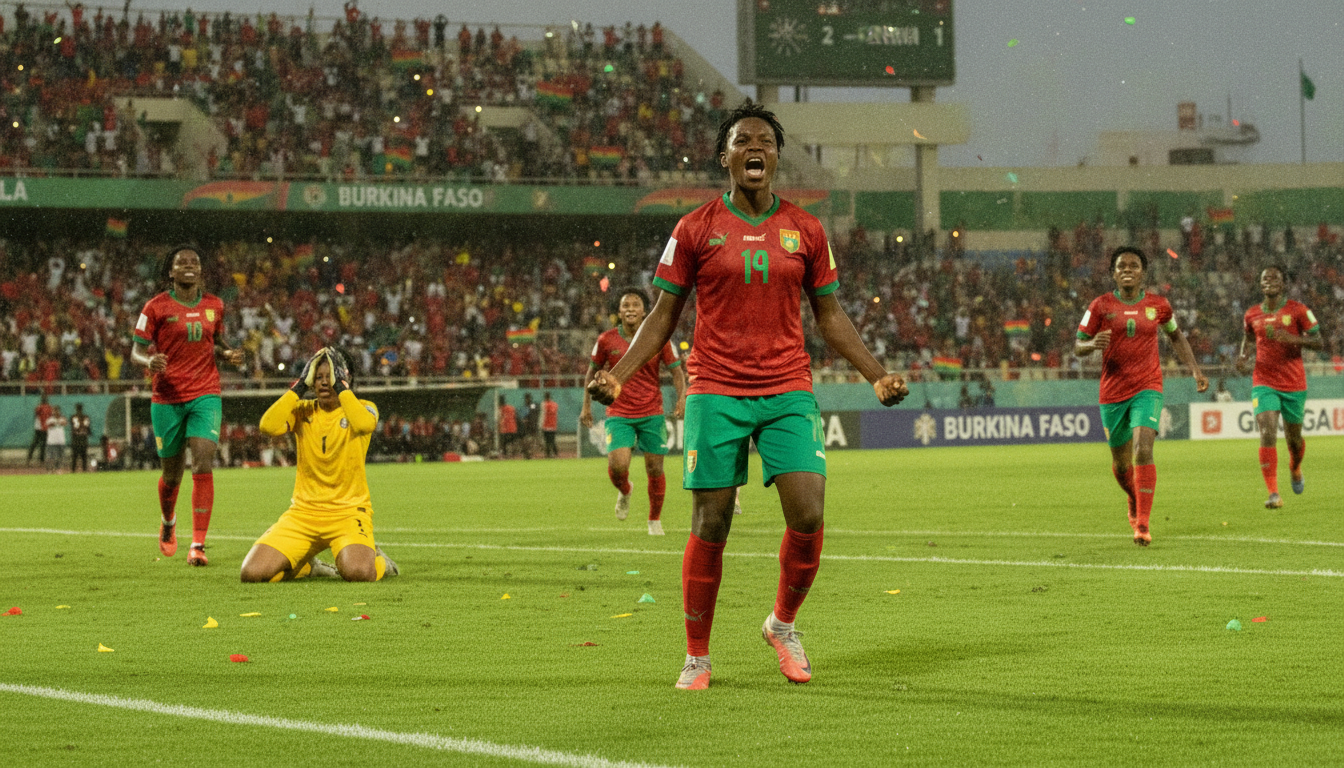
Burkina Faso arrive in Morocco for the 2026 TotalEnergies CAF Women’s Africa Cup of Nations with renewed ambition after a convincing qualification campaign. The Stallions Ladies, led by coach Pascal Sawadogo, are determined to move past the group stage for the first time in the nation’s brief tournament history. Their preparation and recent results have raised expectations at home and signalled real progress on the continental stage.
Strong qualifying campaign sets tone
Burkina Faso secured passage to the finals with decisive results across two qualifying rounds, demonstrating both attacking potency and defensive discipline. The team overcame Burundi by a 5-1 aggregate margin, producing a 4-1 victory in the first leg and a 1-0 win in the return fixture. They then dismissed Togo across two legs, winning 2-0 at home before a 1-0 closing victory sealed a 3-0 aggregate success and booked their place in Morocco. Those outcomes underline a side that can finish chances and manage tight fixtures, qualities coach Sawadogo will seek to sharpen ahead of the group stage.
Coaching and development under Pascal Sawadogo
Pascal Sawadogo has overseen a sustained development programme that prioritises youth and structural growth within Burkina Faso women’s football. His tenure has focused on building a defined playing identity, combining physical intensity with quick transitions and measured positional play. Sawadogo’s emphasis on integrating younger players into international competition has broadened the squad’s depth and created competition for places. That continuity and long-term planning are central to Burkina Faso’s hopes of converting qualification momentum into tournament progress.
Adama Congo provides the attacking spark
Forward Adama Congo, 22, stands out as Burkina Faso’s most prominent attacking talent and a clear focal point for the team’s ambitions in Morocco. Congo progressed through club stints in Equatorial Guinea before moving to Spain, where she represented Dux Logroño and SE AEM Femení, gaining valuable experience in European competition. She became the first Burkina Faso player to score at the AFCON finals with her goal in the 2-2 draw against Uganda in 2022, which remains a landmark moment for the programme. Congo’s pace, movement behind defenders and ability to create space will be crucial if the Stallions Ladies are to convert opportunities at this tournament.
Past AFCON experience offers practical lessons
Burkina Faso made their first appearance at the continental finals in 2022, using the tournament as a stepping stone for longer-term growth despite an exit at the group stage. The team held Uganda to a 2-2 draw to claim their first AFCON point, but narrow defeats to hosts Morocco and Senegal curtailed their progression. That initial exposure to high-level competition provided valuable benchmarks around match tempo, defensive coordination and set-piece preparation. Officials and coaching staff have since sought to address those specific areas in training and international friendlies to close the gap with Africa’s established sides.
Tactical profile and likely approach in Morocco
Expect Sawadogo to set up a compact, counter-aware side that relies on structure and rapid forward movements to exploit space. Burkina Faso typically employ disciplined defensive blocks and look to transition quickly through midfield channels, allowing forwards like Adama Congo to run in behind opposition lines. The squad’s qualification performance showed an ability to manage possession when required and to press effectively without overcommitting. Set pieces and organised defending will be critical aspects, particularly against technically superior opponents where margins are tight.
Squad balance and selection considerations
Selection decisions will hinge on blending experience with the emerging players who pushed for places during qualifying, ensuring tactical flexibility for different opponents. The central spine of goalkeeper, central defence and a controlling midfielder will be crucial to maintain stability, while wing play and rotation up front provide the attacking variations needed to break down compact defences. Depth in midfield and replacement options on the flanks could determine Burkina Faso’s ability to cope with fixture congestion and in-game tactical shifts. Injuries and form in the weeks ahead will influence the final choices, but Sawadogo’s recent emphasis on youth makes it likely that more than a handful of qualifiers will make the tournament roster.
Significance for women’s football in Burkina Faso
Qualification for Morocco 2026 carries symbolic and practical importance for the domestic game, with increased visibility and investment prospects at stake. The Stallions Ladies’ performances have already inspired wider media coverage and boosted grassroots interest in women’s football across the country. Burkina Faso’s opening match in 2022 against Morocco marked a broadcasting milestone back home, drawing prime-time national television coverage and highlighting the competition’s growing profile. Continued success on the continental stage would reinforce calls for stronger domestic competitions and more systematic youth development pathways.
Burkina Faso enter the tournament with clear objectives: to harness the confidence of a strong qualifying run, to sharpen tactical cohesion under Sawadogo, and to produce consistent performances that can carry them beyond the group stage for the first time. The combination of a proven coach, a rising attacking talent in Adama Congo and recent competitive results gives the Stallions Ladies a platform to challenge more established African teams. How they manage pressure, adapt tactically and convert chances in critical moments will ultimately determine whether this campaign marks a historic step forward.
The coming weeks in Morocco will be a meaningful test of how Burkina Faso translate preparation into results on the continental stage.