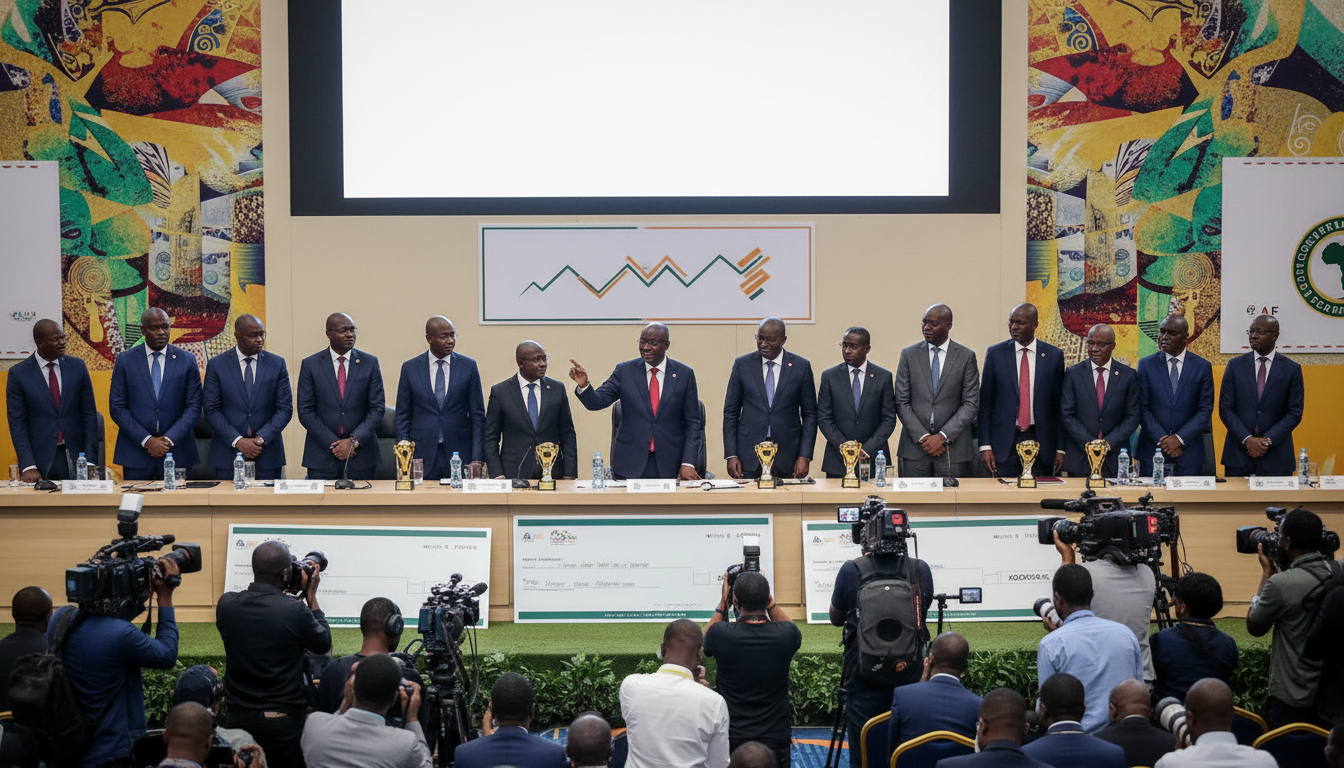
CAF solidarity fund lauded as CAF boosts prize money and support for clubs
CAF solidarity fund praised by African Club Association as prize money rises to $6m and $4m, and preliminary-round payments double to $100,000 to ease club costs.


Strong support from ACA for CAF solidarity fund and prize money increase
The African Club Association has publicly praised the CAF solidarity fund after Confederation of African Football raised preliminary-round payments to USD 100,000 and lifted interclub prize money to record levels. The endorsement from ACA President Hersi Said highlights how the CAF solidarity fund and larger purses for the TotalEnergies CAF Champions League and Confederation Cup are reshaping club finances. Said credited CAF President Patrice Motsepe’s leadership for recognizing travel and logistical burdens and for committing tangible resources to address them.
Preliminary payments doubled to ease travel and logistics
CAF’s decision to double the solidarity payment for teams eliminated in preliminary rounds to USD 100,000 directly targets one of African club football’s most persistent barriers. Clubs frequently incur high costs for flights, accommodation and match-day logistics when travelling across the continent, and small-to-mid-size sides often struggle to find sponsors to cover those expenses. ACA officials say the payment, which followed an initial USD 50,000 first-year scheme, helps ensure clubs can participate without jeopardizing their domestic operations.
In addition to the cash lifeline, ACA says coordination with CAF’s administration has improved the speed and reliability of disbursements. Faster, predictable payments reduce uncertainty for club boards and allow teams to budget for travel and squad preparation more effectively. That immediate practical relief is seen as a foundation for longer-term investment and professionalisation at many clubs.
Record prize money raises stakes in CAF interclub competitions
CAF has announced record first-place prize money of USD 6 million for the TotalEnergies CAF Champions League winners and USD 4 million for the Confederation Cup champions. The increases extend beyond the winners, with greater sums allocated to semi-finalists, quarter-finalists and group-stage participants, creating stronger incentives across the competition ladder. Officials and club representatives say the new financial structure both rewards achievement and encourages clubs to allocate resources towards squad strengthening and infrastructure.
Those higher rewards are expected to attract greater commercial interest in African club competitions, including sponsorship and broadcasting bids, which in turn should help clubs diversify revenue streams. CAF and club leaders argue that sustained increases in prize money will shift the calculus for domestic clubs, making continental success a realistic route to financial sustainability rather than a costly prestige project.
Competitiveness is growing as first-time finalists emerge
Recent editions of the TotalEnergies CAF Champions League have produced surprise finalists and far deeper competition, a trend ACA points to as evidence the financial reforms are bearing fruit. Teams such as Pyramids FC and AS FAR have reached new heights, with AS FAR contesting a Champions League final for the first time in over four decades. ACA leadership says these breakthroughs demonstrate that improved funding and professional preparation allow a wider set of clubs to challenge traditional powerhouses.
Young Africans, long active in CAF interclub events and represented within ACA leadership, serve as a domestic benchmark of rising standards, while encounters against emergent sides have highlighted tactical and organisational progress across nations. The pattern of first-time finalists and unexpected deep runs suggests that the competitive balance is shifting and that the field is more open than in previous eras.
ACA formation driven by club needs and European model comparison
The African Club Association was formed to provide clubs with a collective voice and to help bridge gaps between clubs and CAF governance. ACA has opened offices in Rabat and is engaging member clubs across the continent, explaining its role in education, advocacy and coordination. Several prominent clubs, including Mamelodi Sundowns, Young Africans, Kaizer Chiefs, Raja Casablanca, Zanaco and Maniema Union, are already involved and working with ACA on shared priorities.
ACA leaders point to the European Club Association as a reference for how collective representation can influence competition structures, commercial deals and player welfare. The aim for ACA is pragmatic: to build capacity at member clubs, professionalise operations and ensure that reforms such as the CAF solidarity fund translate into durable gains rather than temporary relief. Early responses from clubs have been positive, though ACA recognises that broader outreach and time will be needed to embed the organisation’s work.
CAF leadership and administrative changes supporting reforms
ACA singled out CAF President Patrice Motsepe and the competitions department, now under Samson Adamu’s leadership in the General Secretary’s office, for driving the funding and organisational changes. Motsepe’s administration has made club support and enhanced commercialisation cornerstones of its agenda, and ACA officials say those priorities have created momentum for both immediate cash relief and structural reforms. Administrative coordination between CAF and ACA has been cited as critical in ensuring payments reach clubs promptly and that policy adjustments are practical.
Operational improvements inside CAF competitions management, along with clearer timelines for disbursement and greater transparency around prize distribution, have been welcomed by clubs. Those procedural gains reduce friction for match planning and allow club executives to focus on competitive preparation rather than protracted financial negotiations.
Longer term impact on club investment and African football development
Club executives and ACA leadership argue the combination of solidarity payments and higher prize money will encourage clubs to invest in youth development, scouting and facilities. Where continental campaigns once represented net financial risk for many teams, the new model creates a pathway to recoup and reinvest funds earned through international success. Over time, that dynamic could strengthen domestic leagues, improve player retention, and make African competitions more attractive to global partners.
Financial stability at participating clubs may also encourage better coaching structures and more sophisticated medical and sports-science practices. If sustained, those improvements can raise the level of play and increase the marketability of African club football, benefiting players, fans and sponsors alike.
Remaining challenges and calls for continued growth
Despite the positive reception, club leaders caution that costs remain high and that further increases and guarantees will be necessary to fully level the playing field. Travel across Africa still presents logistical hurdles, and disparities in infrastructure and commercial capacity between clubs mean some teams will need targeted support beyond prize money. ACA is pressing CAF to maintain a trajectory of increasing support while also working with national federations and private partners to build domestic sponsorship markets.
ACA also emphasises the need for transparency in how funds are distributed and for mechanisms that ensure solidarity payments reach those most in need. Continued dialogue between CAF, ACA and club stakeholders will be essential to turn headline-grabbing figures into measurable improvements on the ground.
The solidarity payments have already altered club budgeting and approach to continental competition, and the record prize money has recalibrated expectations for success and sustainability. As CAF and ACA continue to refine the architecture of club support, African interclub football is poised for further professionalisation and competitiveness.